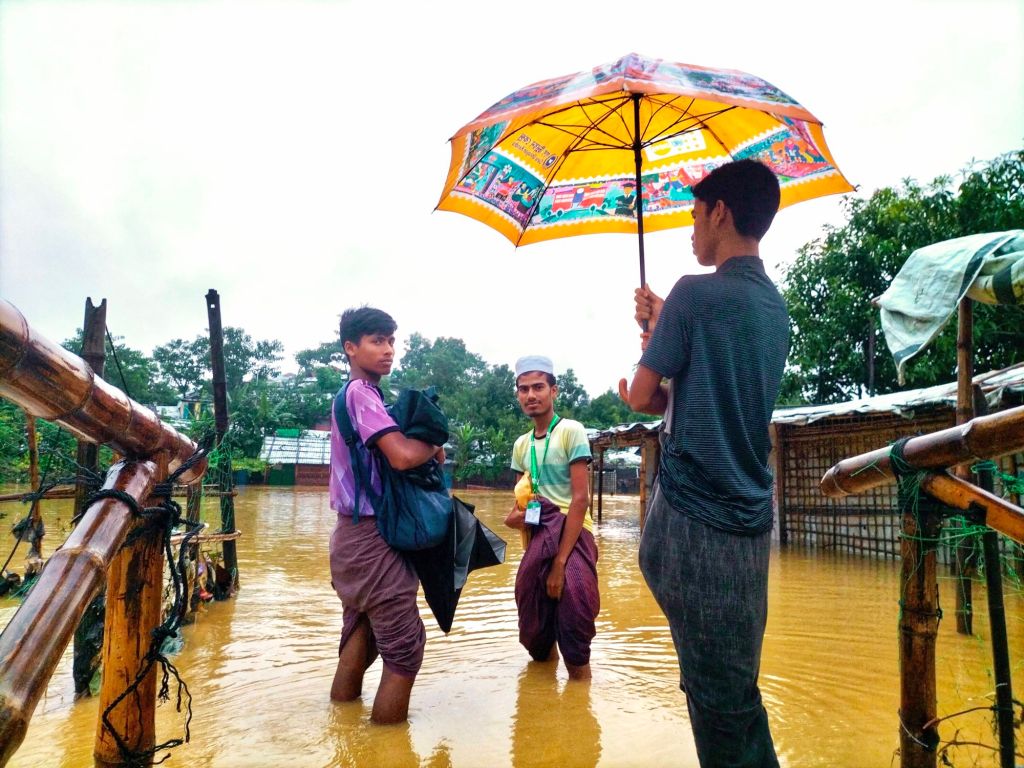
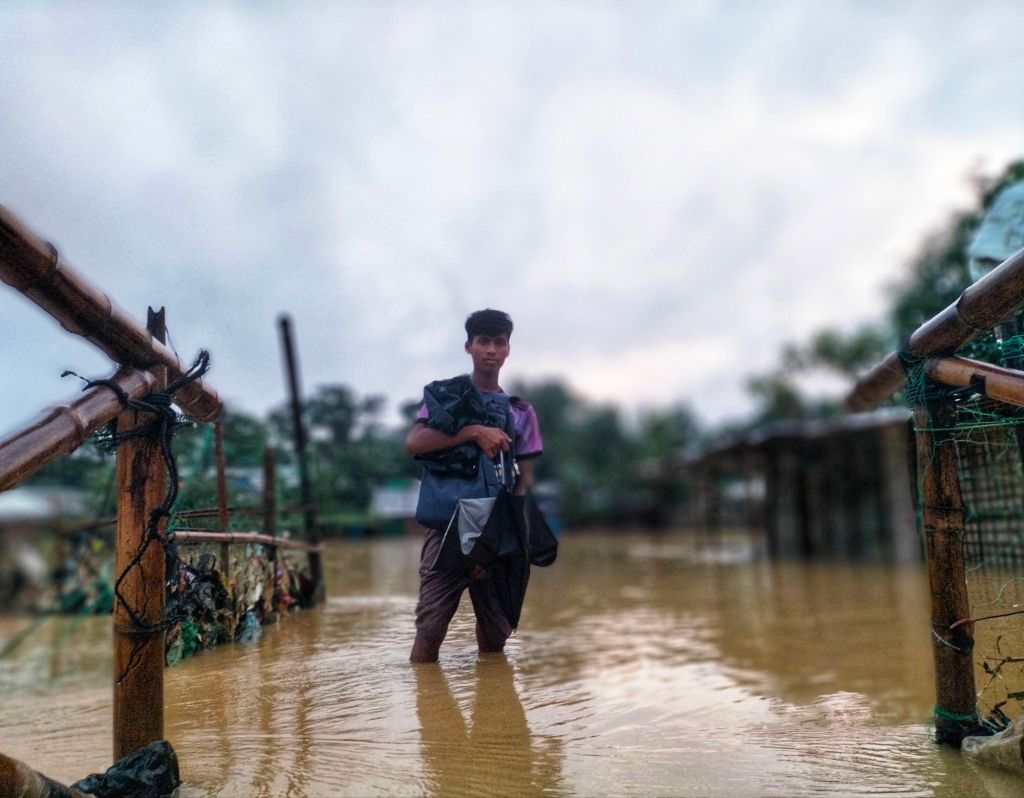
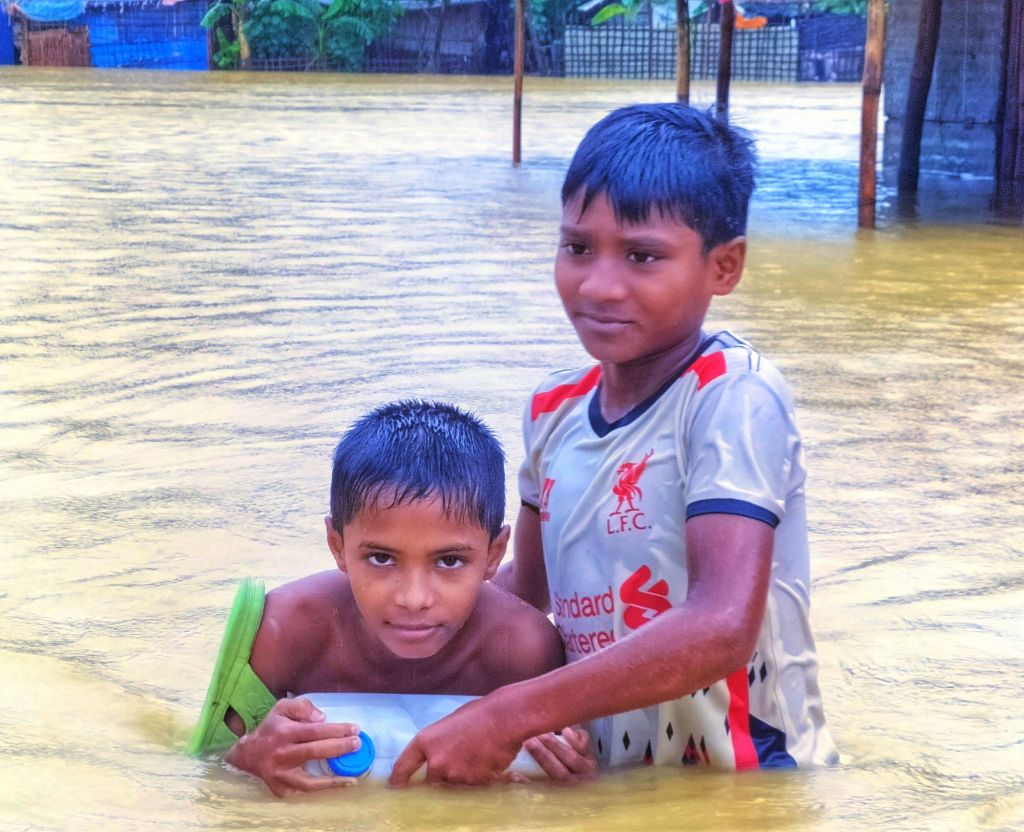
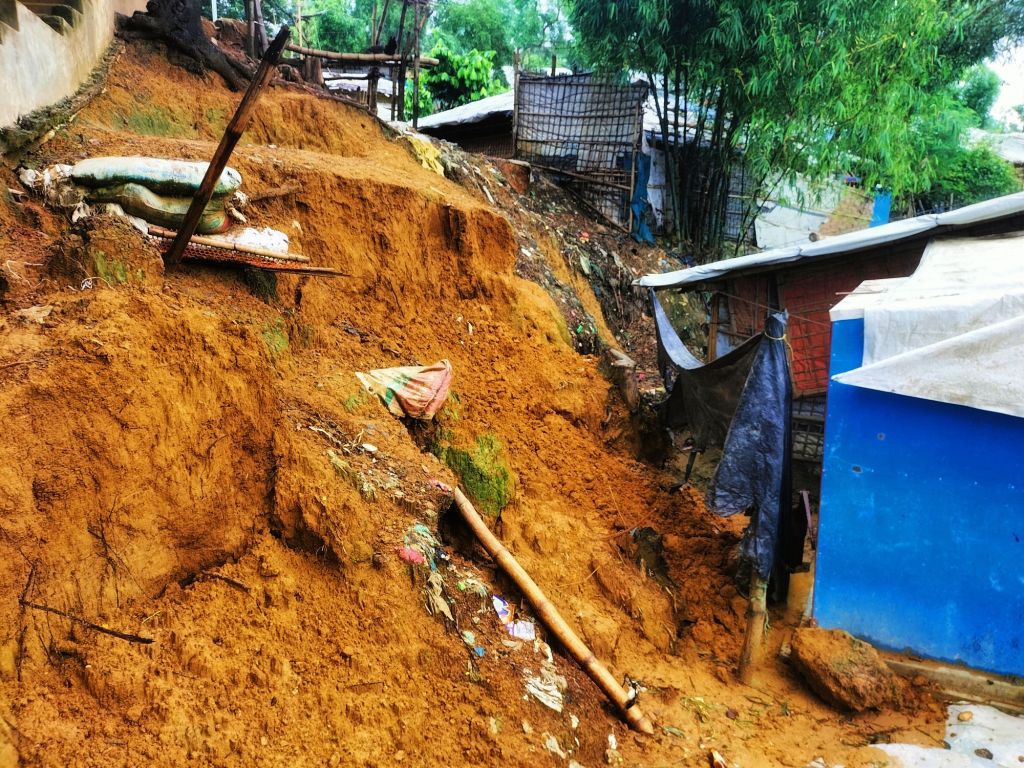
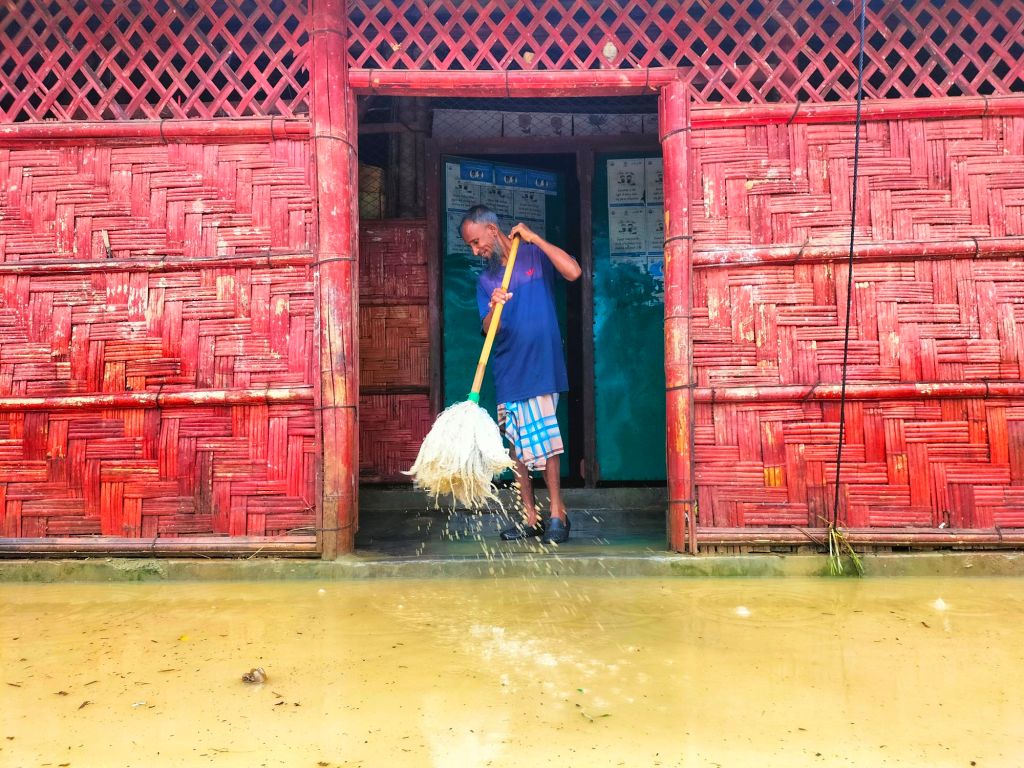
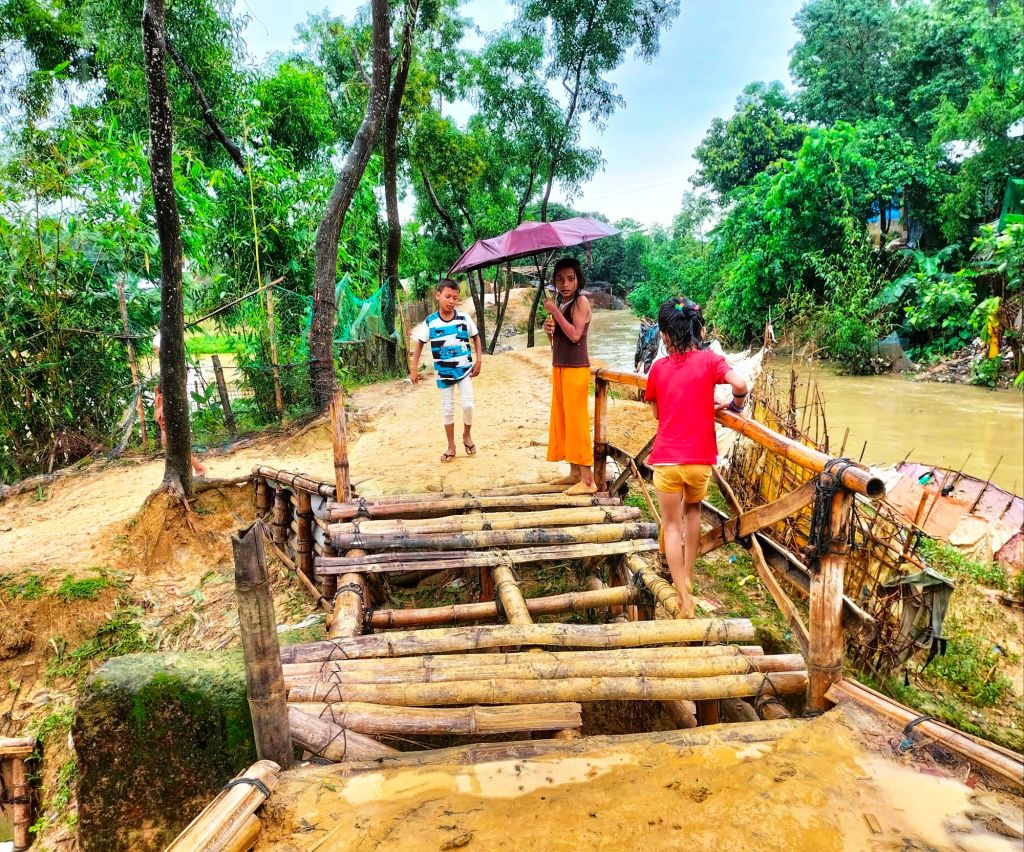
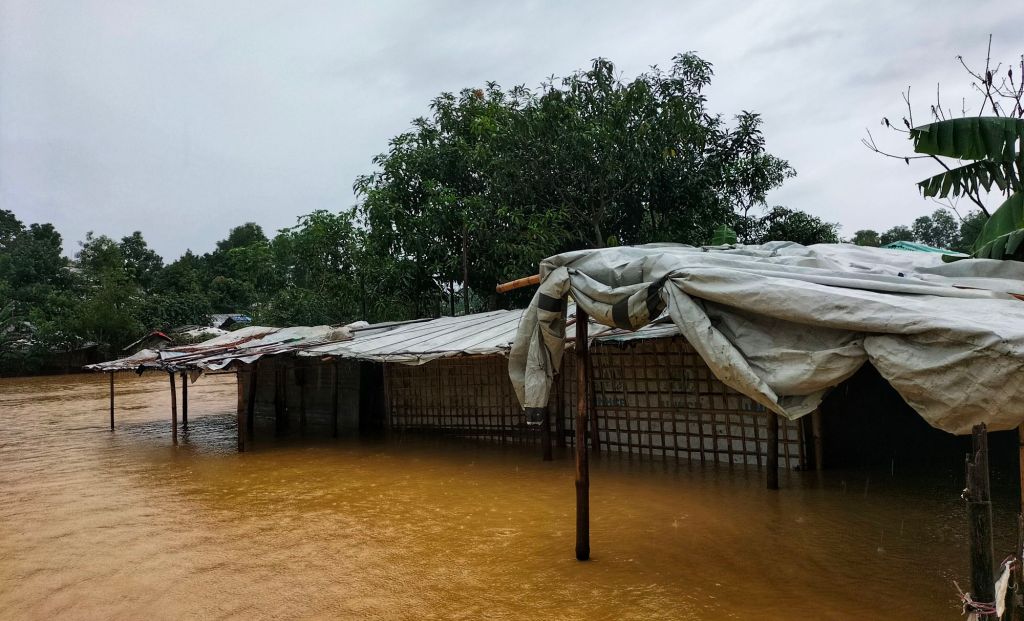
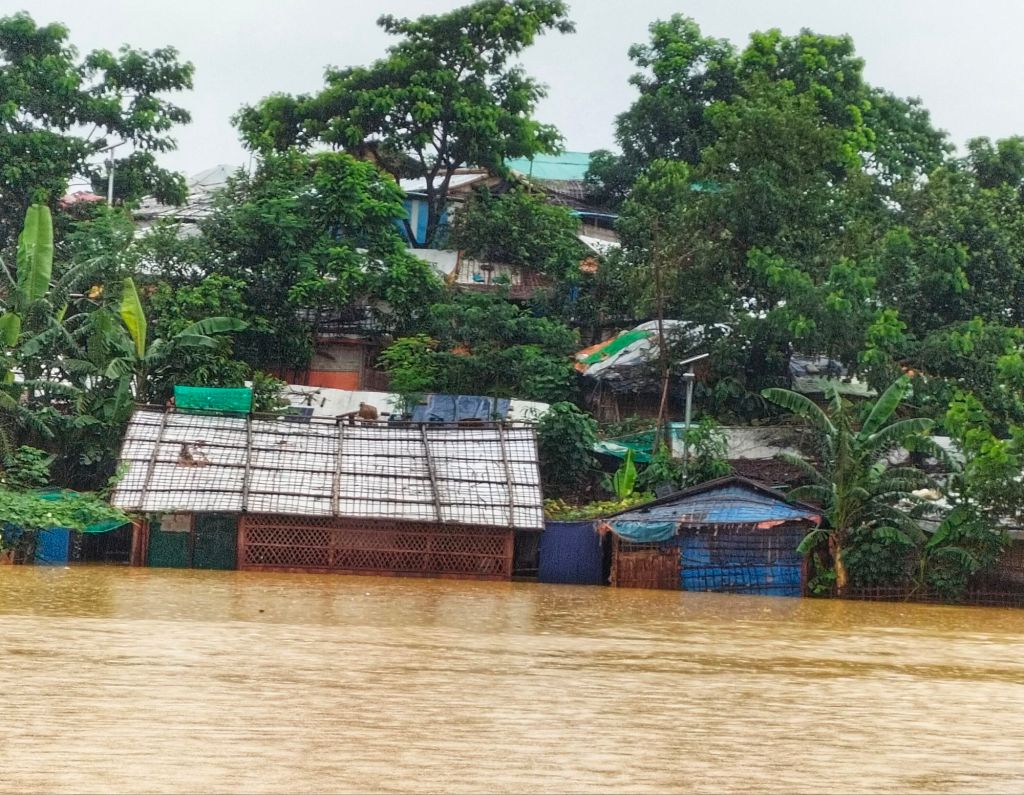
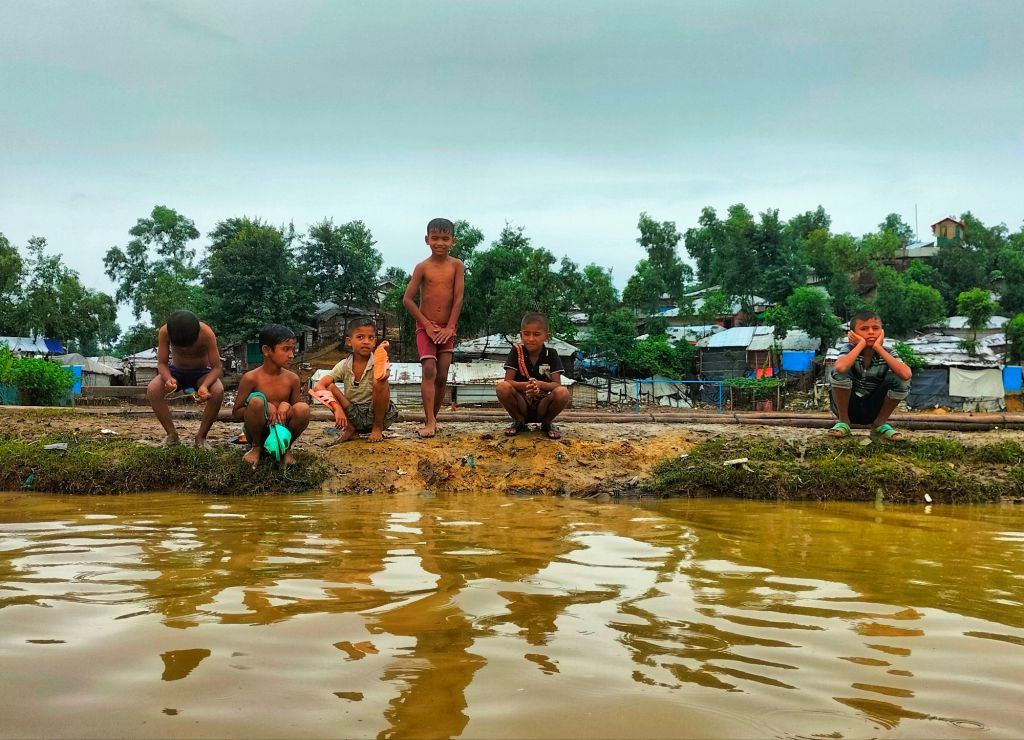
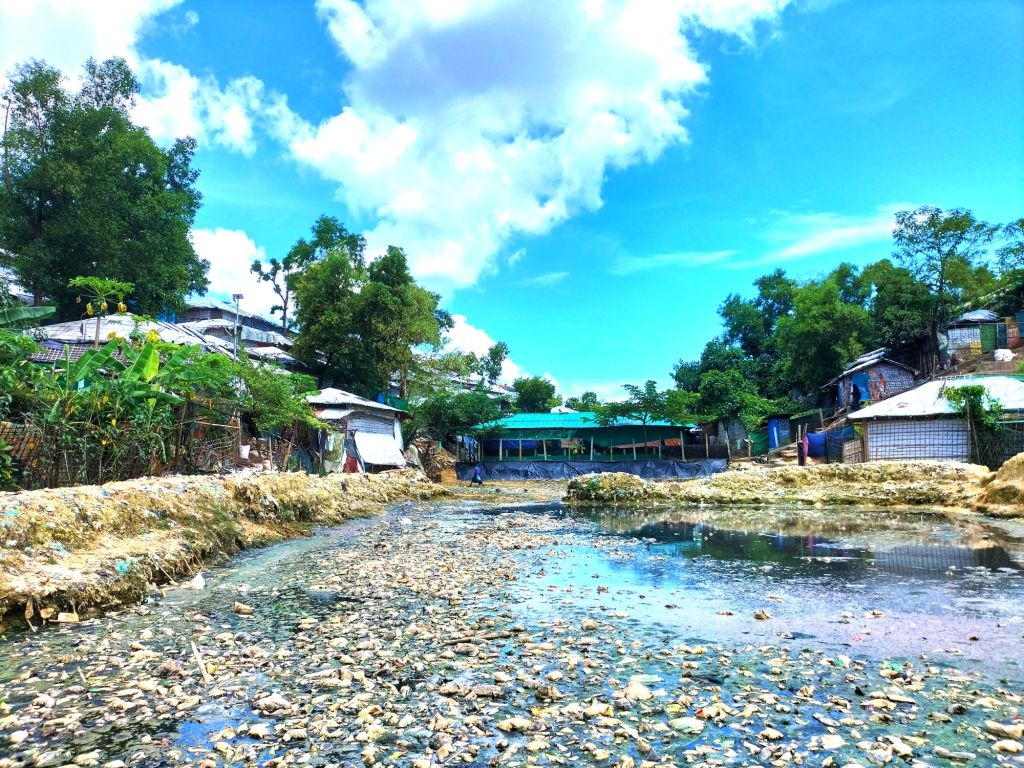
The monsoon may seem romantic to many, but for the Rohingya Muslims in the refugee camps of Bangladesh, it brings only hardship. Torrential rains trigger floods that destroy shelters on the low ground, while landslides threaten those living on the sandy hillsides. Every year, many families are left homeless, losing their few valuable belongings, including essential documents; in the devastation.
Rohingya students are being stuck in the current of floodA Rohingya youth, crossing the flood water When flood occurs, it damages not only the shelters but also the hearts of Rohingya people Two young boys, playing in flood water by using glands and floating over the waterIf the hill is sandy, it is easy to break into pieces when during the rainy season and the shelters nearby it, are buried under the ground This is a learning center completely wet due to flood waterA broken briadge and Rohingya children are crossing over it even though fear to fall comesShops and shelters are drowned in the flood waterAnother learning center is also under the flood water While the Rohingya children find the places where they play is drowned, they feel disapointed because they are not able to play
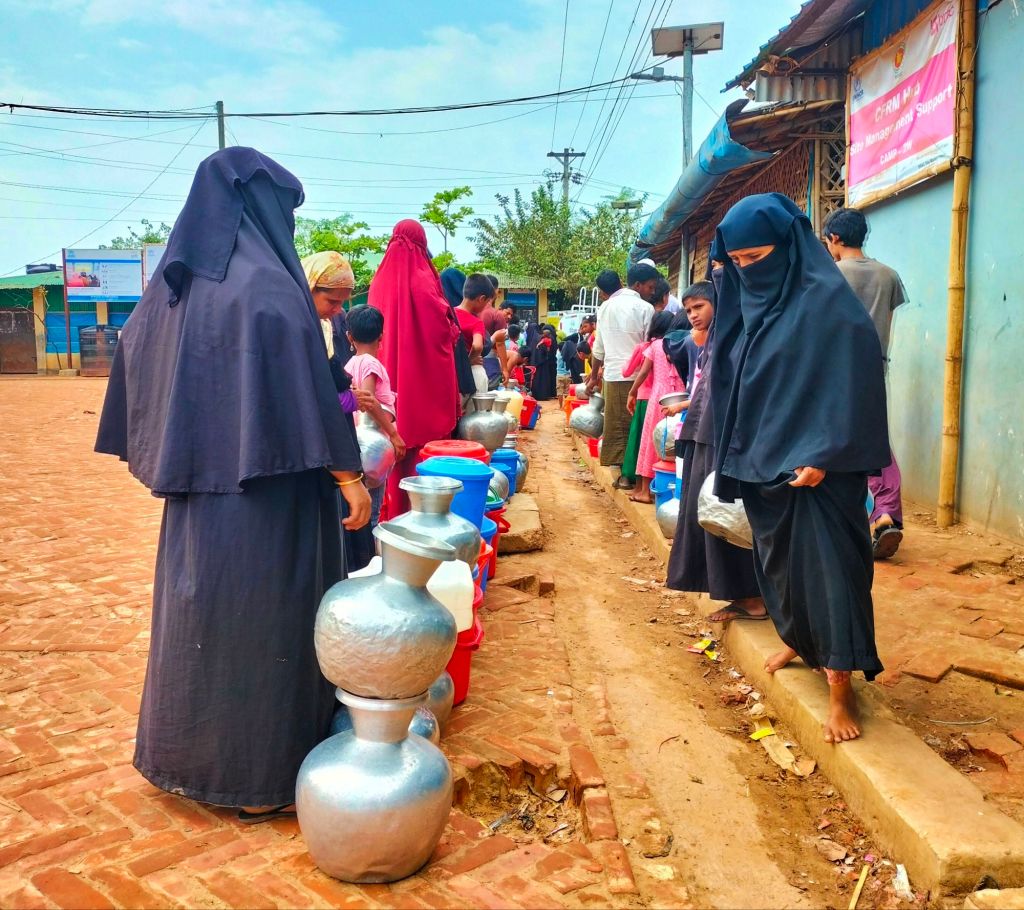
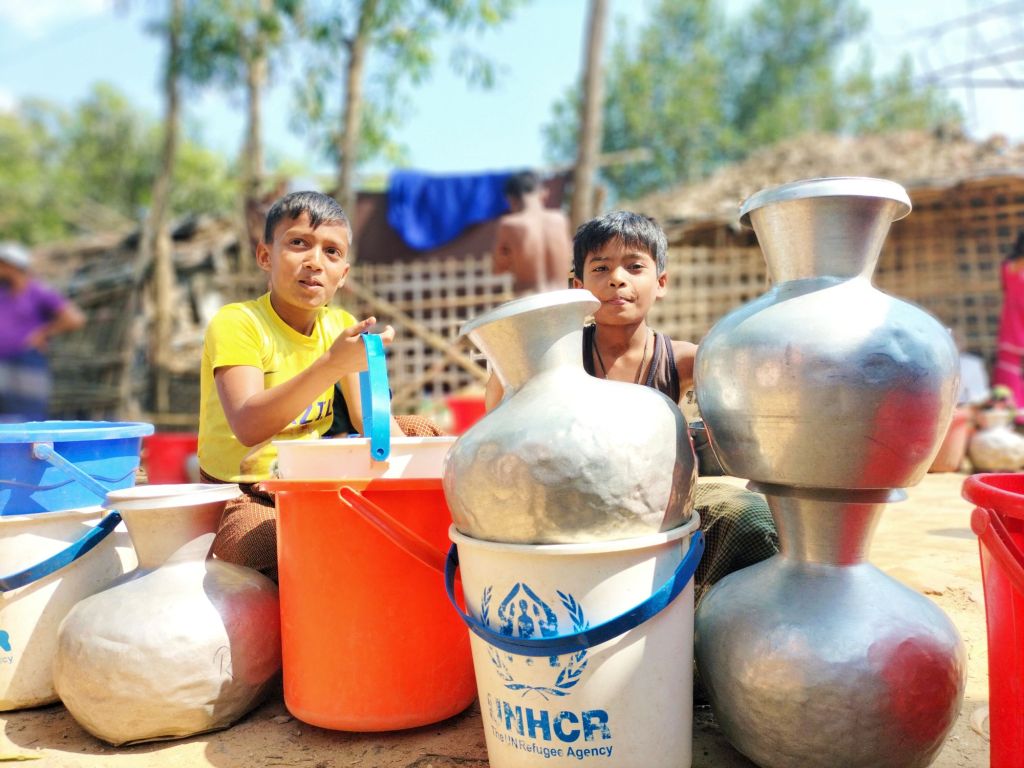
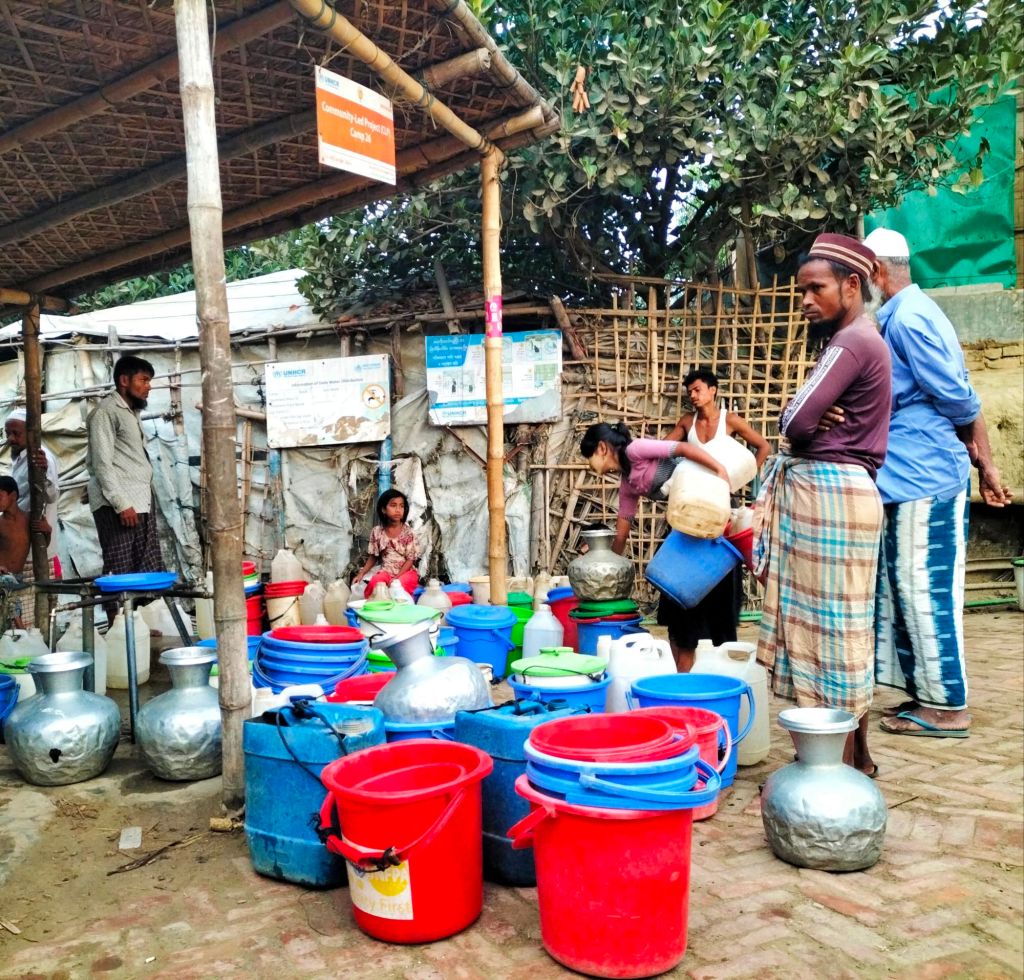
The Rohingya Muslims are the persecuted and vulnerable community in the world. Nearest one million Rohingya Muslims fled thier mother land, Myanmar due to genocidal act by the Myanmar Government and Arakan Army and currently taking refuge in the Cox’ s Bazar, Bangladesh. They extremely facing the challenge with many relevant basic needs such as food, health, movement, water, climate change and so on. Water is one of the most challenge for them to reach to their daily home- usage and pure water to drink clearly as the access to water is not enough to cover all the families in Rohingya refugee camp, Bangladesh.
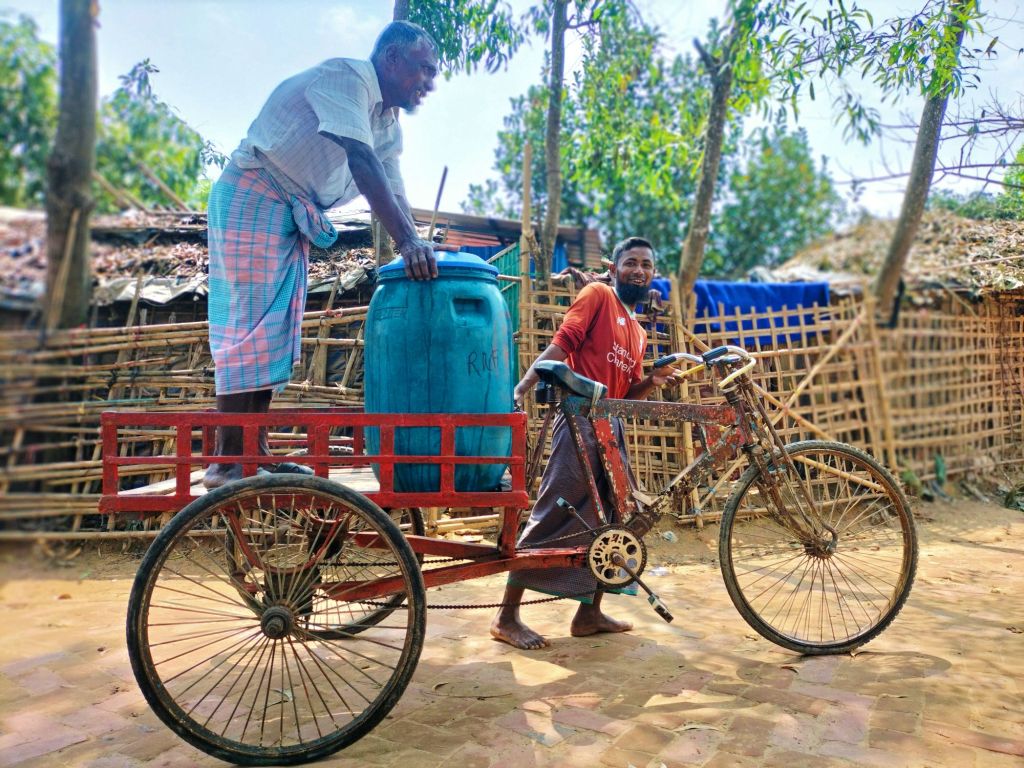
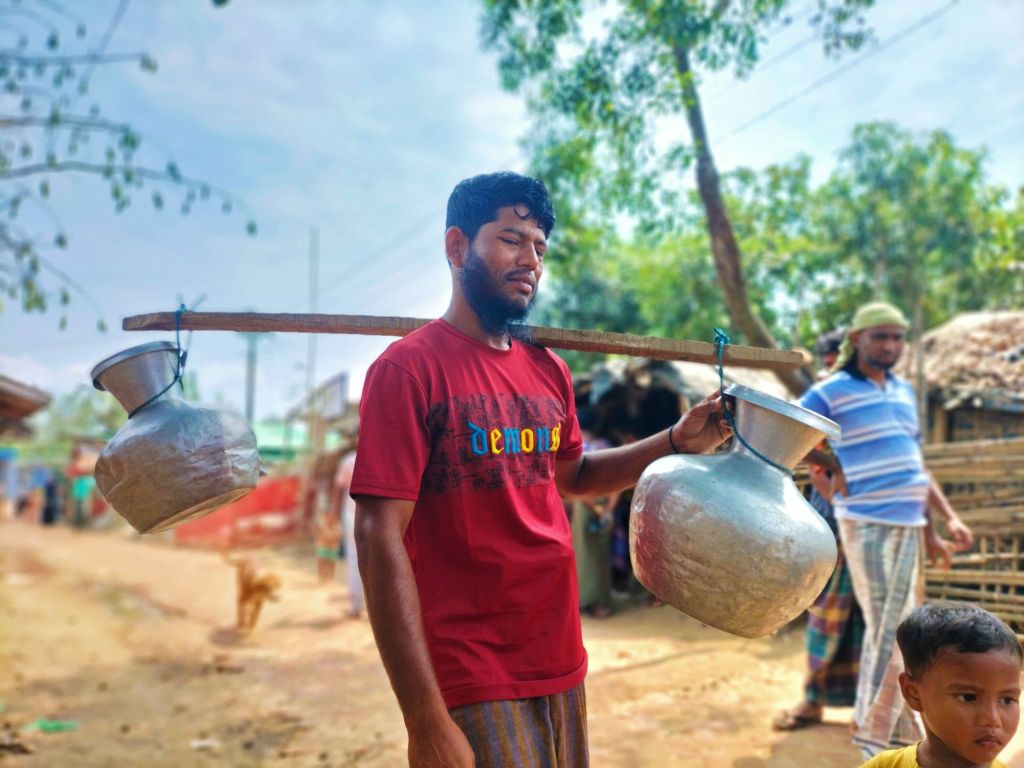
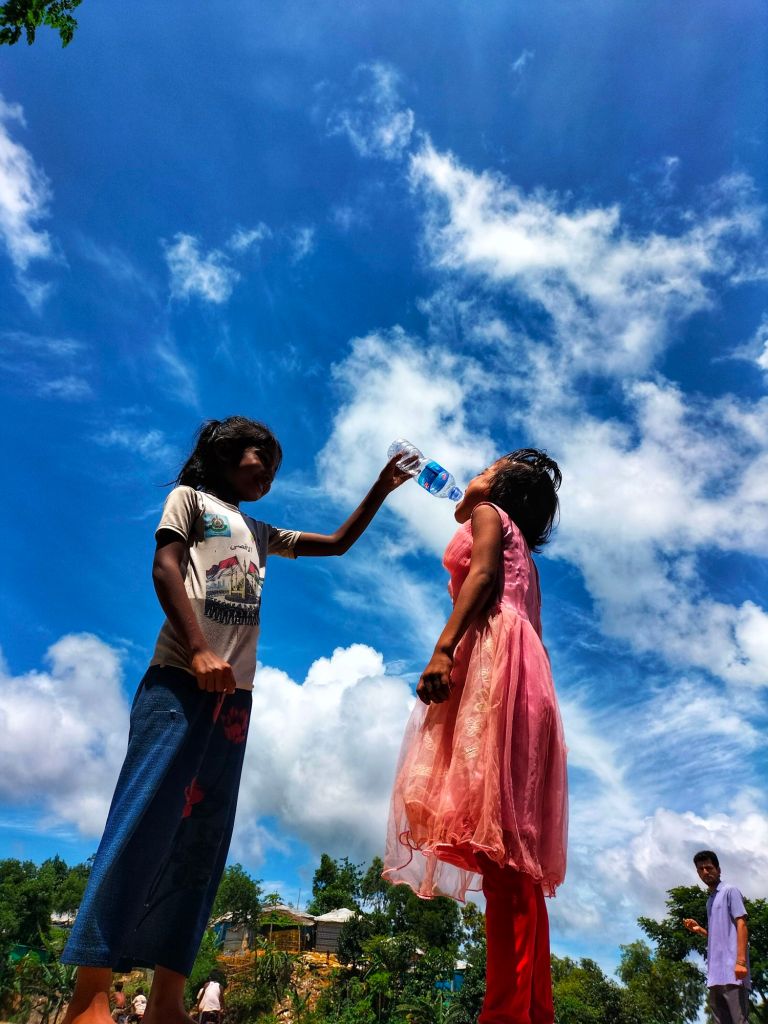
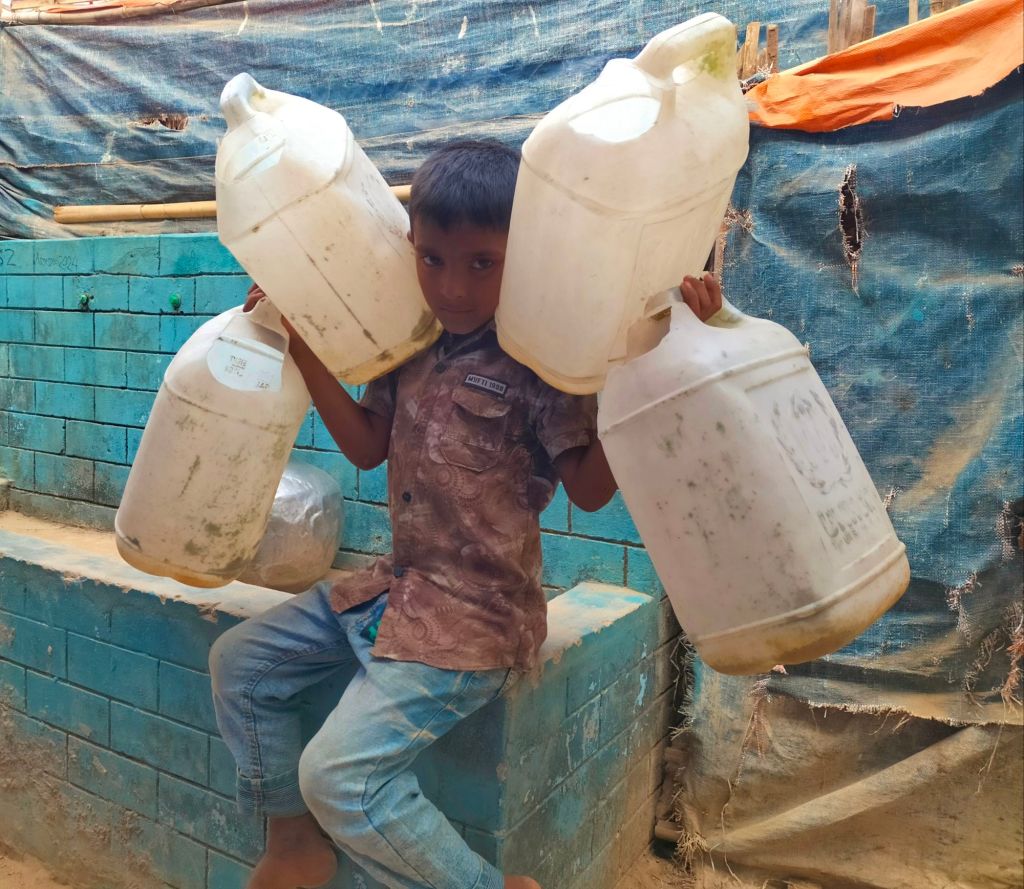
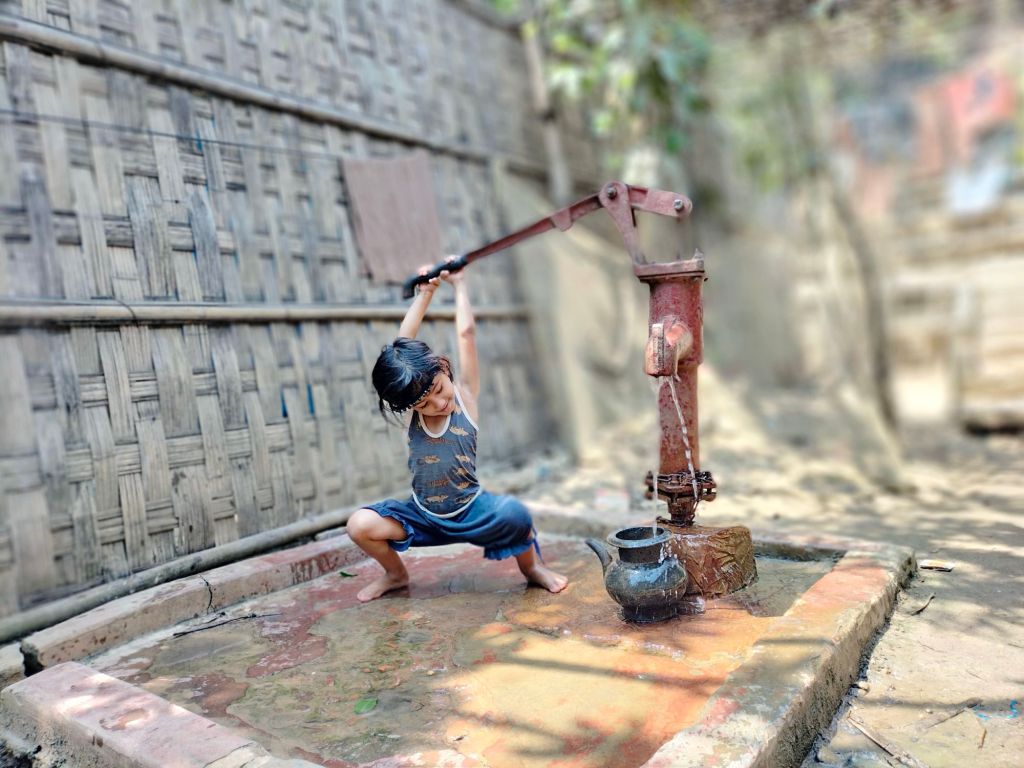
Dried water doesn’t allow Rohingya women inside their shelters. Forcing them to stay in a long queue to fetch the water. A Rohingya man is carrying water after standing for a long moment. Even the children are not able to escape from crisis of water and they are also being forced to stand for water . Water is the main problem for the Rohingya Muslims in Refugee camp, Banglsdesh. These both Rohingya men carrying water for their home-use. Even after standing too long period, this man with litter falling sleep even he is standing When the season is hot, the Refugee camp becomes a plot for fighting of waterMohammad, 8, a Rohingya young boy used his two hands as a cup to drink water as he felt thirsty while he was on the way of his schoolMohammed Anos, 6 years old, a Rohingya child, helping to his pregnant mother by waiting for water beside the water tankNo matter how small a child is, everyone at least try to support to thier parents when they realize how the struggle they face within the waterThis is camp-26, Teknaf, where Rohingya survivors often use the stream water to drink becuase the source of fresh water is unavailable thereThis is what you see is a Rohingya cultral system which they used to drink water on the way of journey when they were in Myanmar A little child is trying to release water from a water-tube
This is Anuwar Sadek, a photographer, writer, teacher and poet from the largest refugee camp, Bangladesh. Through my lens, I love capturing the hardships and emotional inner cry of the Rohingya Muslims and also capturing macro objects like insects and flowers.
Words by Mohammed Anuwar and Photos by Anuwar Sadek
The Rohingya refugee community is facing a dire humanitarian crisis as food rations have been slashed from $12 to just $6 per person. This drastic cut is not merely a funding issue—it is a direct consequence of the escalating global climate crisis. Extreme weather events are disrupting aid supply chains, reducing global food production, and worsening the already fragile conditions in the refugee camps. Here’s how the climate crisis is impacting our community and why urgent action is needed:
1. Climate Disasters Disrupting Aid Delivery Flooding and Landslides
Heavy monsoon rains frequently wash away roads, damage infrastructure, and make it nearly impossible for aid trucks to reach the camps. Violent storms disrupt supply chains, delay food shipments, and leave the community even more vulnerable to hunger. Extreme heat and prolonged droughts are reducing global food production, increasing food prices, and making it harder for aid agencies to meet refugees’ needs
2. Global Food Shortages and Rising Costs
Climate change is devastating agriculture worldwide, causing crop failures and supply chain disruptions. Food prices are skyrocketing due to droughts, floods, and extreme weather, forcing humanitarian organizations to reduce aid budgets. As a result, Rohingya refugees now receive just $6 in rations per person—barely enough to survive.
3. The Impact on Rohingya Refugees
Families are skipping meals or surviving on inadequate nutrition, leading to widespread malnutrition. Malnourished children, pregnant women, and the elderly are at high risk of illness, while weakened immune systems make diseases spread faster.
4. Broader Consequences of Ration Cuts
Desperate for survival, many are at risk of exploitation, child labor, and human trafficking. Scarce resources are fueling conflicts within the camps, further destabilizing an already fragile situation.
5. A Call for Immediate Action The international community must recognize the climate crisis as a direct cause of worsening refugee conditions. Immediate funding is needed to restore food rations and prevent further hunger-related deaths. Long-term solutions must include climate resilience strategies, sustainable aid distribution, and stronger global commitments to refugee rights
Conclusion The ration cut from $12 to $6 is not just a statistic—it’s a life-threatening reality. The climate crisis is no longer a distant threat; it is here, and it is pushing the Rohingya community to the brink of survival. We urge the world to act now before it is too late. Our lives depend on it.
” An insightful article by Mohammed Anuwar, a young Rohingya climate change activist working in the UNHCR environmental sector and also a grade-12 student of our Life Destination High School.”







 Life Destination School