Autobiography of Mohammad Younus NC


Name:                               Mohammad Younus NC
Father:                              Nurul Islam
Date of birth:                    2007
Address in Myanmar:     Ngan Chaung village (ငန်းချောင်း)
Address in Bangladesh: Block A, Camp-6, Kutupalong

My name is Muhammad Younus, also known as Maung Maung Soe NC, and I am the eldest child in my family. I am the son of Nurul Islam and #Rokiya, and I am currently 18 years old. According to UNHCR records, our family consists of 12 members. I was born in Ngan Chaung village (ငန်းချောင်း), located in the northern part of Maungdaw Township, Arakan State, Myanmar (မြန်မာနိုင်ငံ).

Today, I live as a refugee in Kutupalong Camp 06, Block A, in the FDMN camp at Ukhiya, Cox’s Bazar, Bangladesh.

Early Life and Education

I was born into a humble Rohingya family. My father was a hardworking farmer, and my mother is a devoted housewife managing our large family with courage and strength. Although my parents are uneducated, they always taught us the value of learning and perseverance.

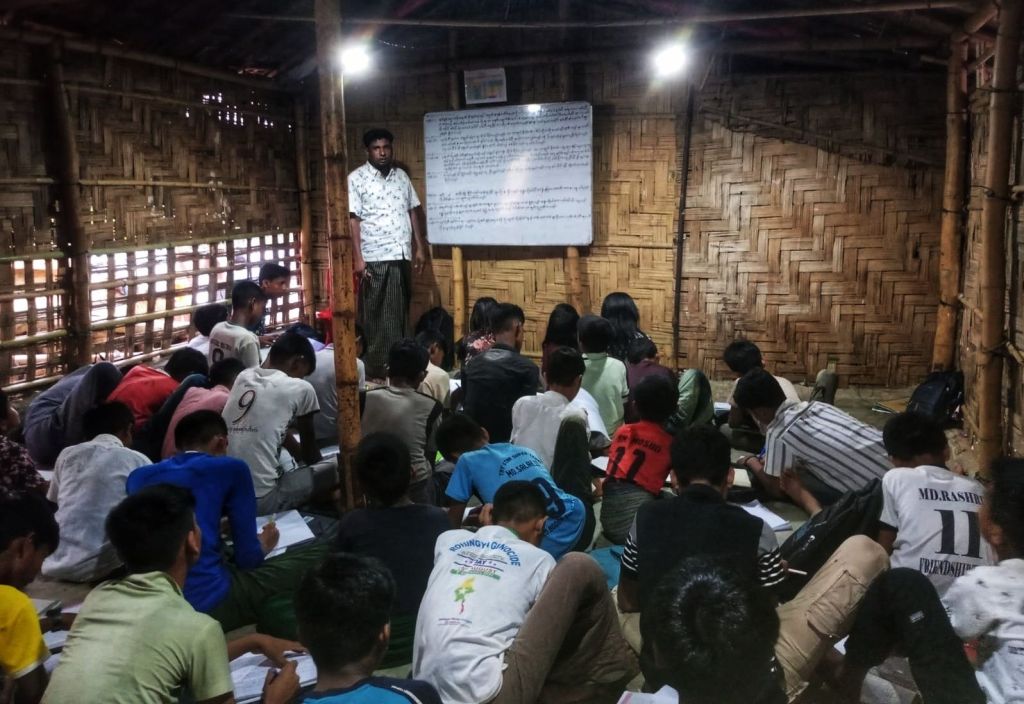
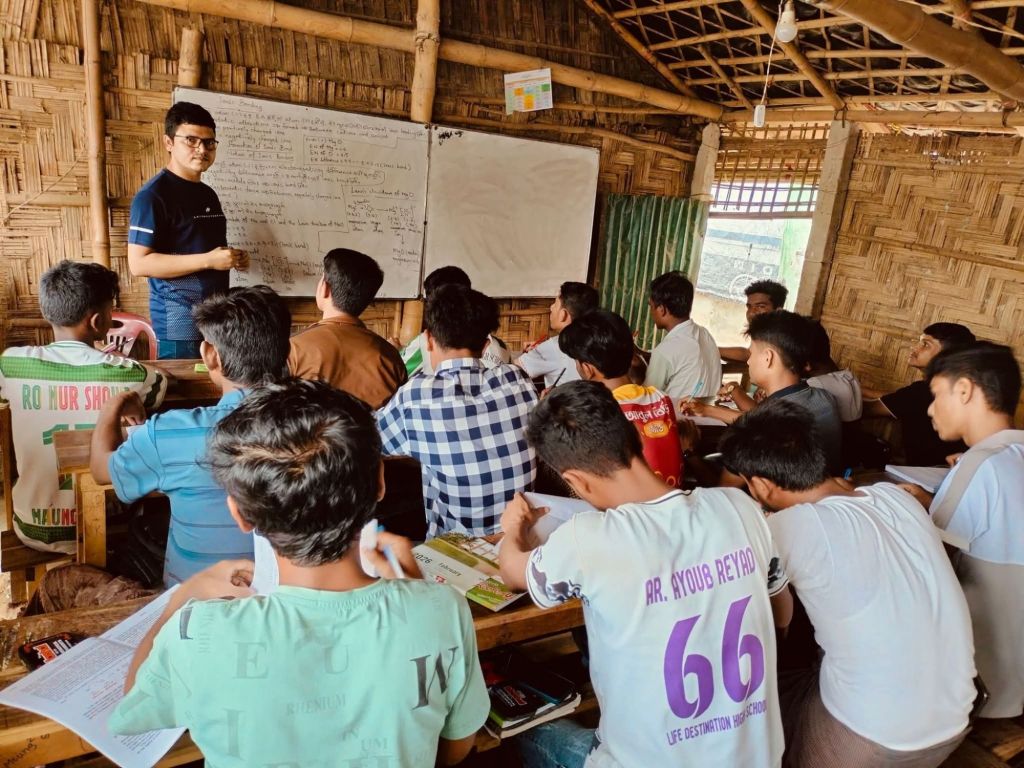
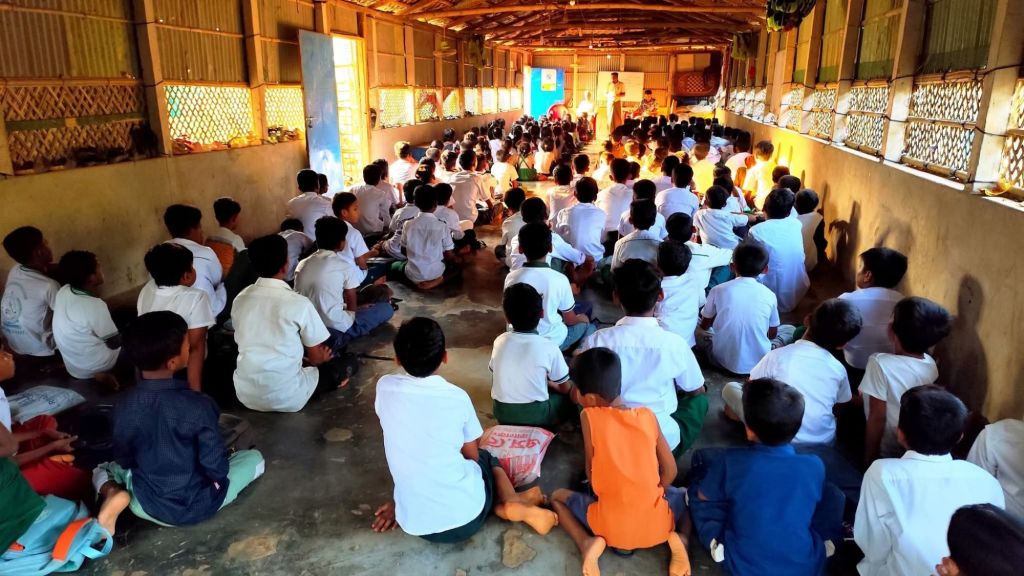
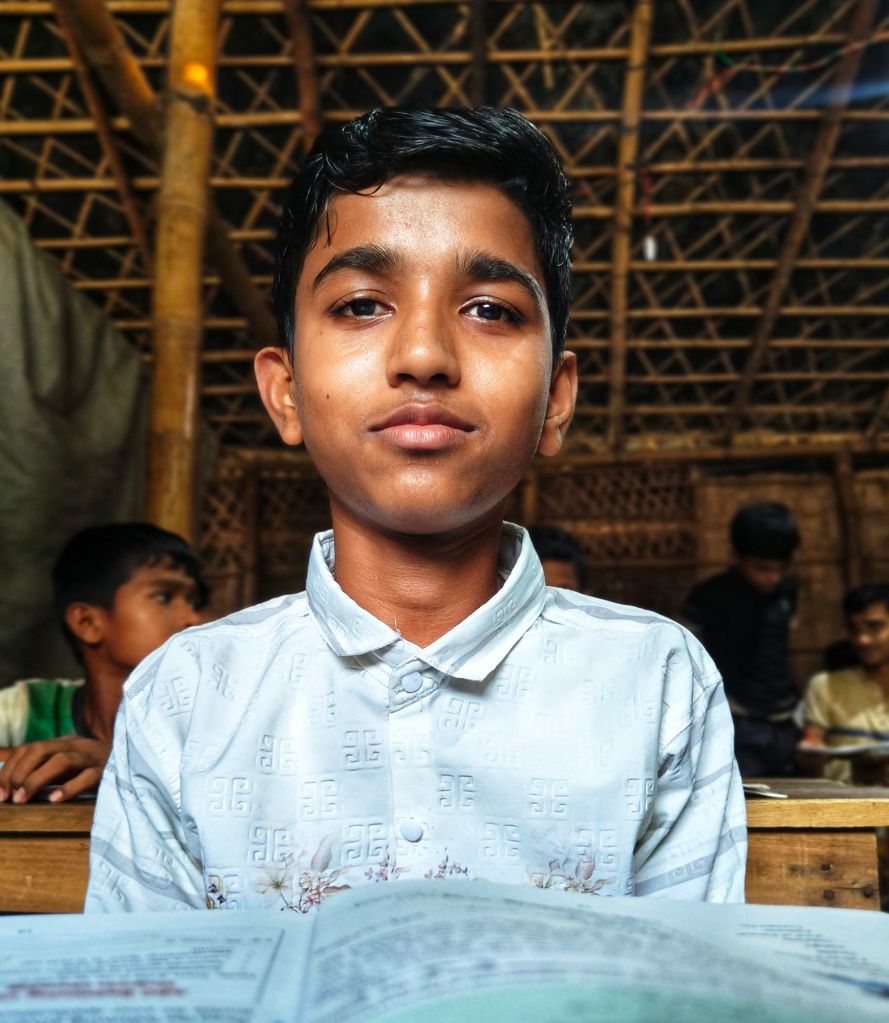
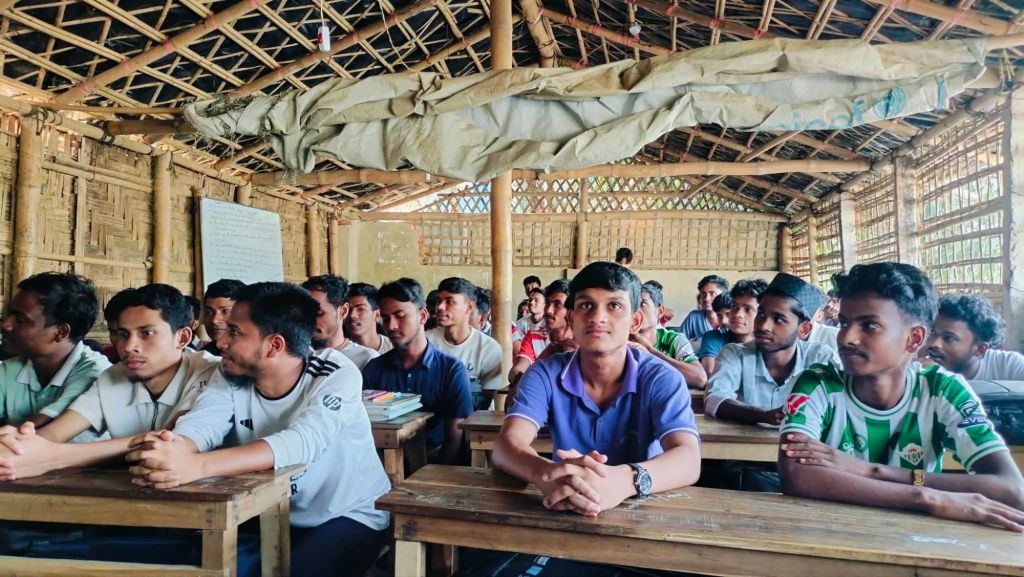
I studied up to Grade 4 in our village school in Myanmar, where I proudly achieved 2nd prize in both Grade 2 and Grade 3. After being forced to flee Myanmar, I continued my studies in the refugee camps of Bangladesh. I am now studying in Grade 12 at Life Destination High School (ဘဝပန်းတိုင်).

My educational journey has been full of challenges, yet I have remained determined. Throughout school, I ranked among the top three students multiple times. In the 2024 final examinations, I secured #second place in Grade 11 under the Myanmar curriculum. My favorite subjects are Biology, Chemistry and physics.

Career and Achievements

Alongside my studies, I have worked to contribute to my community. I served as a teacher with the Jagorani Chakra Foundation (JCF), a project under UNHCR, where I educated young Rohingya students in the camps. Unfortunately, the project was temporarily closed due to lack of funding.

I have also worked with other organizations such as NGO Forum, BRAC, and CWC, gaining valuable experience in humanitarian and community service work. These opportunities taught me leadership, communication, and the importance of helping others even in times of hardship.

Through my consistent effort in both academics and community service, I have built a foundation for my future goals. I aspire to one day serve my people at a global level.

Turning Point

The greatest turning point in my life came in 2017, when violence and persecution forced my family and me to flee #Myanmar. That painful journey across the border to #Bangladesh changed me forever.

I witnessed unimaginable suffering and the destruction of my homeland. We lost our property, identity, and sense of security overnight. Yet, amidst the fear and uncertainty, I made a promise to myself: I would not give up, and I would rise stronger for my people.

This turning point shaped my identity and gave me a deep sense of responsibility to pursue education and advocate for the rights of the Rohingya community.

The Pain of Persecution

I will never forget how we were denied our identity in Myanmar. We were called “Bengali” or “Kula” in an attempt to erase our Rohingya heritage. We were stripped of citizenship and forced into statelessness.

But the truth remains: we are the original people of Arakan, and Myanmar is our motherland. We were born there, and we rightfully belong there.

Dreams and Hopes

I find great joy in reading textbooks, writing poems and articles, and documenting the history of the Rohingya people. My dream is to become both a #university professor and an engineer, not just for myself, but to uplift and support my community.

As a Rohingya refugee, I face countless restrictions—no freedom of movement, no recognized citizenship, and limited access to higher education. Many young people in the camps have lost hope.

But I continue to study, learn, and prepare myself for the future. I believe that one day the world will hear my voice, and I will be able to bring change for my people.

Legacy and Impact

Though I am still young, I hope to leave behind a legacy of resilience, service, and hope. My goal is to break the barriers that confine Rohingya youth and to inspire them to dream again.

Through education and writing, I want to preserve our culture and history, and ensure that the sacrifices of our people are never forgotten. One day, I aspire to lead initiatives that provide quality education and opportunities to future generations.

My ultimate wish is for a world where Rohingya children can grow up with dignity, rights, and the chance to reach their full potential.

“I dream not just for myself, but for every Rohingya child who deserves a life of dignity and hope.”

@Muhammad Younus NC
Student | Aspiring Professor & Engineer | Advocate for the Rohingya Community

Note;
After completing a writng workshop, Younus begins writing his own autobiography.

Edited by Anuwar Sadek

Autobiography of Nur Kader NC

Name : Nur Kader
Date of Birth. : 7 May 2004
Address. : Nang Chaung Village, Maungdaw Township, Arakan State
Religion. : Islam

Early Life and Education

I was born into a middle-class Rohingya family in Nang Chaung village, located in Maungdaw Township of Arakan State, Myanmar. My father, a hardworking farmer, is no longer with us, and my mother is a dedicated housewife. We lived a simple life, surviving hand-to-mouth without any strong financial background.

As a child, I often helped my father in the paddy fields. I cherished the natural beauty around us and spent my free time playing various games with friends. Despite our hardships, my childhood was extraordinary because of the love and care my parents gave me.

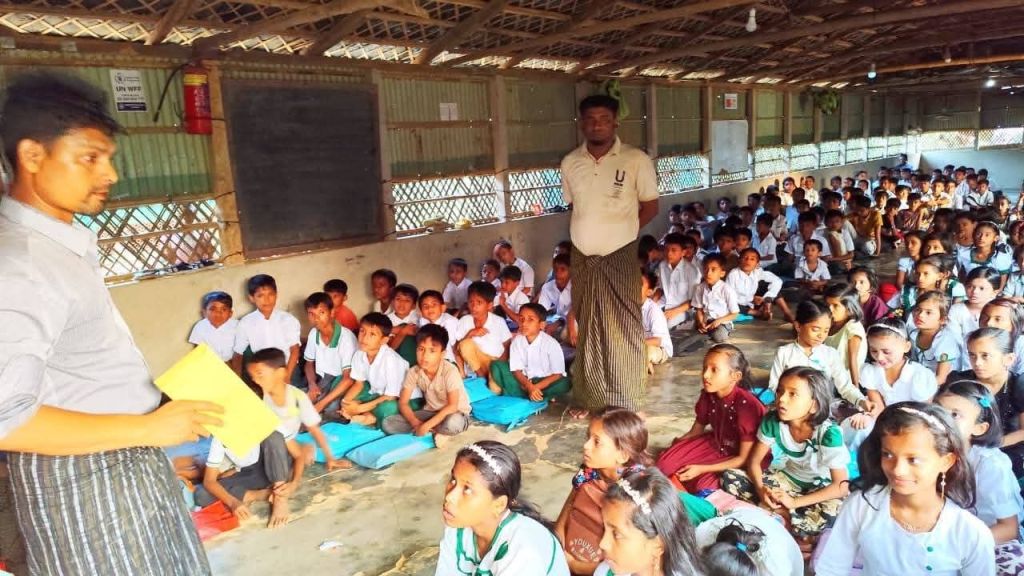
I began my education at Nang Chaung KG School and studied there until Grade 6. After being forced to flee Myanmar due to persecution, I continued my education in Bangladesh, completing my basic studies at Life Destination High School in Rohingya Refugee Camp 6.

Career and Achievements

Education became a light in the darkness of refugee life. I was honored to be selected among the top 10 in an essay and letter writing competition organized by the Rohingya Youth Initiative – RYI. Later, I achieved one of the top 2 positions in my Grade 12 exams.

Currently, I serve as a professional teacher under the Jagorani Chakra Foundation (JCF). Alongside my teaching career, I am committed to advocating for justice and writing about the struggles and hopes of the Rohingya people. My interest in writing and research continues to grow, fueled by my passion for truth and justice.

Struggles and Challenges

Being a Rohingya has meant facing constant challenges. I have endured discrimination, the loss of homeland, and limited opportunities for education and personal growth. The Myanmar government forced us from our land, stripping me of the rights and chances I deserved.

Yet, despite everything, I continue to dream. I aspire to become a professional writer and poet for my community—someone who can give voice to the voiceless and share our untold stories with the world.

Legacy and Impact

Though I now live in a refugee camp, I carry within me a heart full of dreams. My past is marked by persecution and loss, but I remain committed to building a better future through education, creativity, and hope.

One of my poems, titled “Dream as a Refugee”, expresses the journey of my soul and the resilience of my people. I am still writing, still dreaming—to become not just a teacher or a refugee, but a voice, a poet, and a writer for change.

@Nur Kader NC

A dreamer, a survivor, and an emerging voice of the Rohingya people. After completing a writing workshop organized by Life Destination High School , he began telling his own story as the author of his autobiography.

DREAM AS A REFUGEE

None choose to be in this life;
No dream alive to achieve
Dreaming as a refugee is not a choice.

To imagine the future is
disgusting;
          Dream is still a dream existing.
Dream as is not a choice.

Loading thousands of dream in mind;
       But a dream within refugee is a crime.
Dream as a refugee is not a choice.

Surviving in makeshift shelter;
      No dream to help a life arise.
A dream as a refuge is not a choice


Rarely hold up a dream to secure,
But for refugees, even hope feels unsure.
A dream as a refugee is not a choice.

autobiography #Writing #Rohingya #studentlife #Dreamer #highereducation

Alhamdulliah

The last day of Beginning Writer’s Workshop

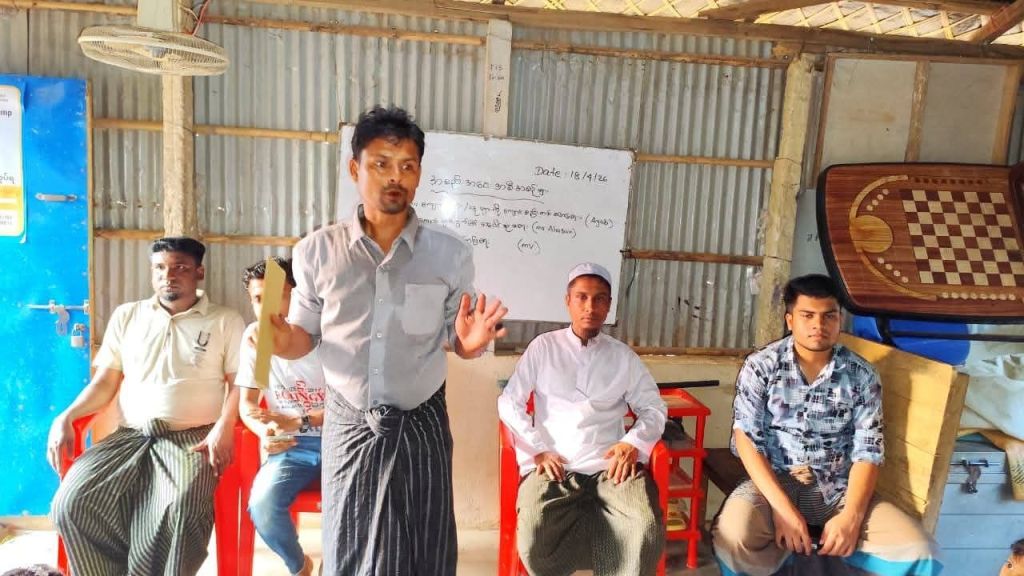
Day 8 marks the final day of our #Beginning Writer’s Workshop. Heartfelt thanks to our dedicated #trainers and passionate #participants. A special note of gratitude to Saya Anuwar Sadek for your selfless efforts and unwavering dedication in guiding our students toward a brighter future.


#WritersWorkshop #Gratitude #YouthEmpowerment #AnuwarSadek #RohingyaWriters #Day8Complete

Day-6

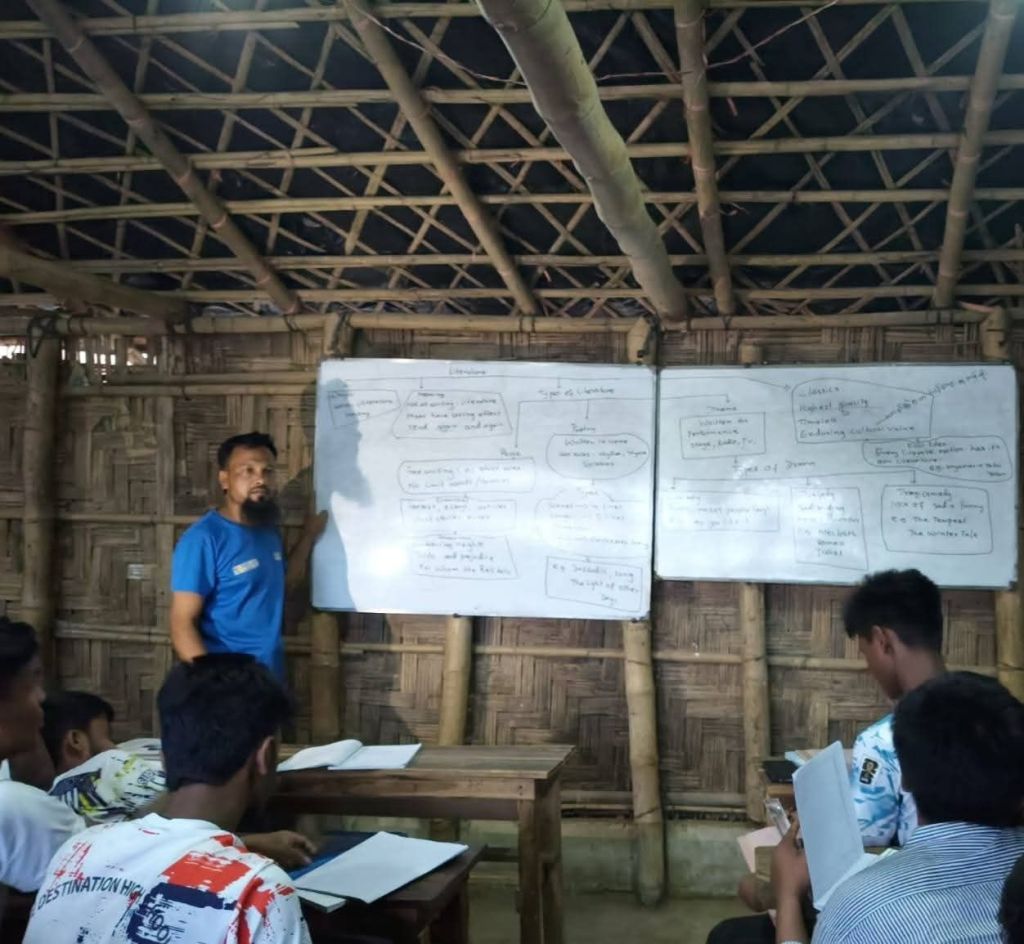
It was a remarkable moment as Life Destination High School offered a great opportunity for Rohingya youth to learn how to write both fiction and nonfiction. We extend our heartfelt thanks to our dedicated trainers and enthusiastic students for their commitment to skill development. A special thanks to Anuwar Sadek for creating a wonderful training module that made this program a success.

#Education #training #course #fiction #nonfiction #Rohingyayouth #Bangladesh #Refugeecamp #writing

Day-4

#begining Writer’s Workshop, organized by Life Destination High School and thank you to our dedicated #trainers and #participants for your regular #attendances and sincere #efforts.

#Writing #educationmatters #Rohingyalearners #students #academicyear20252026 #Creativewriting


📷 Saber Hossain

Alhamdulliah

Day-2

Alhamdulliah

Day-2,

#begining Writer’s Workshop, organized by Life Destination High School and thank you to our dedicated #trainers and #participants for your regular #attendances and sincere #efforts.

#Writing #educationmatters #Rohingyalearners #students #academicyear20252026 #Creativewriting

Assalamualikum Dear Learners 

📢 ANNOUNCEMENT


 Beginning Writer’s Workshop – Join Us! ✍️📚

🚨 Calling all young minds, storytellers, and dreamers!

We’re excited that Life Destination High School is going to launch the Beginning Writer’s Workshop, a creative space to help you explore the power of words, stories, and self-expression!

🗓️ Start Date: [04 July 2025]

🕒 Time: [09:00am to 12:00pm]

✍️ Days: [ Firday to Saturday in three weeks]

🌄 Total hours: [ 18 ]

📍 Location: [ Camp-6, Kutupang Refugee Camp]

📅 Duration: 6 sessions ( 3hours each)

Learn how to write: 

✔️ Stories & poems

✔️ Personal essays & biographies

✔️ Real-life and fiction writing

✔️ Letters, emails & more!

🧑‍🎓 Trainers

✍️ Anuwar Sadek

✍️ Nur Kabir

📌 Open to beginners of all ages! No experience needed — just your imagination and a pen.

🎓 Certificates will be awarded at the end of the course!

👉 Limited seats! Reserve your spot now.

📞 Contact: [ +880 1884-761425  ]

📩 [anuwarsadek493@gmail.com]

#WritingWorkshop #BeginnerWriters #Storytelling #LearnToWrite #WritersCommunity

The Endless Ordeal of the Rohingya: A Cry for Justice and Rising Voices on World Refugee Day

By Anuwar Sadek

Photo: Anuwar Sadek, This elderly person is a new arrival and becomes a refugee arrived at Bangladesh from the Arakan State, Myanmar and lost one of his five years old son under the drone attack of Arakan Arakan Army AA on August 2024

Persecution, killings, imprisonment, torture, forced labor, movement restrictions, and many other forms of oppression against the Rohingya minority by the brutal Burmese government are not new. These atrocities have been ongoing since the early years following Myanmar’s independence from British colonial rule. Most recently, a new armed group claiming authority—the so-called Arakan Army (AA)—with terroristic intentions of ethnically cleansing the remaining Rohingya Muslims from Arakan (Rakhine) State, has reportedly killed more than 5,000 civilians across Maungdaw, Buthidaung, Rathidaung, and other regions.

For a single Rohingya, trying to live a normal life has become like surviving in a battlefield that feels more like a graveyard. Can anyone truly understand what it means to live with the constant fear of death, without access to even the most basic necessities? It is not easy—perhaps impossible—for any human being to survive in such a condition.

Due to the unbearable persecution inflicted by the Burmese government, the Rohingya people have endured multiple waves of forced exodus—each one a desperate search for a place where they can live without the fear of being killed. These journeys have repeatedly ended in Cox’s Bazar, Bangladesh, where over a million Rohingya now take shelter and survive under more humane conditions. The warm hospitality extended by the people and government of Bangladesh will never be forgotten. It is an act of humanity that deserves eternal gratitude—and surely, divine reward.

According to the United Nations, more than 122.6 million people have been forcibly displaced worldwide. Among them are the Rohingya, driven from their ancestral homeland of Myanmar. Being a refugee does not strip a person of their humanity. Refugees still carry hope, emotions, anger, decisions, feelings, and dreams—just like anyone else. But all of these are suppressed, locked away under the label of “refugee,” often treated like prisoners in cages.

Have you ever truly noticed how emotionally shattered a refugee can be? Have you heard the silence of their unheard voices? They live like birds in a cage—unable to fly, speak, or be free.

Countless Rohingya activists, diaspora leaders, camp-based organizations, youth leaders, elders, and women have tirelessly tried to make their voices heard by international institutions such as the ICC, ICJ, and OIC. But the world often listens without responding. Is it not the responsibility of these international bodies to ensure equal justice for vulnerable communities like the Rohingya? If not—then what is the purpose of international justice at all?

Alhamdulillah!Massive 🌹🌹Congratulations🌹🌹 to Mohammed Ayub Khan for Securing Six Distinctions (6D) in Grade-12 at Life Destination High School for the Academic Year 2024–2025!

Alhamdulillah, a proud and inspiring moment has arrived in the academic journey of Mohammed Ayub Khan, a dedicated student of Life Destination High School in Camp-6, Kutupalong Refugee Camp, Bangladesh. Through unwavering commitment and relentless hard work, he has reached a remarkable milestone — achieving Distinctions in all six subjects in Grade-12 for the academic year 2024–2025.

As the academic year came to an end, Ayub Khan waited anxiously for his results. The examinations had been tough, but his focus and perseverance never wavered. When the results were finally announced, his efforts were rewarded — he was named the top student in his grade and recognized across the entire Refugee Camp in Bangladesh.

This outstanding accomplishment brought him not only immense pride but also deep personal satisfaction. It stands as a shining example that with hard work, perseverance, and faith, anything is possible. His academic success reflects countless hours of study, self-discipline, and the resilience to overcome every obstacle in his path.

Mohammed Ayub Khan is a new arrival from Kyet Yoe Pyin, a village in the northern part of Maungdaw, Arakan State, Myanmar. He completed his earlier grades in Myanmar before continuing his education in the refugee camp. He expresses his heartfelt gratitude to Life Destination High School for providing a supportive and nurturing learning environment that enables him to grow, learn, and thrive.

Looking ahead, Ayub Khan is filled with hope and ambition. He dreams of pursuing higher education, including university studies, to become a role model for his community. He believes that his success can be the first step toward building a brighter future — not just for himself, but for all Rohingya people.

He humbly calls upon the international community to provide greater access to higher education for Rohingya students so that they too can contribute meaningfully to society and realize their full potential.

The Endless Hope for Rohingya Community

Words by Anuwar Sadek and photos by Rj Sayed Nur

Rohingya refugees gathered in hope of repatriation during the visit of UN Secretary-General António Guterres and Dr. Muhammad Yunus to Cox’s Bazar, Bangladesh.

Photo: Rj Sayed Nur

The Rohingya, a Muslim minority group in the northwest of Myanmar, have long endured persecution and oppression. For decades, the Burmese government has subjected them to violence and denied them basic human rights, including access to education, healthcare, employment, and freedom of movement.

Historically, the Rohingya were recognized as one of Myanmar’s 136 ethnic groups, living peacefully alongside the Rakhine people in Arakan State. However, as a minority, the Rohingya faced growing hostility, particularly from the Rakhine community. False accusations and discriminatory attitudes led to their increasing marginalization. These claims were widely accepted by the Burmese government, which resulted in the systematic denial of the Rohingya’s rights and, eventually, the forced displacement of hundreds of thousands of people in 2017.

During a recent visit to Bangladesh, UN Secretary-General António Guterres announced that the United Nations would engage with the Arakan Army AA to negotiate the safe and dignified repatriation of the Rohingya refugees currently in Bangladesh.

However, many refugees have raised concerns about the role of the Arakan Army in the repatriation process.

” Once, the Rakhine people were not part of the Arakan Army but were supporters of the Burmese government. They used hatred, discrimination, and false accusations to strengthen the Burmese government’s power to deny us equal rights. They also created magazines against our people and distributed them to their generations to instill deeper hatred toward us. The Burmese government took this seriously, and as a result, the Rakhine people gained more favors.” Nurul Haque shared his point

Nurul Haque also added that the Burmese government’s trust in the Rakhine people crumbled under the Arakan Army’s dominance. This became the greatest lesson the Rakhine community taught the Burmese government.

Rohingya refugees seek justice from the world and call for a safe return to their homeland.

Photo: Rj Sayed Nur

Md Nur, another refugee, shared his view that the Rakhine community manipulated the Burmese government to further their own agenda.

“Once the Arakan Army was weak, they used the term “Rohingya,” but when they became strong enough to defend themselves, they started calling us “Bengali.” “

He said. “They are our primary enemy, and we cannot accept any repatriation process that puts us under their control and their main focus is to exclude us from our original homes.”

Mohammed Saber, a Rohingya student, emphasized the importance of international intervention for any successful repatriation.

“It will not be possible to repatriate Rohingya refugees from the Bangladesh refugee camps unless the United Nations intervenes and deploys forces to Arakan State. It is crucial for the international community to take concrete action to establish a safe zone in northern Arakan, Myanmar, rather than relying solely on negotiations with the Arakan Army.”

While there is hope for the repatriation of the Rohingya refugees, many recognize that this process cannot proceed without the proper protection and security guarantees. International action is necessary to ensure that the refugees can return to their homeland safely and with dignity, without being subject to further persecution.

#Arakanarmy #Repartriation #UNforces #homes #safereturn #Arakanstate #Myanmar

The Climate Crisis and Rohingya Refugee Ration Cuts: A Humanitarian Emergency

Words by Mohammed Anuwar and Photos by Anuwar Sadek

The Rohingya refugee community is facing a dire humanitarian crisis as food rations have been slashed from $12 to just $6 per person. This drastic cut is not merely a funding issue—it is a direct consequence of the escalating global climate crisis. Extreme weather events are disrupting aid supply chains, reducing global food production, and worsening the already fragile conditions in the refugee camps. Here’s how the climate crisis is impacting our community and why urgent action is needed:

1. Climate Disasters Disrupting Aid Delivery
Flooding and Landslides

Heavy monsoon rains frequently wash away roads, damage infrastructure, and make it nearly impossible for aid trucks to reach the camps.
Violent storms disrupt supply chains, delay food shipments, and leave the community even more vulnerable to hunger. Extreme heat and prolonged droughts are reducing global food production, increasing food prices, and making it harder for aid agencies to meet refugees’ needs

2. Global Food Shortages and Rising Costs

Climate change is devastating agriculture worldwide, causing crop failures and supply chain disruptions. Food prices are skyrocketing due to droughts, floods, and extreme weather, forcing humanitarian organizations to reduce aid budgets.
As a result, Rohingya refugees now receive just $6 in rations per person—barely enough to survive.

3. The Impact on Rohingya Refugees

Families are skipping meals or surviving on inadequate nutrition, leading to widespread malnutrition. Malnourished children, pregnant women, and the elderly are at high risk of illness, while weakened immune systems make diseases spread faster.

4. Broader Consequences of Ration Cuts

Desperate for survival, many are at risk of exploitation, child labor, and human trafficking. Scarce resources are fueling conflicts within the camps, further destabilizing an already fragile situation.

5. A Call for Immediate Action
The international community must recognize the climate crisis as a direct cause of worsening refugee conditions.
Immediate funding is needed to restore food rations and prevent further hunger-related deaths.
Long-term solutions must include climate resilience strategies, sustainable aid distribution, and stronger global commitments to refugee rights

Conclusion
The ration cut from $12 to $6 is not just a statistic—it’s a life-threatening reality. The climate crisis is no longer a distant threat; it is here, and it is pushing the Rohingya community to the brink of survival. We urge the world to act now before it is too late. Our lives depend on it.

” An insightful article by Mohammed Anuwar, a young Rohingya climate change activist working in the UNHCR environmental sector and also a grade-12 student of our Life Destination High School.”