Eight Years On: The Voices of  Rohingya for Justice and Dignity Still Remain Unheard By the World

Words by Anuwar Sadek

Photos by Ayub Khan Dkl

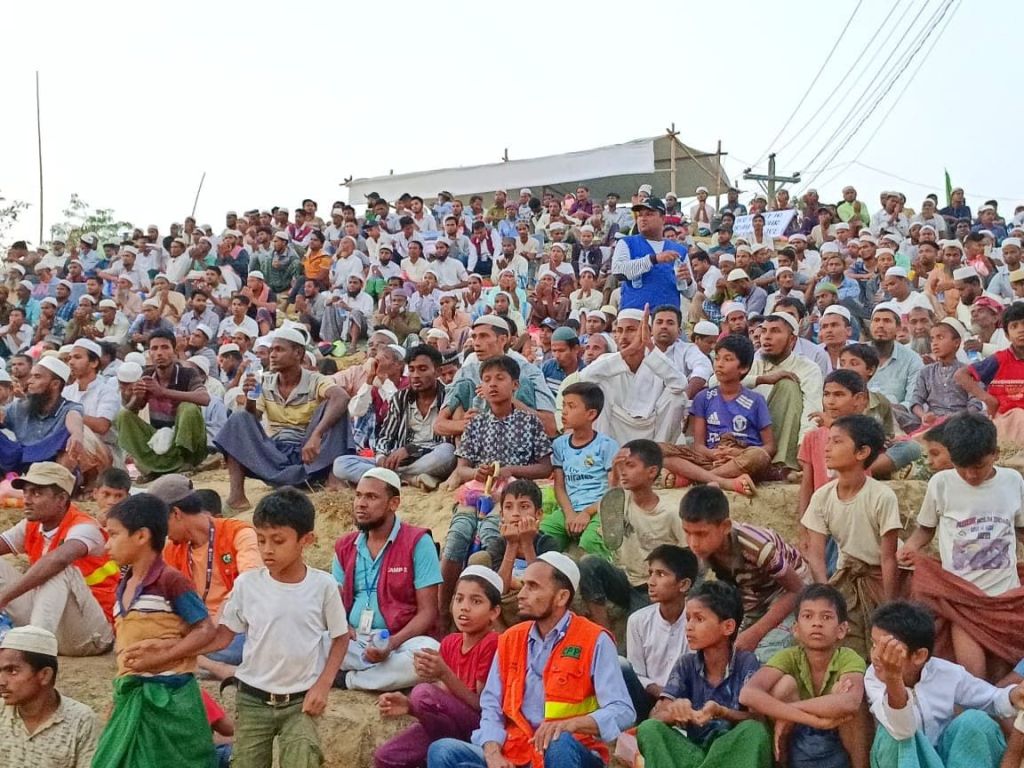
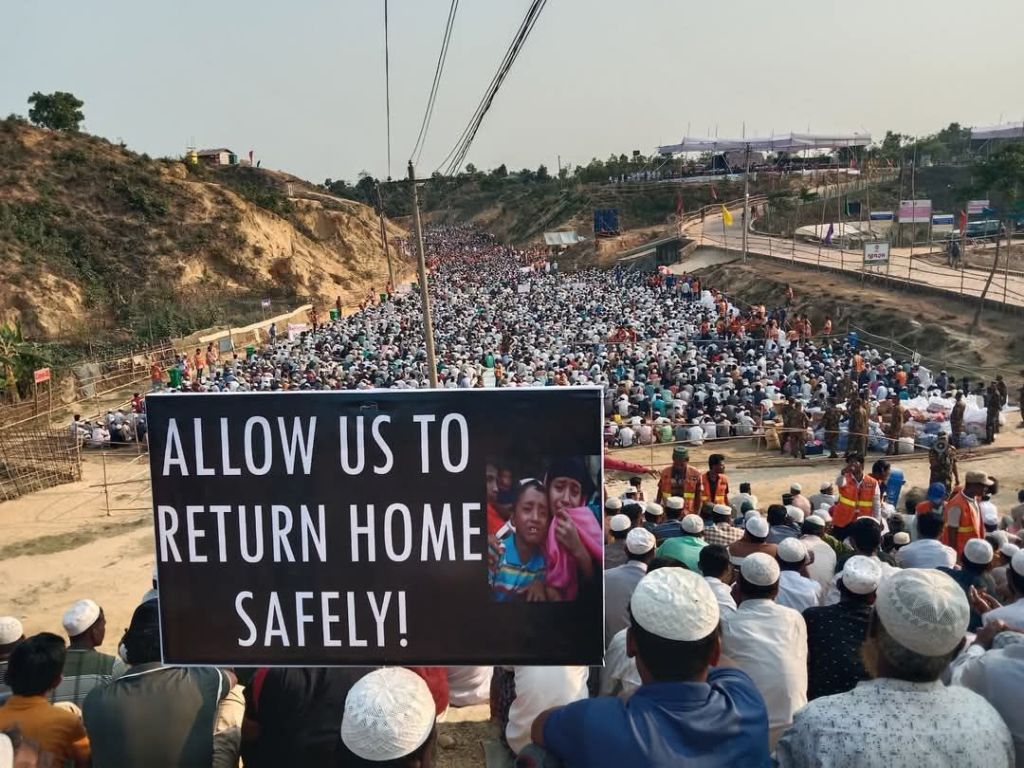
Photo captured by Ayub Khan Dkl during Rohingya young students are demanding the protection from the international bodies

The denial of the Myanmar government has left the Rohingya people deeply concerned as they mark the 8th anniversary of the 2017 atrocities, still holding on to the hope of a dignified return to their ancestral homeland.

Since the country’s independence in 1948, the Myanmar government has systematically excluded the Rohingya from their ancestral lands, stripping them of rights and recognition. Over decades of gradual persecution and orchestrated violence, more than one million innocent Rohingya civilians were forced to flee into neighboring Bangladesh. How can a person survive without land, peace, and dignity? For the Rohingya, 25 August 2017 stands as a dark milestone, the day everything they owned and cherished was destroyed.

Despite living in disorderly, overcrowded refugee camps made of mud and tarpaulin shelters in Cox’s Bazar, Bangladesh, the Rohingya community has not remained silent. They continue to raise their voices for justice and equal rights that were unjustly stolen by Myanmar Government.

“We will never stop raising our voices until our rights are restored,” said Sarwah Shah, 22, a Rohingya youth. “We will never let the Myanmar government or the Arakan Army take advantage of our people and our motherland, Arakan State.”

Eight years have passed, yet the international community has failed to bring justice. Mohammed Ayub, 32, a Rohingya activist, reflected:


“Behind every 25 August lies a drop of tears and heartbreak. It reminds us of our sisters being raped, our children thrown into fire, and our homes burnt by the Myanmar military.”
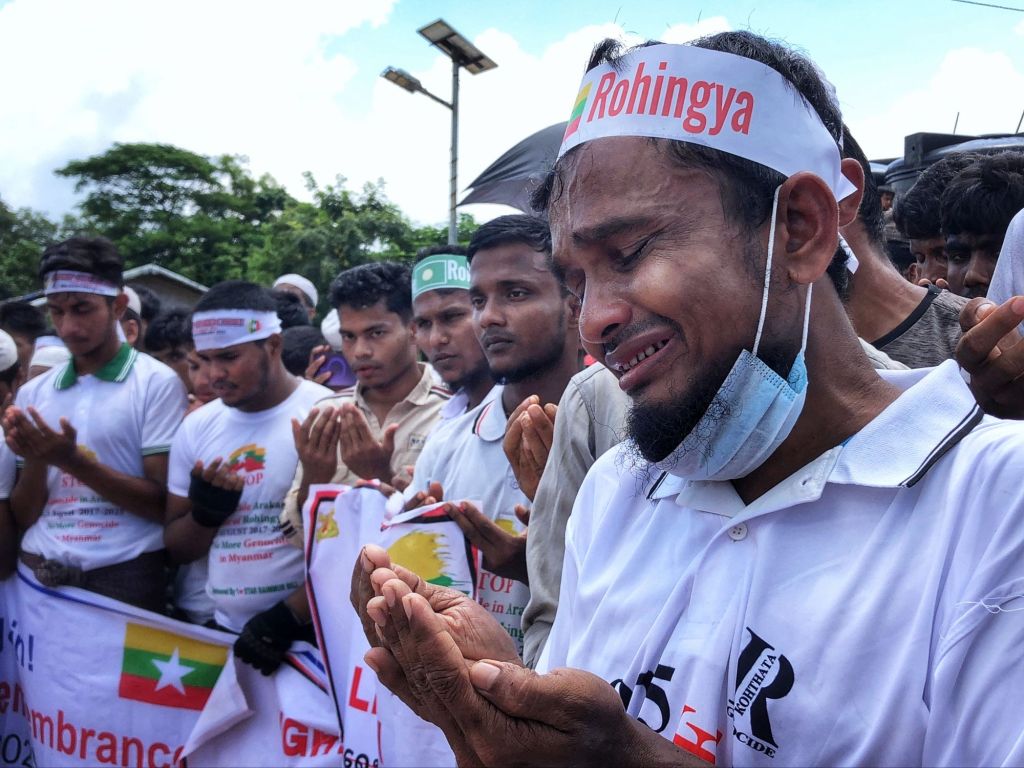
Photo captured by Ayub Khan Dkl, showing
Rohingya survivors in tears as they prayed on stage during the 8th Anniversary of Rohingya Genocide Rememberance Day


Ayub also added that to delay justice is not only to ignore genocide but also to silently support the perpetrators in their crimes.


At the same time, the Arakan Army (AA), a Rakhine rebel group has become another source of suffering for the Rohingya, falling like a sudden stone from the sky. While their stated aim is to challenge the Myanmar military, their violence has heavily targeted on innocent Rohingya civilians. Torture, rape, killings, looting, and land seizures have become widespread.


Anuwar Faisal, a private teacher who fled to Bangladesh in 2024, described that the year ” 2024 ” is the worst period in recent memory of Arakan State.


“The Arakan Army conscripted our youths to use them as human shields on the frontlines. They killed more than 5,000 civilians with drone attacks. It was unforgettable.”

For decades, Rohingya Muslims have been denied citizenship by the Myanmar government, effectively confering them stateless. The continued delay in addressing this crisis by the international community only strengthens the hands of the perpetrators and deepens the suffering of the victims.

The Rohingya community urges that silence is no longer an option. The international community must act decisively to end impunity, restore rights, and ensure a just and dignified return for one of the world’s most persecuted peoples like Rohingya.
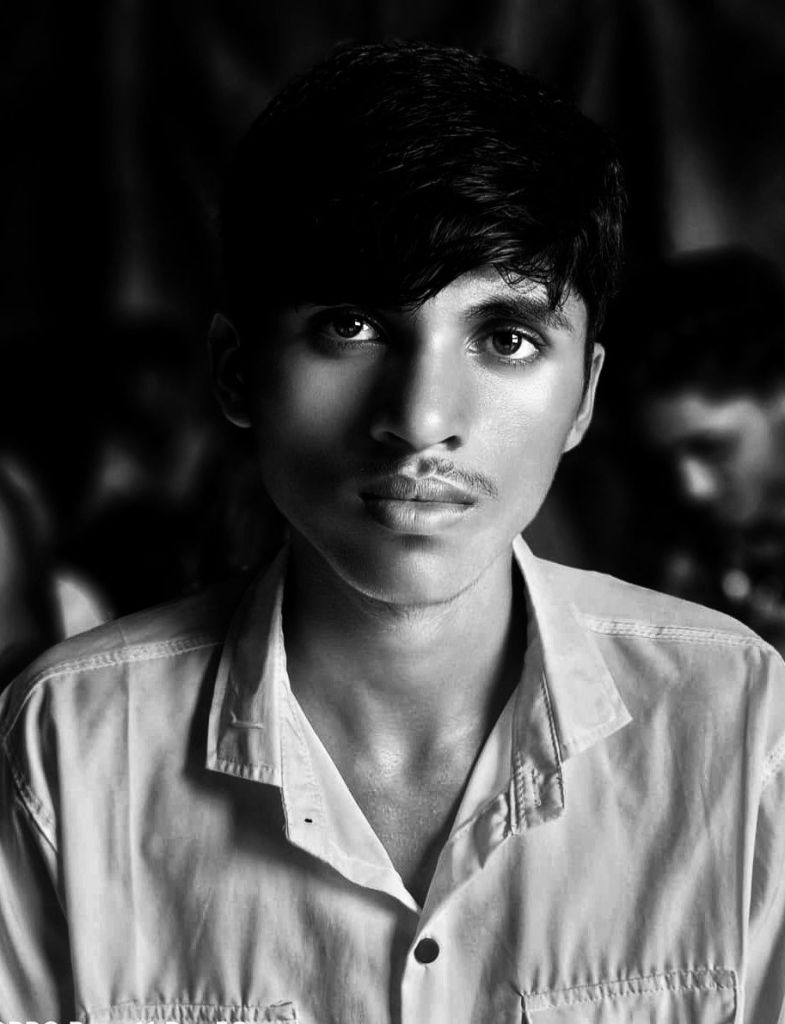
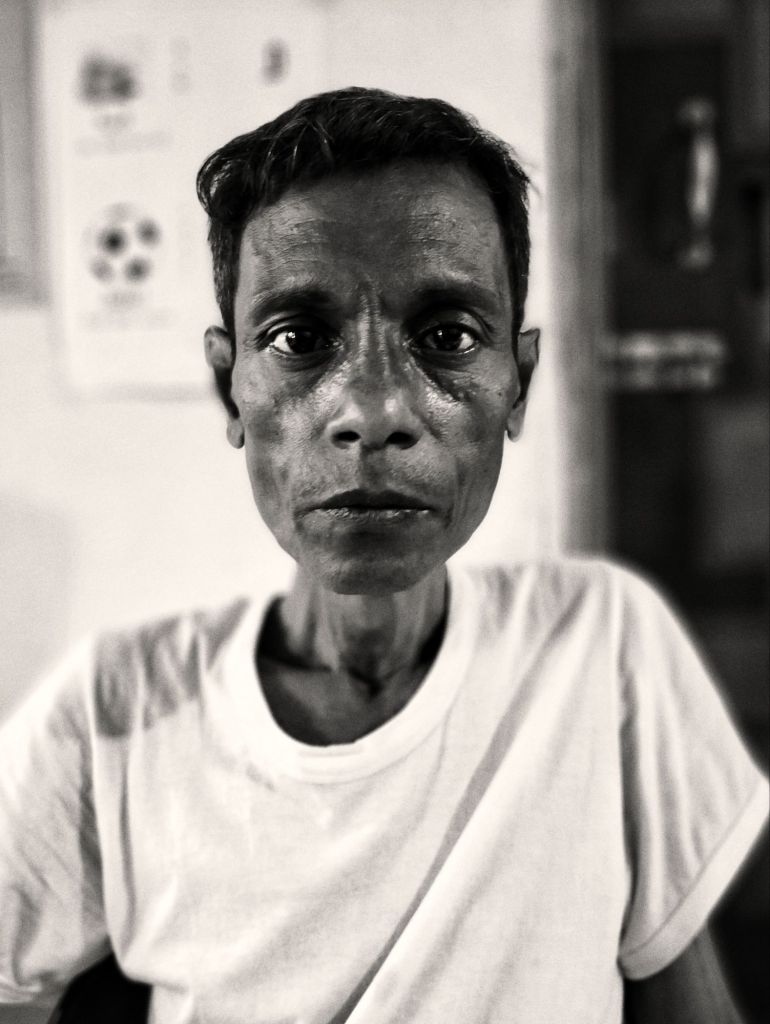
“How the Buzz of Mosquitoes Followed a Rohingya Boy Fleeing Burmese Militaries’ Gunshots “

Words by Anuwar Sadek and Sayedul Amin

Photo: Anuwar Sadek

My name is Sayedul Amin, son of Kamal Hossain and Noor Foraz. I am 17 years old and one of nine members in my family. I was a student in Kyet Yoe Pyin (ကြက်ရိုးပြင်), Northern Maungdaw Township, Arakan State, Myanmar. Life was simple and peaceful, closely tied to nature. I was in grade 2 when I was still in Myanmar. Though our life was small, our hopes were big.

But how could we ever imagine that we would be forced to search for safety from a land that had suddenly become a graveyard, destroyed by the brutal operations of the Burmese military?

On 11 October 2016, my life changed forever when the junta began its campaign of discrimination and violence. It all started on 9 October, when an armed operation began moving from Hawarbil village (ကျီးကန်ပြင်) toward our village, Kyet Yoe Pyin. On that day, some of my neighbors were killed by gunfire, young and old, without distinction. Others were taken by Burmese soldiers, and to this day, there is no news of them. Tears became our closest companion. Fear flowed like a stream. Our land became venomous, yet hope still lived in our hearts.

On 12 October 2016, we made the painful decision to leave our home. I felt like a motherless child. “Where will we go?” my father asked through tears. No one wanted to leave, but we had no choice. We left behind everything—our belongings, our memories with carrying only fear in our hearts and a faint hope for survival.

That night, we reached a house not far from our village. We spent the whole night hearing gunfire, like rain falling on our fears and the mosquitoes were only night guards. The next morning, the military began going door to door. We hid in silence. The soldiers shouted, “Where are you? Come fight us!” Our hearts felt like they were breaking into pieces, like a landslide falling into sand. We silently wept. Everyone prayed, “Oh Allah, Oh Allah.” After about an hour, the soldiers moved to another home. As soon as they left, we escaped.

Behind us, houses began to burn. Nearly 1,500 homes were destroyed in our village, including the market. We moved from village to village, desperately searching for safety. Gunfire echoed from the north. Everyone took shelter in the paddy fields and under the open sky. As we ran, the cries of the people and the sounds of bullets followed us.

A small stream with a strong current blocked our path. In the grief struck like an earthquake, I lost sight of my parents and other family members. I didn’t know how to swim. My heart broke again. Luckily, a villager heard my cries and helped me cross.

On 15 October 2016, I reached Kya Gon Ton village (ကျားခေါင်းတောင်ရွာ), where by some miracle, I found my family again. But the villagers there were also filled with fear and sorrow. My father, crying as he hugged me, said, This is the end of my life.” One of my uncles suggested us to ahead to the mountains for safety. But soon, another idea gave us more hope, “It’s better to move to Bangladesh.” He added.

So we began our journey. Along the way, we were hungry, exhausted, and afraid. When we finally reached the border, gunfire broke out again. We were forced to stay one night near the border. That night, grass became our bed, leaves became our food, and melted dew became our water. Mosquitoes were our only companions and their relentless buzzing kept us awake. Many people died that night. I thought: “This stream is their grave, and the fish are now their friends.”

At dawn, we crossed the border into Bangladesh, paying 25,000 MMK per person with the money my parents had saved back home. On 22 October 2016, we reached our final destination: the Rohingya refugee camp in Bangladesh.

Now, I live as a refugee without home, land, or happiness. I am like a fish without water. A baby without a mother. A bird without a nest and the shelter I sleep in at night is full of mosquitoes and doesn’t allow me a peaceful sleep. I don’t have access to higher education. Sadness is my closest friend in the camp. Yet despite everything, I continue my studies. I currently study in grade 9 at Life Destination High School in Camp 6. I am trying to build a better future, InshAllah (God willing).

My final request to the world is this: Please open your eyes to the Rohingya crisis. Bring us justice. And ensure that Rohingya children like me—have the chance to access higher education.

Note:

Sayedul Amin, a grade 9 students, begins sharing his life struggle through his pen after receiving the recent Beginning Writers’ Workshop organized by Life Destination High School.

The Endless Ordeal of the Rohingya: A Cry for Justice and Rising Voices on World Refugee Day

By Anuwar Sadek

Photo: Anuwar Sadek, This elderly person is a new arrival and becomes a refugee arrived at Bangladesh from the Arakan State, Myanmar and lost one of his five years old son under the drone attack of Arakan Arakan Army AA on August 2024

Persecution, killings, imprisonment, torture, forced labor, movement restrictions, and many other forms of oppression against the Rohingya minority by the brutal Burmese government are not new. These atrocities have been ongoing since the early years following Myanmar’s independence from British colonial rule. Most recently, a new armed group claiming authority—the so-called Arakan Army (AA)—with terroristic intentions of ethnically cleansing the remaining Rohingya Muslims from Arakan (Rakhine) State, has reportedly killed more than 5,000 civilians across Maungdaw, Buthidaung, Rathidaung, and other regions.

For a single Rohingya, trying to live a normal life has become like surviving in a battlefield that feels more like a graveyard. Can anyone truly understand what it means to live with the constant fear of death, without access to even the most basic necessities? It is not easy—perhaps impossible—for any human being to survive in such a condition.

Due to the unbearable persecution inflicted by the Burmese government, the Rohingya people have endured multiple waves of forced exodus—each one a desperate search for a place where they can live without the fear of being killed. These journeys have repeatedly ended in Cox’s Bazar, Bangladesh, where over a million Rohingya now take shelter and survive under more humane conditions. The warm hospitality extended by the people and government of Bangladesh will never be forgotten. It is an act of humanity that deserves eternal gratitude—and surely, divine reward.

According to the United Nations, more than 122.6 million people have been forcibly displaced worldwide. Among them are the Rohingya, driven from their ancestral homeland of Myanmar. Being a refugee does not strip a person of their humanity. Refugees still carry hope, emotions, anger, decisions, feelings, and dreams—just like anyone else. But all of these are suppressed, locked away under the label of “refugee,” often treated like prisoners in cages.

Have you ever truly noticed how emotionally shattered a refugee can be? Have you heard the silence of their unheard voices? They live like birds in a cage—unable to fly, speak, or be free.

Countless Rohingya activists, diaspora leaders, camp-based organizations, youth leaders, elders, and women have tirelessly tried to make their voices heard by international institutions such as the ICC, ICJ, and OIC. But the world often listens without responding. Is it not the responsibility of these international bodies to ensure equal justice for vulnerable communities like the Rohingya? If not—then what is the purpose of international justice at all?

The Endless Hope for Rohingya Community

Words by Anuwar Sadek and photos by Rj Sayed Nur

Rohingya refugees gathered in hope of repatriation during the visit of UN Secretary-General António Guterres and Dr. Muhammad Yunus to Cox’s Bazar, Bangladesh.

Photo: Rj Sayed Nur

The Rohingya, a Muslim minority group in the northwest of Myanmar, have long endured persecution and oppression. For decades, the Burmese government has subjected them to violence and denied them basic human rights, including access to education, healthcare, employment, and freedom of movement.

Historically, the Rohingya were recognized as one of Myanmar’s 136 ethnic groups, living peacefully alongside the Rakhine people in Arakan State. However, as a minority, the Rohingya faced growing hostility, particularly from the Rakhine community. False accusations and discriminatory attitudes led to their increasing marginalization. These claims were widely accepted by the Burmese government, which resulted in the systematic denial of the Rohingya’s rights and, eventually, the forced displacement of hundreds of thousands of people in 2017.

During a recent visit to Bangladesh, UN Secretary-General António Guterres announced that the United Nations would engage with the Arakan Army AA to negotiate the safe and dignified repatriation of the Rohingya refugees currently in Bangladesh.

However, many refugees have raised concerns about the role of the Arakan Army in the repatriation process.

” Once, the Rakhine people were not part of the Arakan Army but were supporters of the Burmese government. They used hatred, discrimination, and false accusations to strengthen the Burmese government’s power to deny us equal rights. They also created magazines against our people and distributed them to their generations to instill deeper hatred toward us. The Burmese government took this seriously, and as a result, the Rakhine people gained more favors.” Nurul Haque shared his point

Nurul Haque also added that the Burmese government’s trust in the Rakhine people crumbled under the Arakan Army’s dominance. This became the greatest lesson the Rakhine community taught the Burmese government.

Rohingya refugees seek justice from the world and call for a safe return to their homeland.

Photo: Rj Sayed Nur

Md Nur, another refugee, shared his view that the Rakhine community manipulated the Burmese government to further their own agenda.

“Once the Arakan Army was weak, they used the term “Rohingya,” but when they became strong enough to defend themselves, they started calling us “Bengali.” “

He said. “They are our primary enemy, and we cannot accept any repatriation process that puts us under their control and their main focus is to exclude us from our original homes.”

Mohammed Saber, a Rohingya student, emphasized the importance of international intervention for any successful repatriation.

“It will not be possible to repatriate Rohingya refugees from the Bangladesh refugee camps unless the United Nations intervenes and deploys forces to Arakan State. It is crucial for the international community to take concrete action to establish a safe zone in northern Arakan, Myanmar, rather than relying solely on negotiations with the Arakan Army.”

While there is hope for the repatriation of the Rohingya refugees, many recognize that this process cannot proceed without the proper protection and security guarantees. International action is necessary to ensure that the refugees can return to their homeland safely and with dignity, without being subject to further persecution.

#Arakanarmy #Repartriation #UNforces #homes #safereturn #Arakanstate #Myanmar