
Words by Anuwar Sadek and Abul Kayas
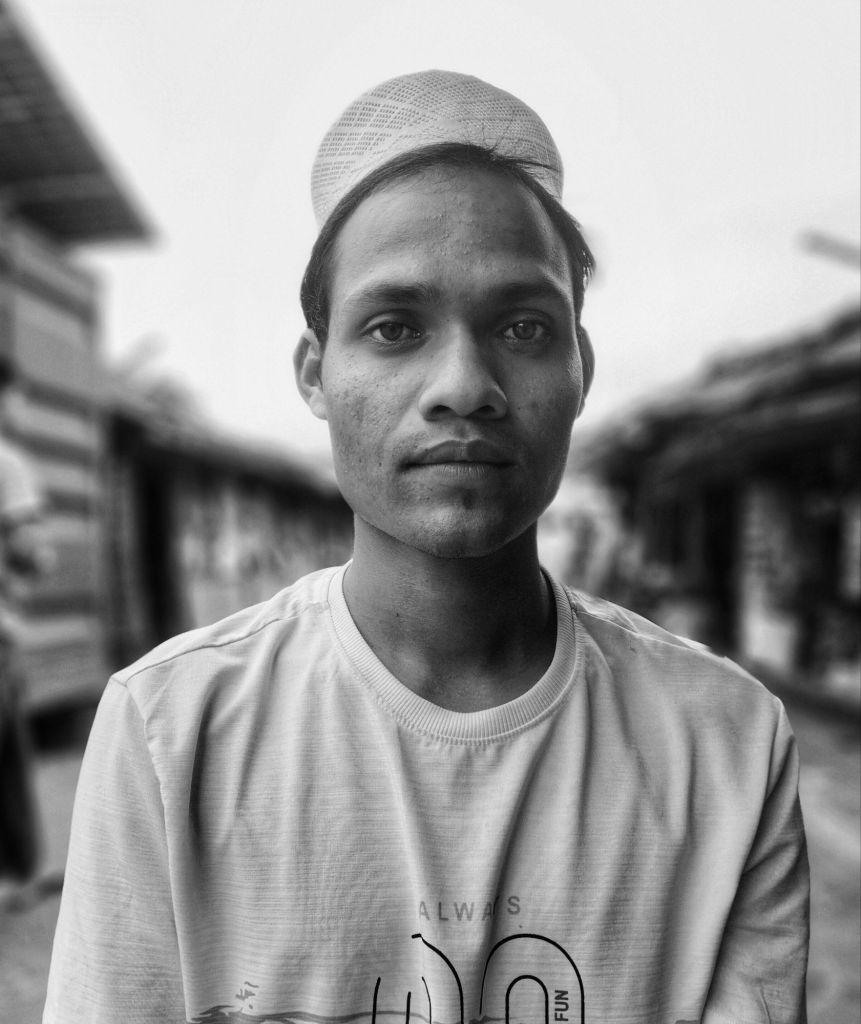
My name is Abul Kayes, and I was born on July 2, 2002, in a village called Yea Mea Toung, nestled in the green hills of Northern Maungdaw, in Arakan State, Myanmar. My family is big with my parents, four brothers, eight sisters, and me. We lived a life of simplicity and closeness, where love was stronger than hardship. My father, Nur Korim, now 73, is a man of deep thought and quiet strength. My mother, Sara Khatun, now 48, is the heart of our home, resilient, selfless, and full of courage.
Our village was more than a place. It was a world. I remember waking up to the sounds of birds and the smell of fresh rain within the romantic scene as I felt like a prince in a kingdom made of bamboo, sunlight, and family.
But on 25 August 2017, when I was just 15, everything changed. The sound of gunfire from the Burmese military thundered over the skies like crashing icebergs, shattering the calm and scattering our world into trauma. I remember the fear before I understood the reason. Rumors of violence spread like wildfire: soldiers were coming. Villages were burning. People were disappearing. And then, it came to us. That night, none of us could sleep. All of my parents’ remaining belongings including jewelry were buried under the ground for safety. My mother held onto 500,000 MMK, but it didn’t last. Some of it was spent during our escape, and the rest was given to the poor as an act of generosity even in hardship. My father quickly reached out to his brother, Habib Ullah, who supported us by sending 100,000 MMK after selling fish from my father’s lagoon.
One night, under a moonless sky, we packed whatever we could carry that were some rice, clothes, and food. Before leaving, we fed our cows and pets, hoping they’d survive without us. But they didn’t touch the food. They seemed to know. We cried as we walked away from everything we had ever known.
On 27 Aug 2017, we made our way to Kyet Yoe Pyin ( ကြက်ရိုးပြင် ) where one of my sisters lived. Her family joined our escape. Along the way, we lost Jesmin, my sister, in the chaos. She had run ahead. It took hours to find her in a nearby village. By then, our home had burned to ash.
We moved another village called Kiyan Bong where we took shelter but sometimes we needed to sleep beside the village, in the paddy fields and hidden inside the bushes because the fear of Militaries’ gunshots didn’t allow to stay at proper place or sleep. My mother had cooked Qurbani meat for Eid just the day before we fled. “It is our last proper meal as a family.” My mother said with tear.
We again reached Shil Khali village. I remember carrying 2–3 kilograms of rice and the last 2,000 kyat we had. I bought onions and chilies from a nearby shop. Jesmin made a thin soup that warmed our empty stomachs and tired souls.
On 3 Sep 2017, we crossed the Naf River into Bangladesh, but a new challenge awaited us. The boats were too small to carry our entire family together, so I and one of my brothers boarded one boat, while the rest of our family, including my parents, were placed on another.
During the crossing, the crew on our boat took everything we had important documents, supplies, and personal belongings. It was a cruel moment when we were already at our most vulnerable. Thankfully, the rest of the family had managed to carry 100,000 MMK which my Uncle sent to my parents and paid the fare for their boat.
We arrived on the other side with exhausted, broken, and afraid hearts. But then something unexpected happened. The Bangladeshi people welcomed us with kindness. They gave us water, food, and shelter. For the first time in weeks, we felt the warmth of human compassion again.
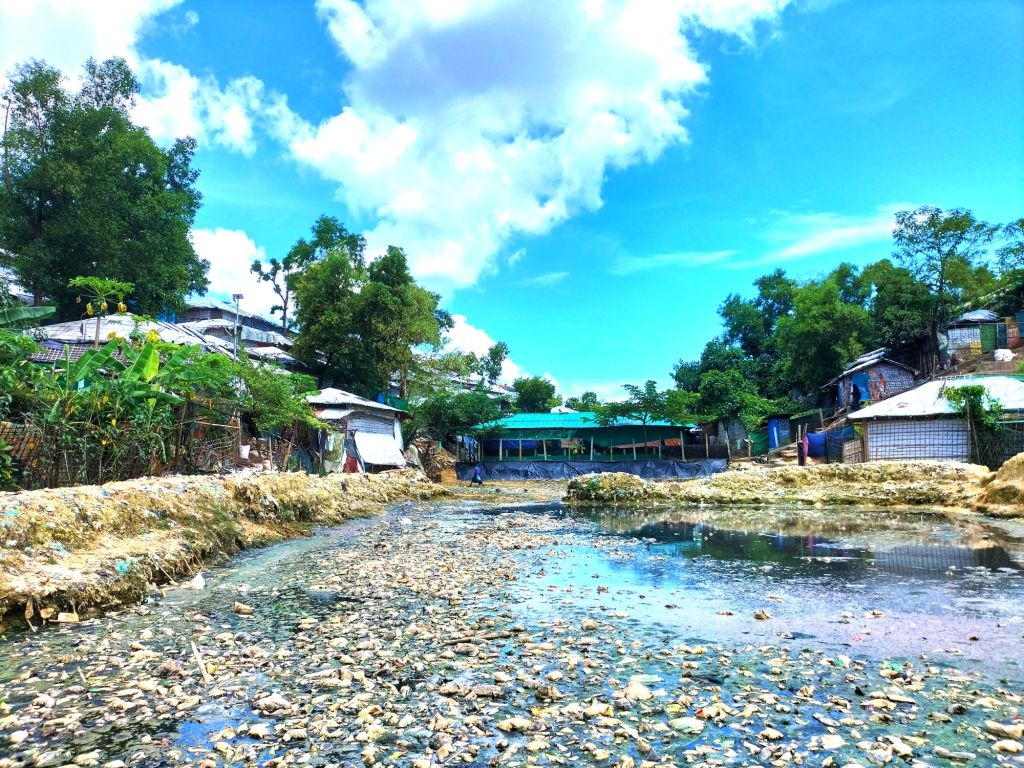
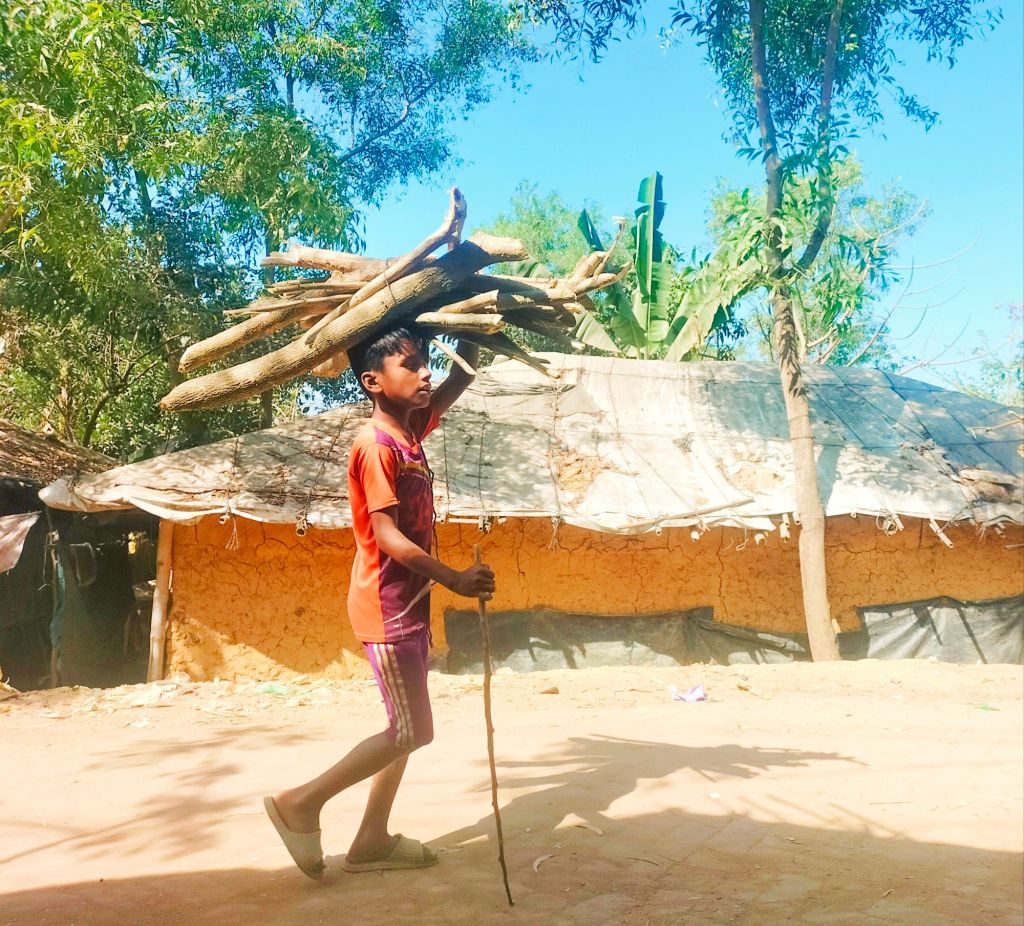
Jesmin got lost once more in Hansur Para, a village in Bangladesh, waiting on the roadside. When we finally found her, we smiled. It was the first smile I’d seen on my parents’ faces since we left Myanmar. We stayed there for three days, then moved to Kutupalong Refugee Camp in Cox’s Bazar, now the largest refugee settlement in the world. My eldest sister’s husband paid the 2,500Tk for our transport. It wasn’t easy, but we were safe.
My parents, even in their grief, encouraged me to keep studying. I enrolled in informal classes and managed to complete Class 10 while living in the camp. It was not just about education and it was survival. Learning became my rebellion.
My mother, with almost nothing, found ways to support me. She sold lentils, rice, and potatoes, earning barely 500 taka a month, just enough for pens and notebooks. Her hands were worn, but her faith was unshaken. ” You don’t need to be afraid of your study is being lost till I am alive.” She encouraged me
I also studied Arabic and Urdu on my own. I wanted to speak with dignity, to write with power. Every new word I learned felt like reclaiming something the world tried to take from us.
When I was 16, I met a man named Soyed Korim. He told me to write a CV, a simple piece of paper that would change my life. I applied for a job, and by the mercy of Allah, I was hired as a Case Management Volunteer with CODEC on November 6, 2019.
It was the first time I felt I had a role in the world again. Since then, I’ve worked to help other refugees, children like me, families like mine, who lost everything but hope. Life is still hard. Our salaries are small. We fall sick often. But we are human, and we still dream. We still believe
This story is not just mine. It is the story of the Rohingya people, a story of sorrow, strength, and survival. We were born in a storm, but we are not broken.
“Hope grows in the soil of pain. And education is the light that breaks through the darkness.”
My parents once dreamed I would become a surgeon. Today, I dream of studying at Stanford University. I don’t know what tomorrow holds. But I know that I will keep learning. I will keep helping. I will keep dreaming. of Because we may be refugees in the eyes of the world. But in the eyes of Allah, we are not forgotten.
Note:
Abul Kayas recieved the recent writing workshop and begins writing on real stories including his own one.
We are proud of seeing our Beginning Writer’s Workshop is playing an essential part of growing too many talents.
Life Destination High School

 Life Destination School