The Challenges Faced By Rohingya Community Behind the Check Point in Arakan State

By Auwar Sadek

The earth itself claims that It is impressively decorated with its natural scenery, the humanity in human beings and beautiful countries. A country called Myanmar is a part of geographical Eastern land on Map, including 136 ethnicities. One them is Rohingya minority living along the Arakan State, western side of Myanmar, combining with Rakhine people. 

Maungdaw, Buthidong and Rathidong are the towns of Arakan with mostly Rohingya Muslims, restricted heavily by the Government of Myanmar to prevent Rohingya from the freedom with the installation of so many check points among their villages which they used to check the innocences and made them push their vehicles after climbing down. Is there any country in the world whose government forcing the public to push thier vehicles like bikes and cycles while they cross the check points in the main roads?

In Myanmar, the BGP and police forces forced Rohingya people to get off their bicycles and motorbikes while crossing checkpoints. However, Rakhine people using the same route and passing through the same checkpoints were not subjected to this treatment, they were allowed to continue without being stopped or forced to dismount. This clearly reflects an intentional and discriminatory policy by the Myanmar authorities, targeting Rohingya Muslims and subjecting them to humiliation and unequal treatment.

No one was exempt including students, businessmen and ordinary civilians. “They also confiscated money and other valuables from businessmen, shopkeepers and fish sellers.” Nurul Amin said, “If anyone refused to meet their demands, he or she was punished and all their belongings were seized.”

Sometimes, innocent people were falsely accused and called into their rooms for interrogation and intimidation. Women were also targeted and subjected to secret abuse and rape in these rooms. “Rohingya students were not spared from their brutal treatment; they too were forced to get off their bicycles and motorbikes while crossing the checkpoints.” Nurul Amin added.

” For example, I was a student when I lived in Myanmar. My village was six miles away from my school, and I had to cross the checkpoints to get there. Shockingly, within that six-mile distance, there were six checkpoints.” Mohammed Jubair explained, ” I had to pass through each one just to attend school. I was also constantly afraid, as the Myanmar BGP could falsely accuse me of any issue, even if I had nothing to do with it.”

Every checkpoint was a struggle for every Rohingya civilian, was forced to get off thier bicycle and push it while crossing each one.

At every checkpoint, every Rohingya was required to show a permission slip issued by the village administrator. If they were unable to show it, they were either forcibly punished or sent back to their village.

Rohingya Muslims have endured these forms of hardship and discrimination in their own land since the day they were born. Because of limited access to social media and the internet, these struggle voices went unnoticed by the outside world. The Myanmar government systematically enforced these measures as part of a silent campaign to erase the Rohingya from their ancestral homeland.
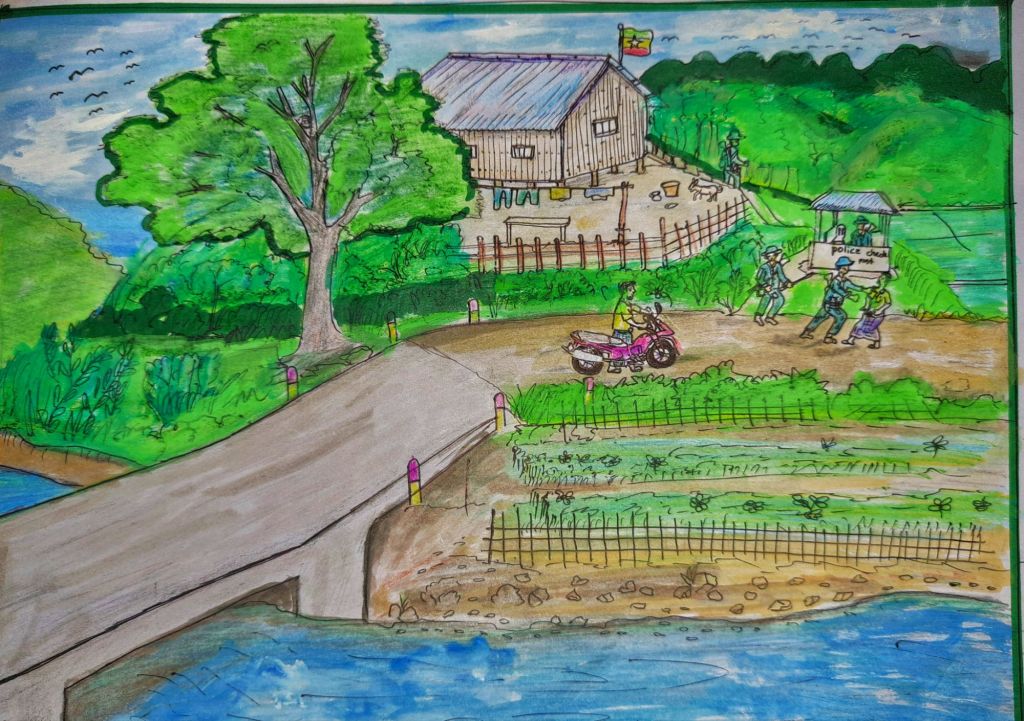
Art by Mohammed Osman, a student of Rohingya Ideal Private High School

A Peaceful Demonstration Held by Rohingya Refugees During the Visit of the U.S. Special Envoy

31 July 2026Cox’s Bazar, Bangladesh

Rohingya Refugee Camp

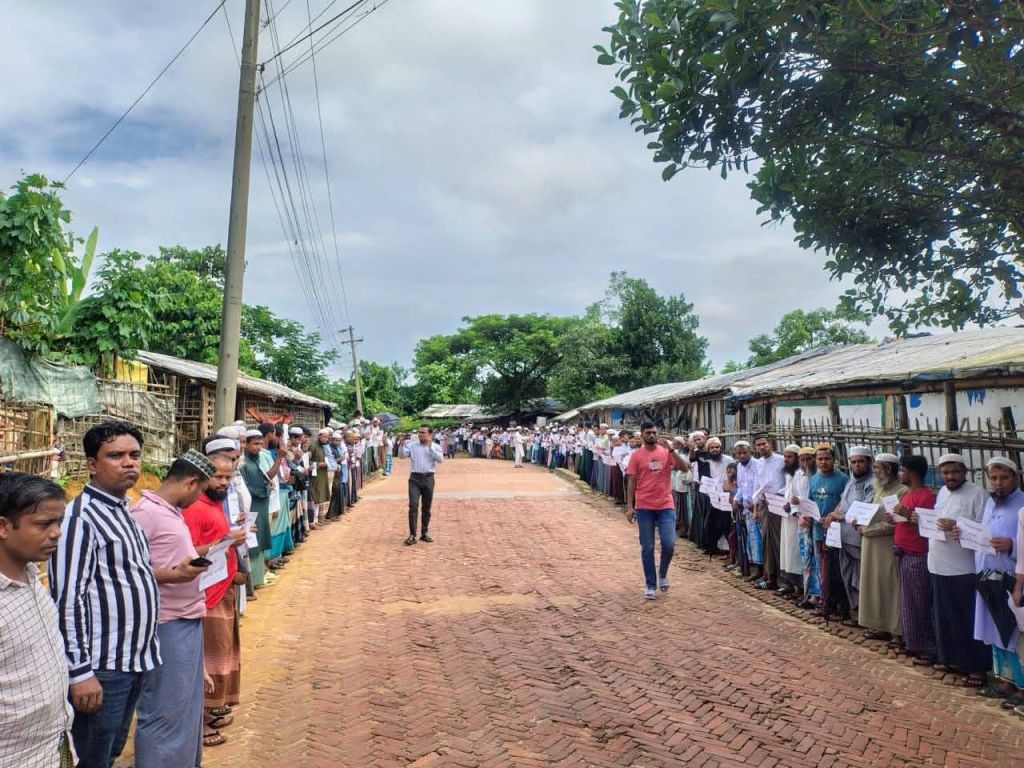
During the visit of the U.S. Special Envoy for South and Central Asia, Rohingya refugees, led by the United Council of Rohingya (UCR), held a peaceful demonstration to raise their voices for the safe, voluntary, and dignified repatriation of Rohingya refugees to Arakan State, Myanmar. They called for equal rights, citizenship, dignity, and security in their homeland.

The demonstrators also urged the international community to continue providing humanitarian assistance to Rohingya refugees and to take stronger international action to ensure accountability for the genocide and other atrocities committed against the Rohingya by the Myanmar military.

Image: United Nation of Rohingya-UCR

The Shadow, the Peaceful Moment


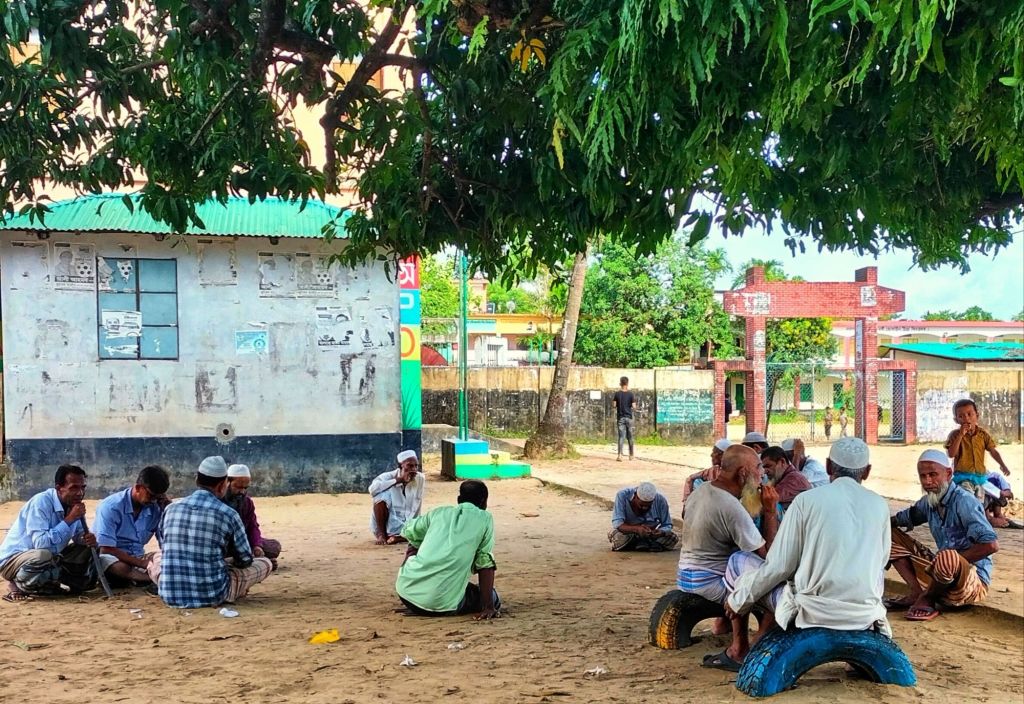
Once, Arakan was blessed with abundant natural beauty, where people cultivated and traded a variety of fruits. Beneath the shade of towering trees, they would gather to rest, share stories, exchange gossip, and listen to the latest news from their community.

At times, the elders recited traditional poems, and villagers gathered around to listen, preserving their rich cultural heritage through oral storytelling and verse.

In the Rohingya refugee camps in Bangladesh, people are unable to experience that same sense of peace because of the overcrowded living conditions and the limited presence of trees and natural spaces.

The tranquil environment that once surrounded their daily lives in Arakan has been replaced by densely packed shelters and a constant struggle for space.

Photo: Captured by Anuwar Sadek during elderly persons gathered to take rest under the shadow of a big tree in Teknaf, Bangladesh

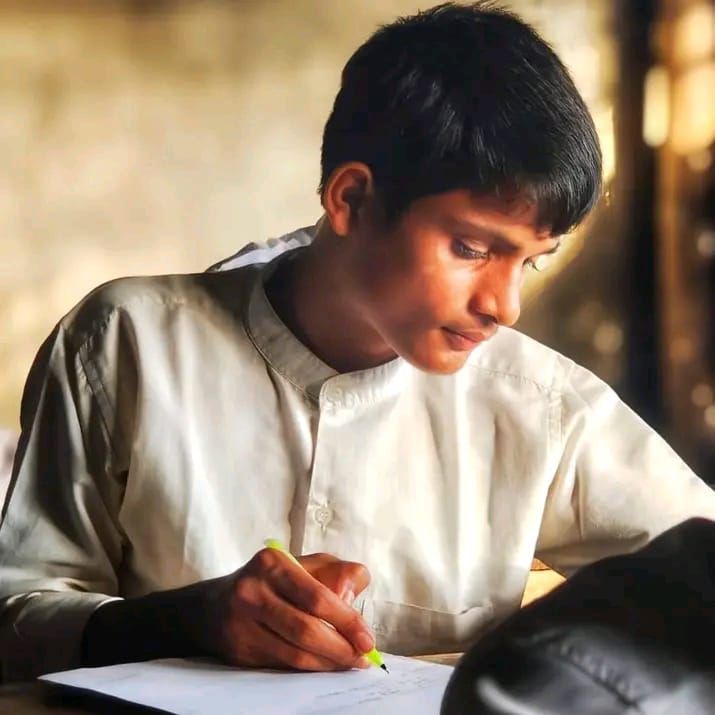
Autobiography of Mohammed Faisal


My name is Mohammed Faisal. I am a Rohingya student with a strong passion for education and personal development. I was born and raised in Rimmoguna, Rakhine (Arakan) State, Myanmar, where I spent my early childhood with my family and friends.

I come from a Rohingya refugee family. My father is Mohammed Jolil  and my mother is Daw Jomila. My family has always valued education, honesty, and respect. Despite facing many hardships, my parents have consistently encouraged me to study hard, develop good character, and work toward a better future.

My childhood in Arakan was simple and peaceful in many ways. I enjoyed attending school, learning new things, and spending time with my friends. However, as Rohingya, we experienced discrimination and restrictions that affected many aspects of our lives. Access to quality education, healthcare, and economic opportunities was limited. These challenges taught me resilience and strengthened my determination to succeed.

The events of 2017 changed my life forever. Due to violence and insecurity, my family and I were forced to leave our homeland. We traveled for many days with very little food and water, facing fear and uncertainty at every step. Crossing the Naf River was one of the most difficult parts of our journey. We traveled in overcrowded boats, and many families were separated during the displacement. It was a painful experience that remains deeply embedded in my memory.

Today, I live in Kutupalong Refugee Camp, Camp-6, Block D-7, Cox’s Bazar, Bangladesh, one of the largest refugee settlements in the world. Although life in the camp presents many challenges, including limited access to higher education, freedom of movement, and employment opportunities, I remain committed to learning and self-improvement. I believe that education is the key to creating positive change for individuals and communities.

I joined Life Destination High School (LDHS) in 2023 and have continued my educational journey with dedication and enthusiasm. Throughout my academic life, I have worked hard to achieve good results. Some of my notable academic achievements include:

1st Position in Grade 1

3rd Position in Grade 2

3rd Position in Grade 7


These accomplishments motivate me to continue striving for excellence in my studies.

Beyond academics, I am committed to contributing positively to my community. I enjoy learning new skills, helping others, and participating in educational activities. I believe that knowledge should be used to serve society and uplift those in need.

My dream is to pursue higher education and build a successful career that allows me to make a meaningful impact. I hope to support the Rohingya community, advocate for education, and assist people facing hardship. I also aspire to study abroad if given the opportunity. Through dedication, perseverance, and faith, I aim to become an educated, responsible, and compassionate individual who contributes to a better future for all.

“Challenges may shape my journey, but they will never define my limits. Education, determination, and hope continue to guide me toward my goals.” Mohammed Faisal

Photo: Sayed Nur

Note: This biography is collectively written by Mohammed Kaiser, one of a grade-8 students ( Life Destination. High School)

The Silent Memory beyond the Slingshot of Abu Kalam

By Anuwar Sadek

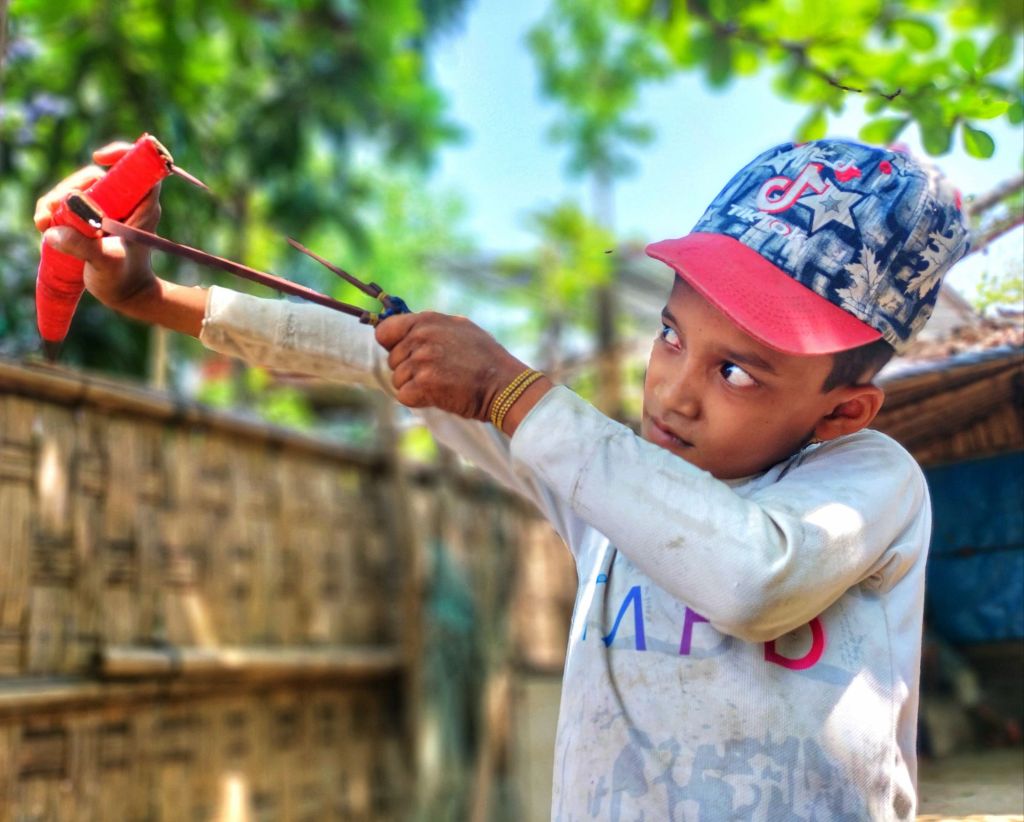
Photo: captured during aiming the bird


For many children in the Rohingya community, aiming at birds is both a game and a quiet passion. Arakan was once full of blessings and its skies alive with countless birds whose sweet songs filled the air and brought joy to the land.

Abu Kalam, a twelve-year-old boy, is the son of Abu Siddek and a student of Life Destination High School, living in Kutupalong Refugee Camp in Bangladesh. Even in a place where animals and birds are now rare, Kalam finds happiness holding a simple slingshot in his hand, pretending to shoot at birds as children once did back home.

Seeing the slingshot in Kalam’s hands pulls me into a deep flashback of Arakan. I remember our student days clearly. We used to gather together, imitating hunters, and travel toward the mountains. Each of us carried a slingshot, our hearts filled with excitement as we aimed at birds under the open sky.

Those were magnificent days. Rohingya youths would go on picnics, sharing food, laughter, and stories after hunting birds. The simple slingshot brought us joy, peace, and unity, strengthening our bonds with one another and with nature.

Though Abu Kalam is still young, he carries within him the memories of a life he barely lived. Through his innocent play, he revives the lost traditions and simple joys of Rohingya life in Arakan, memories that refuse to fade, even in exile.

#livelihood #Childhood #Memory #Slingshot #Arakan