Autobiography of Robi Alam


Name: Robi Alam
Date of Birth: 01 August 2003
Place of Birth: Dabinshara Village, Buthidaung Township, Arakan State, Myanmar
Religion: Islam
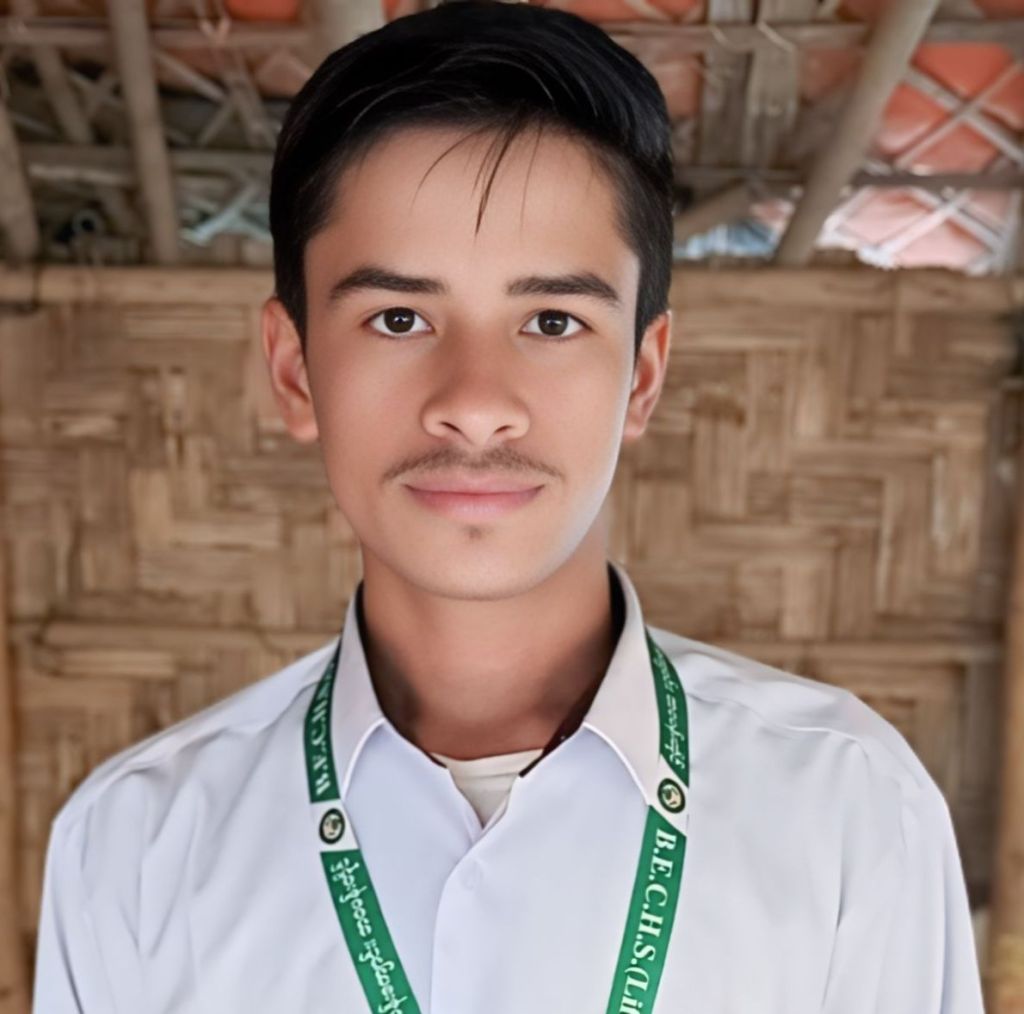
Early Life and Family

My name is Robi Alam. My father’s name is Noor Alam, and my mother’s name is Lalu. I was born into a humble and soft-spoken family in the northern part of Buthidaung Township, Arakan State, Myanmar. I am the eldest among ten siblings.

My father was a team leader of workers and also managed a small shop in our village, while my mother was a housewife. My childhood was simple. I enjoyed playing different games with my friends, especially football, which remains my favorite.

Education and Refugee Life

I began my education at the kindergarten primary school in my village. I was always curious, disciplined, and eager to learn new things. However, my life changed drastically in 2017, when violence against the Rohingya community forced my family to flee Myanmar and take refuge in Bangladesh.

When we first arrived in Bangladesh, a kind man welcomed us with food. That was the moment I realized I had become a “refugee.” Despite this painful reality, I did not lose hope.

In the refugee camp, I continued my studies. From Grade 1 to 5, I studied under Mr. Md Shomin, who also taught me Rohingya language and culture. In 2019, I enrolled at Life Destination High School, where I am now studying in Class 10 with honesty and dedication.

Career and Achievements

Alongside my studies, I pursued opportunities to build my skills. I applied to an INGO called FIVDB and, after an interview, was selected as a teacher. This experience allowed me to contribute to my community by teaching younger children.

In 2022, I participated in a competition organized by CODEC INGO, where I proudly achieved first position among all schools in Camp 06.

Challenges and Struggles

My journey has been marked by great hardship. As a Rohingya, I have faced persecution and discrimination in Myanmar.

On 10 October 2016, while I was in school, the military suddenly arrived and forced us out. Soon after, they burned houses in a nearby village (ဘုန်းတော်ပြင်) and killed many innocent people.

On 25 August 2017, the genocide against my people escalated. Soldiers began killing, raping, and burning houses. I remember a man in my village who was beaten simply for going out to catch fish after 9:00 pm. Terrified, my family and I searched for safety but found none, and finally, with tears and fear, we fled across the border into Bangladesh.

Hope

Today, I live in the world’s largest refugee camp in Bangladesh. Despite the challenges, I remain determined to pursue higher education and to work for a brighter future. My dream is to inspire other Rohingya students never to give up, no matter how difficult life becomes.

Education is my path to freedom, dignity, and hope. I believe it is not just for me, but for all. I will continue to strive with honesty, discipline, and faith to make a positive impact on the world.

Robi Alam, a Grade-10 student from Life Destination High School, begins to write his autobiography and others related true stories after gaining a productive training called “Beginners Writing’s Workshop.”

Eight Years On: The Voices of  Rohingya for Justice and Dignity Still Remain Unheard By the World

Words by Anuwar Sadek

Photos by Ayub Khan Dkl

Photo captured by Ayub Khan Dkl during Rohingya young students are demanding the protection from the international bodies

The denial of the Myanmar government has left the Rohingya people deeply concerned as they mark the 8th anniversary of the 2017 atrocities, still holding on to the hope of a dignified return to their ancestral homeland.

Since the country’s independence in 1948, the Myanmar government has systematically excluded the Rohingya from their ancestral lands, stripping them of rights and recognition. Over decades of gradual persecution and orchestrated violence, more than one million innocent Rohingya civilians were forced to flee into neighboring Bangladesh. How can a person survive without land, peace, and dignity? For the Rohingya, 25 August 2017 stands as a dark milestone, the day everything they owned and cherished was destroyed.

Despite living in disorderly, overcrowded refugee camps made of mud and tarpaulin shelters in Cox’s Bazar, Bangladesh, the Rohingya community has not remained silent. They continue to raise their voices for justice and equal rights that were unjustly stolen by Myanmar Government.

“We will never stop raising our voices until our rights are restored,” said Sarwah Shah, 22, a Rohingya youth. “We will never let the Myanmar government or the Arakan Army take advantage of our people and our motherland, Arakan State.”

Eight years have passed, yet the international community has failed to bring justice. Mohammed Ayub, 32, a Rohingya activist, reflected:


“Behind every 25 August lies a drop of tears and heartbreak. It reminds us of our sisters being raped, our children thrown into fire, and our homes burnt by the Myanmar military.”

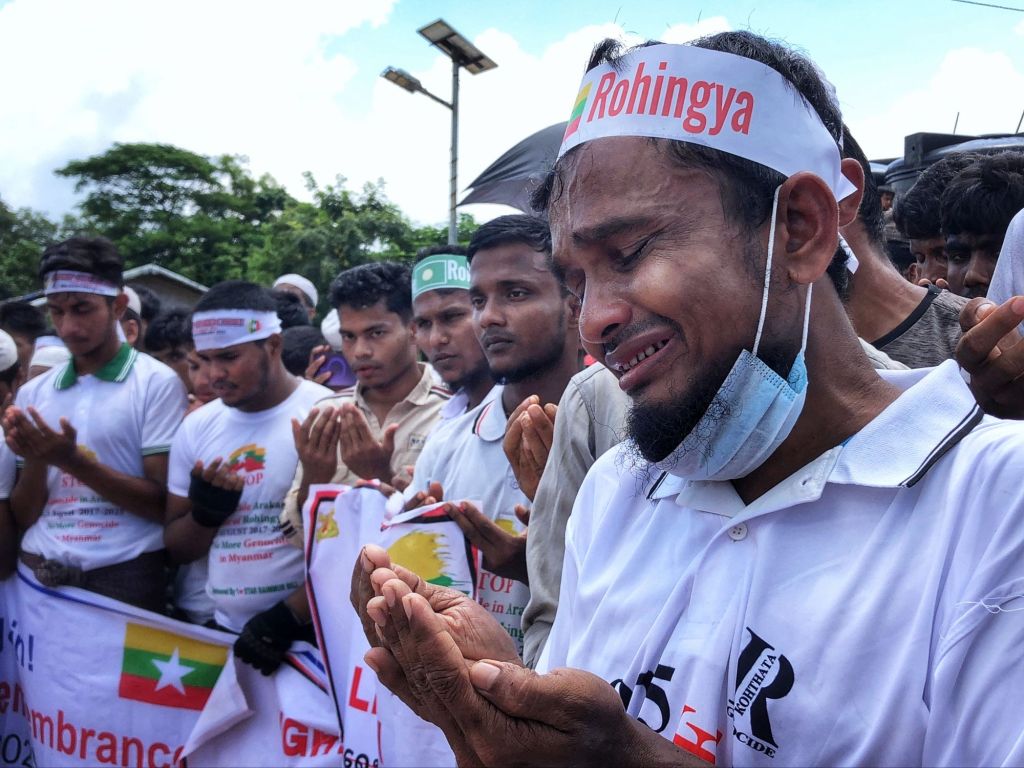
Photo captured by Ayub Khan Dkl, showing
Rohingya survivors in tears as they prayed on stage during the 8th Anniversary of Rohingya Genocide Rememberance Day


Ayub also added that to delay justice is not only to ignore genocide but also to silently support the perpetrators in their crimes.


At the same time, the Arakan Army (AA), a Rakhine rebel group has become another source of suffering for the Rohingya, falling like a sudden stone from the sky. While their stated aim is to challenge the Myanmar military, their violence has heavily targeted on innocent Rohingya civilians. Torture, rape, killings, looting, and land seizures have become widespread.


Anuwar Faisal, a private teacher who fled to Bangladesh in 2024, described that the year ” 2024 ” is the worst period in recent memory of Arakan State.


“The Arakan Army conscripted our youths to use them as human shields on the frontlines. They killed more than 5,000 civilians with drone attacks. It was unforgettable.”

For decades, Rohingya Muslims have been denied citizenship by the Myanmar government, effectively confering them stateless. The continued delay in addressing this crisis by the international community only strengthens the hands of the perpetrators and deepens the suffering of the victims.

The Rohingya community urges that silence is no longer an option. The international community must act decisively to end impunity, restore rights, and ensure a just and dignified return for one of the world’s most persecuted peoples like Rohingya.