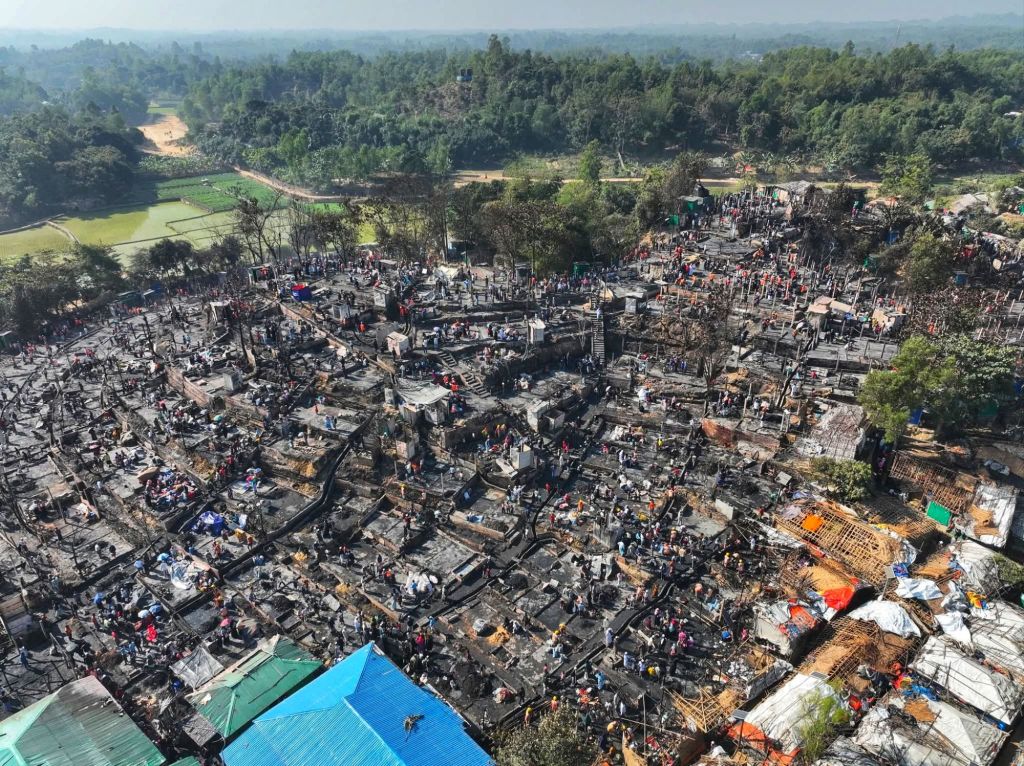
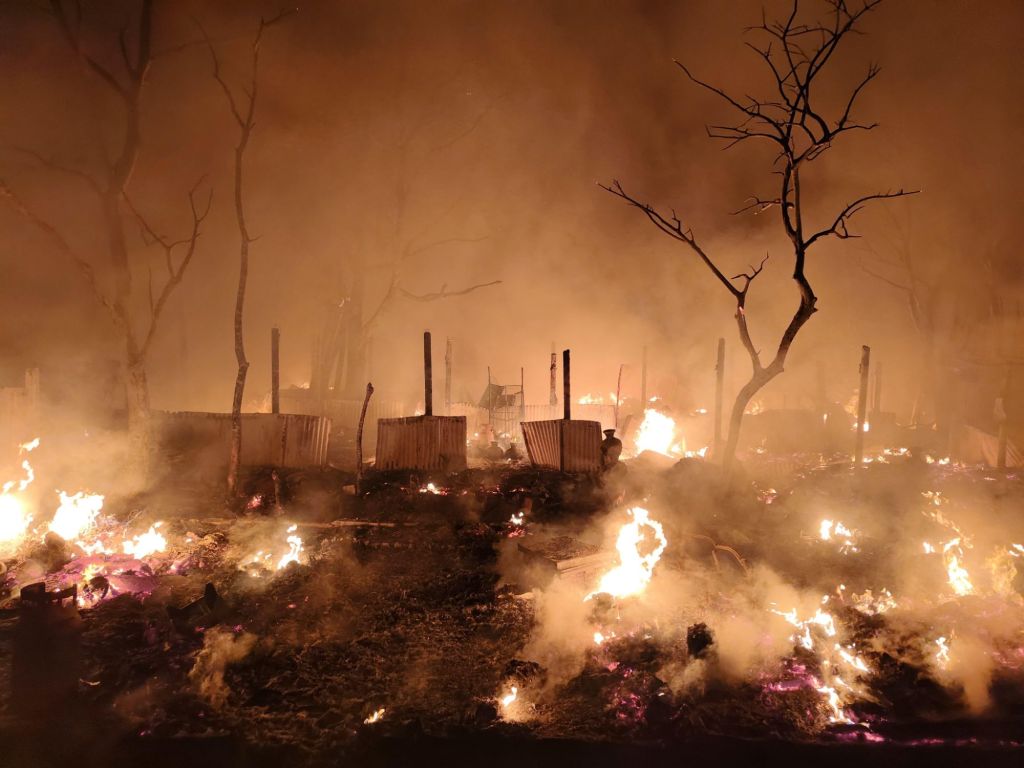
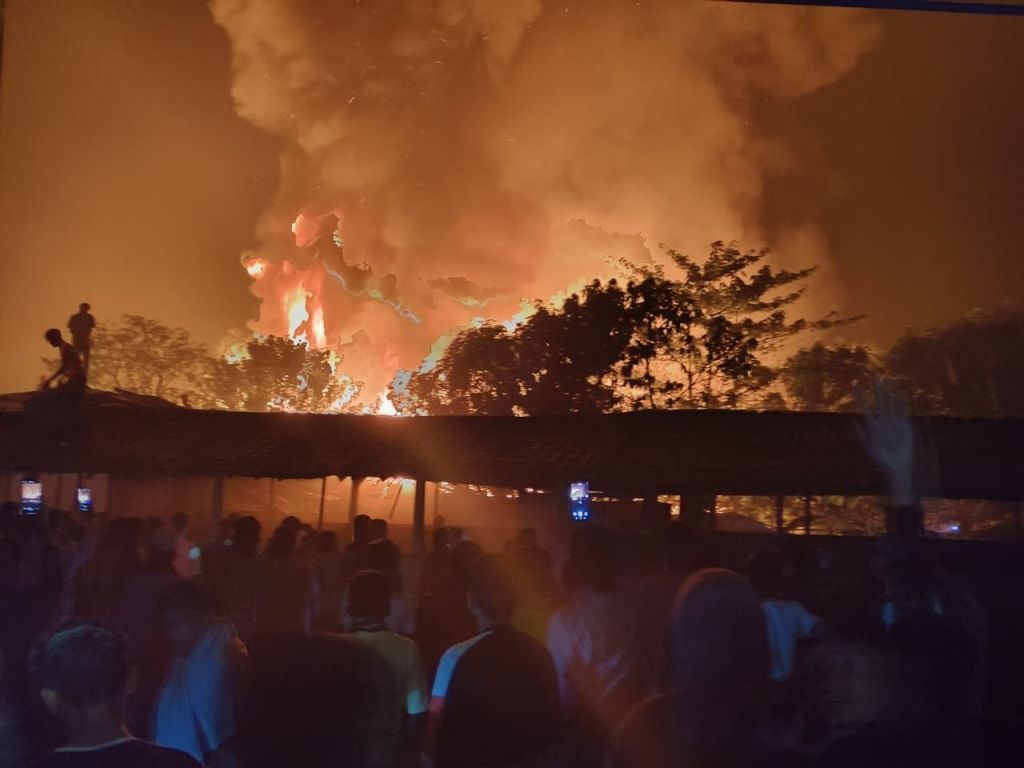
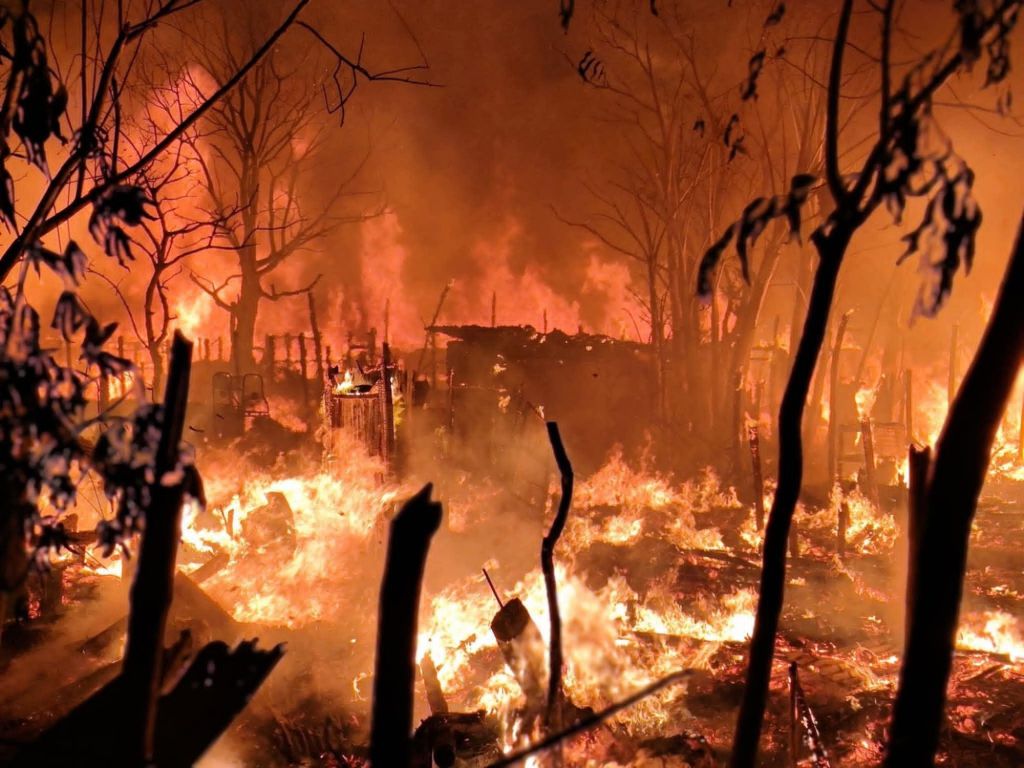
A devastating fire accident occurred last night in Block D, causing severe loss to families and community facilities. The incident has left the community in deep shock and sorrow.
A total of 448 families were affected across different areas:
Block D-04: 140 families Total affected families: 448
The fire also damaged important community institutions, including 02 mosques, 01 maktab, and 10 schools, seriously affecting religious activities and children’s education.
Many families lost their shelters and basic belongings. Immediate humanitarian support is urgently needed to address this critical situation.
We respectfully request timely assistance and cooperation to support the affected families.
Every winter, the fear of fire devastations haunts the Rohingya refugee camps in Bangladesh. On 28 December 2025, at around 10:00 p.m., a massive fire broke out in Camp-24, Leda, burning down more than 100 shelters.
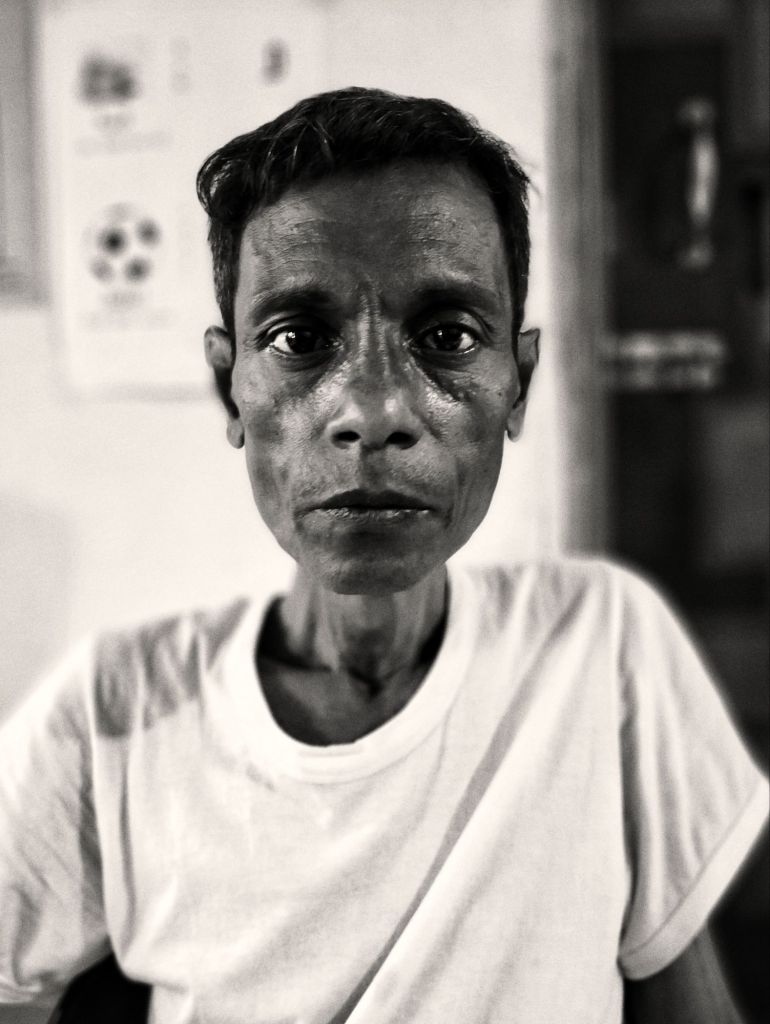
Photo: Anuwar Sadek, This elderly person is a new arrival and becomes a refugee arrived at Bangladesh from the Arakan State, Myanmar and lost one of his five years old son under the drone attack of Arakan Arakan Army AA on August 2024
Persecution, killings, imprisonment, torture, forced labor, movement restrictions, and many other forms of oppression against the Rohingya minority by the brutal Burmese government are not new. These atrocities have been ongoing since the early years following Myanmar’s independence from British colonial rule. Most recently, a new armed group claiming authority—the so-called Arakan Army (AA)—with terroristic intentions of ethnically cleansing the remaining Rohingya Muslims from Arakan (Rakhine) State, has reportedly killed more than 5,000 civilians across Maungdaw, Buthidaung, Rathidaung, and other regions.
For a single Rohingya, trying to live a normal life has become like surviving in a battlefield that feels more like a graveyard. Can anyone truly understand what it means to live with the constant fear of death, without access to even the most basic necessities? It is not easy—perhaps impossible—for any human being to survive in such a condition.
Due to the unbearable persecution inflicted by the Burmese government, the Rohingya people have endured multiple waves of forced exodus—each one a desperate search for a place where they can live without the fear of being killed. These journeys have repeatedly ended in Cox’s Bazar, Bangladesh, where over a million Rohingya now take shelter and survive under more humane conditions. The warm hospitality extended by the people and government of Bangladesh will never be forgotten. It is an act of humanity that deserves eternal gratitude—and surely, divine reward.
According to the United Nations, more than 122.6 million people have been forcibly displaced worldwide. Among them are the Rohingya, driven from their ancestral homeland of Myanmar. Being a refugee does not strip a person of their humanity. Refugees still carry hope, emotions, anger, decisions, feelings, and dreams—just like anyone else. But all of these are suppressed, locked away under the label of “refugee,” often treated like prisoners in cages.
Have you ever truly noticed how emotionally shattered a refugee can be? Have you heard the silence of their unheard voices? They live like birds in a cage—unable to fly, speak, or be free.
Countless Rohingya activists, diaspora leaders, camp-based organizations, youth leaders, elders, and women have tirelessly tried to make their voices heard by international institutions such as the ICC, ICJ, and OIC. But the world often listens without responding. Is it not the responsibility of these international bodies to ensure equal justice for vulnerable communities like the Rohingya? If not—then what is the purpose of international justice at all?


 Life Destination School