
United Nations fact-finding mission reported that about 10,000 people had been killed, and 730,000 people displaced to refugee camps in neighbouring Bangladesh. The military offensive showed “genocidal intent” and the government aimed to “erase” Rohingya identity and remove them from Myanmar, the United Nations mission found.
Eight Years On: The Voices of Rohingya for Justice and Dignity Still Remain Unheard By the World
Words by Anuwar Sadek
Photos by Ayub Khan Dkl

The denial of the Myanmar government has left the Rohingya people deeply concerned as they mark the 8th anniversary of the 2017 atrocities, still holding on to the hope of a dignified return to their ancestral homeland.
Since the country’s independence in 1948, the Myanmar government has systematically excluded the Rohingya from their ancestral lands, stripping them of rights and recognition. Over decades of gradual persecution and orchestrated violence, more than one million innocent Rohingya civilians were forced to flee into neighboring Bangladesh. How can a person survive without land, peace, and dignity? For the Rohingya, 25 August 2017 stands as a dark milestone, the day everything they owned and cherished was destroyed.
Despite living in disorderly, overcrowded refugee camps made of mud and tarpaulin shelters in Cox’s Bazar, Bangladesh, the Rohingya community has not remained silent. They continue to raise their voices for justice and equal rights that were unjustly stolen by Myanmar Government.
“We will never stop raising our voices until our rights are restored,” said Sarwah Shah, 22, a Rohingya youth. “We will never let the Myanmar government or the Arakan Army take advantage of our people and our motherland, Arakan State.”
Eight years have passed, yet the international community has failed to bring justice. Mohammed Ayub, 32, a Rohingya activist, reflected:
“Behind every 25 August lies a drop of tears and heartbreak. It reminds us of our sisters being raped, our children thrown into fire, and our homes burnt by the Myanmar military.”
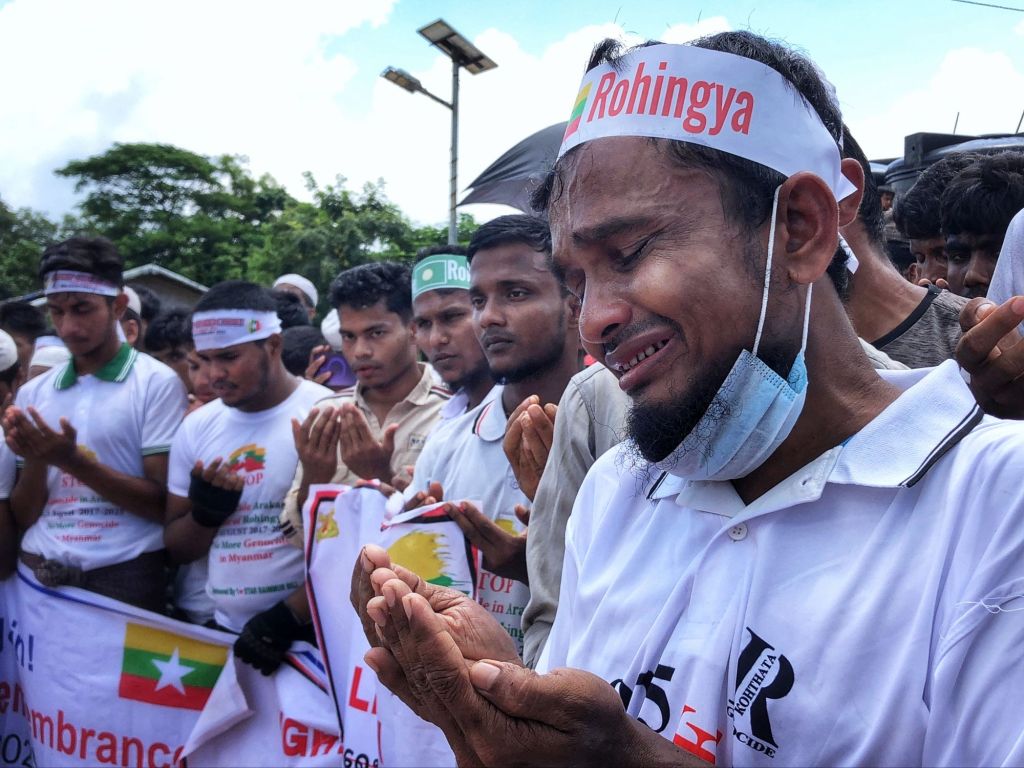
Rohingya survivors in tears as they prayed on stage during the 8th Anniversary of Rohingya Genocide Rememberance Day
Ayub also added that to delay justice is not only to ignore genocide but also to silently support the perpetrators in their crimes.
At the same time, the Arakan Army (AA), a Rakhine rebel group has become another source of suffering for the Rohingya, falling like a sudden stone from the sky. While their stated aim is to challenge the Myanmar military, their violence has heavily targeted on innocent Rohingya civilians. Torture, rape, killings, looting, and land seizures have become widespread.
Anuwar Faisal, a private teacher who fled to Bangladesh in 2024, described that the year ” 2024 ” is the worst period in recent memory of Arakan State.
“The Arakan Army conscripted our youths to use them as human shields on the frontlines. They killed more than 5,000 civilians with drone attacks. It was unforgettable.”
For decades, Rohingya Muslims have been denied citizenship by the Myanmar government, effectively confering them stateless. The continued delay in addressing this crisis by the international community only strengthens the hands of the perpetrators and deepens the suffering of the victims.
The Rohingya community urges that silence is no longer an option. The international community must act decisively to end impunity, restore rights, and ensure a just and dignified return for one of the world’s most persecuted peoples like Rohingya.
The Endless Hope for Rohingya Community
Words by Anuwar Sadek and photos by Rj Sayed Nur
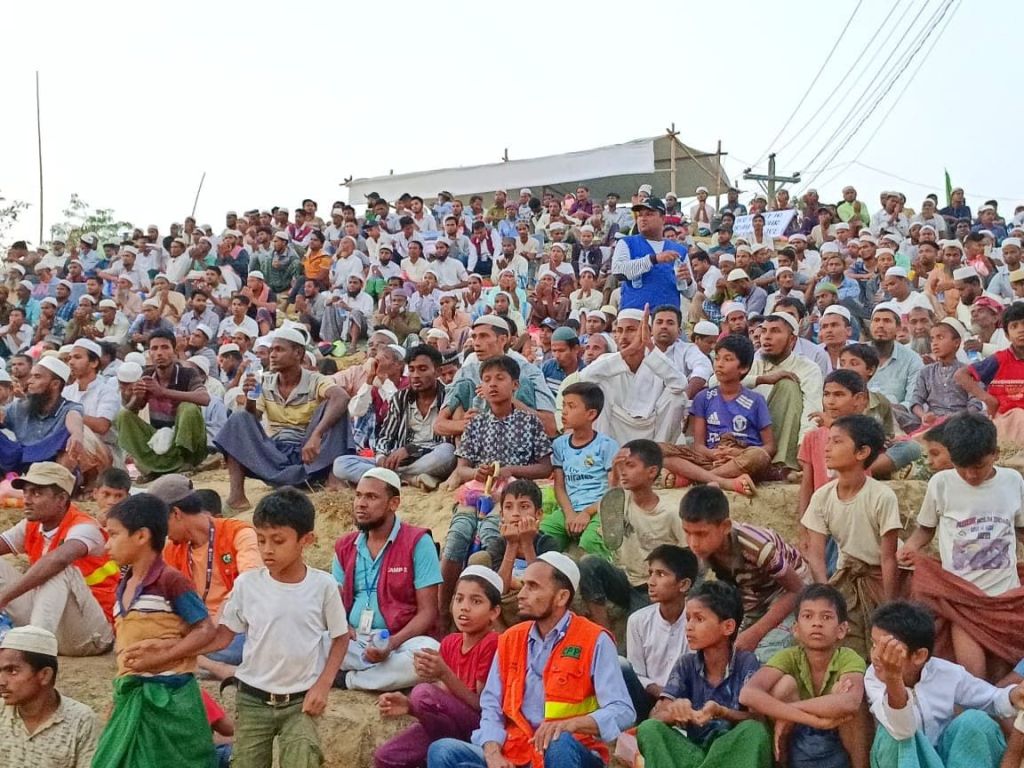
Rohingya refugees gathered in hope of repatriation during the visit of UN Secretary-General António Guterres and Dr. Muhammad Yunus to Cox’s Bazar, Bangladesh.
Photo: Rj Sayed Nur
The Rohingya, a Muslim minority group in the northwest of Myanmar, have long endured persecution and oppression. For decades, the Burmese government has subjected them to violence and denied them basic human rights, including access to education, healthcare, employment, and freedom of movement.
Historically, the Rohingya were recognized as one of Myanmar’s 136 ethnic groups, living peacefully alongside the Rakhine people in Arakan State. However, as a minority, the Rohingya faced growing hostility, particularly from the Rakhine community. False accusations and discriminatory attitudes led to their increasing marginalization. These claims were widely accepted by the Burmese government, which resulted in the systematic denial of the Rohingya’s rights and, eventually, the forced displacement of hundreds of thousands of people in 2017.
During a recent visit to Bangladesh, UN Secretary-General António Guterres announced that the United Nations would engage with the Arakan Army AA to negotiate the safe and dignified repatriation of the Rohingya refugees currently in Bangladesh.
However, many refugees have raised concerns about the role of the Arakan Army in the repatriation process.
” Once, the Rakhine people were not part of the Arakan Army but were supporters of the Burmese government. They used hatred, discrimination, and false accusations to strengthen the Burmese government’s power to deny us equal rights. They also created magazines against our people and distributed them to their generations to instill deeper hatred toward us. The Burmese government took this seriously, and as a result, the Rakhine people gained more favors.” Nurul Haque shared his point
Nurul Haque also added that the Burmese government’s trust in the Rakhine people crumbled under the Arakan Army’s dominance. This became the greatest lesson the Rakhine community taught the Burmese government.
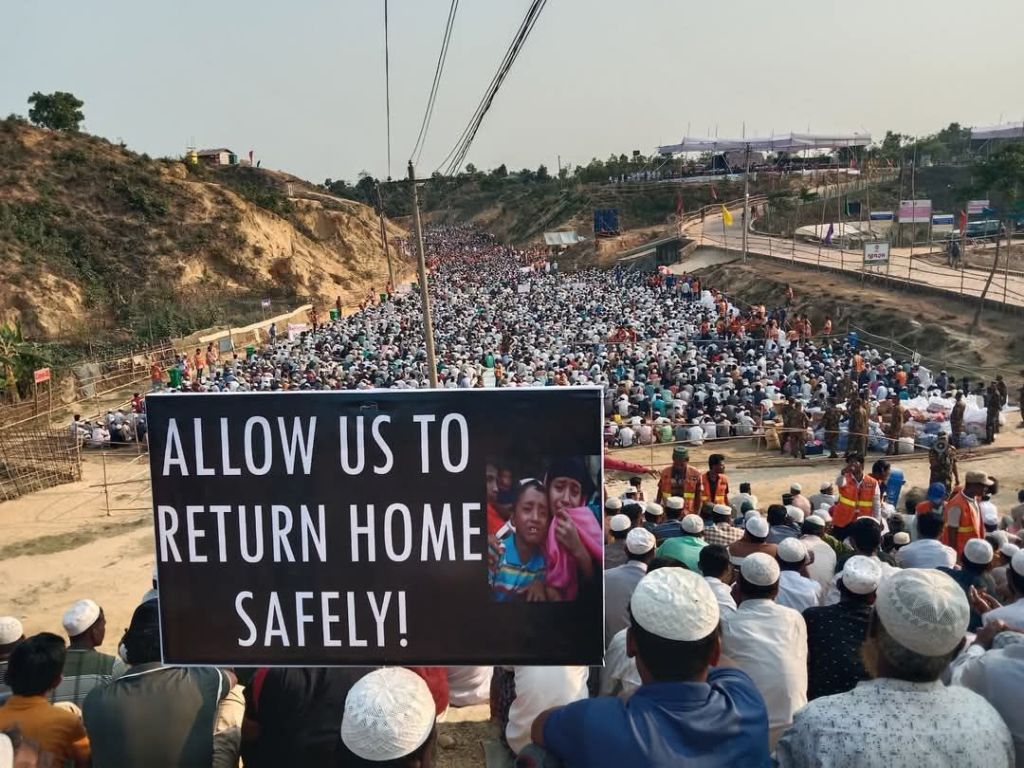
Rohingya refugees seek justice from the world and call for a safe return to their homeland.
Photo: Rj Sayed Nur
Md Nur, another refugee, shared his view that the Rakhine community manipulated the Burmese government to further their own agenda.
“Once the Arakan Army was weak, they used the term “Rohingya,” but when they became strong enough to defend themselves, they started calling us “Bengali.” “
He said. “They are our primary enemy, and we cannot accept any repatriation process that puts us under their control and their main focus is to exclude us from our original homes.”
Mohammed Saber, a Rohingya student, emphasized the importance of international intervention for any successful repatriation.
“It will not be possible to repatriate Rohingya refugees from the Bangladesh refugee camps unless the United Nations intervenes and deploys forces to Arakan State. It is crucial for the international community to take concrete action to establish a safe zone in northern Arakan, Myanmar, rather than relying solely on negotiations with the Arakan Army.”
While there is hope for the repatriation of the Rohingya refugees, many recognize that this process cannot proceed without the proper protection and security guarantees. International action is necessary to ensure that the refugees can return to their homeland safely and with dignity, without being subject to further persecution.
#Arakanarmy #Repartriation #UNforces #homes #safereturn #Arakanstate #Myanmar
The Climate Crisis and Rohingya Refugee Ration Cuts: A Humanitarian Emergency
Words by Mohammed Anuwar and Photos by Anuwar Sadek
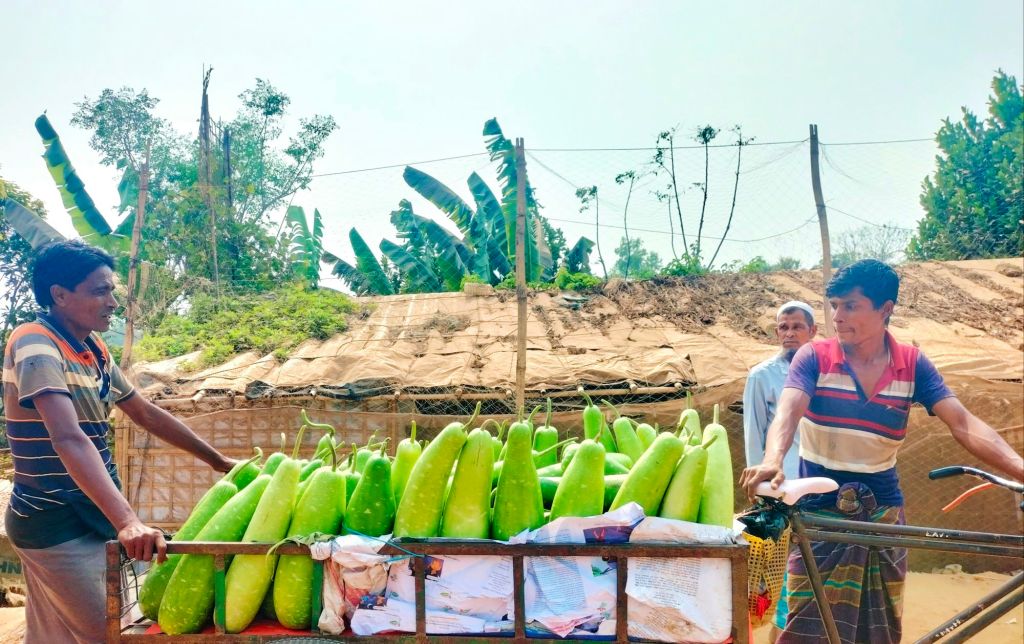
The Rohingya refugee community is facing a dire humanitarian crisis as food rations have been slashed from $12 to just $6 per person. This drastic cut is not merely a funding issue—it is a direct consequence of the escalating global climate crisis. Extreme weather events are disrupting aid supply chains, reducing global food production, and worsening the already fragile conditions in the refugee camps. Here’s how the climate crisis is impacting our community and why urgent action is needed:
1. Climate Disasters Disrupting Aid Delivery
Flooding and Landslides

Heavy monsoon rains frequently wash away roads, damage infrastructure, and make it nearly impossible for aid trucks to reach the camps.
Violent storms disrupt supply chains, delay food shipments, and leave the community even more vulnerable to hunger. Extreme heat and prolonged droughts are reducing global food production, increasing food prices, and making it harder for aid agencies to meet refugees’ needs
2. Global Food Shortages and Rising Costs
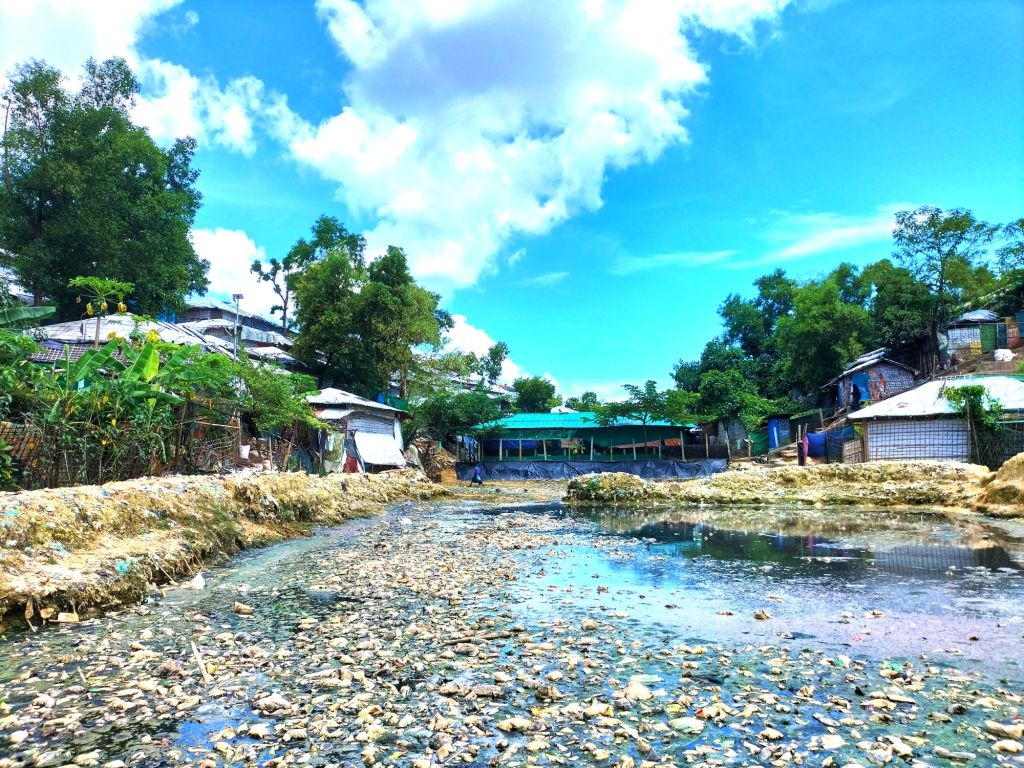
Climate change is devastating agriculture worldwide, causing crop failures and supply chain disruptions. Food prices are skyrocketing due to droughts, floods, and extreme weather, forcing humanitarian organizations to reduce aid budgets.
As a result, Rohingya refugees now receive just $6 in rations per person—barely enough to survive.
3. The Impact on Rohingya Refugees
Families are skipping meals or surviving on inadequate nutrition, leading to widespread malnutrition. Malnourished children, pregnant women, and the elderly are at high risk of illness, while weakened immune systems make diseases spread faster.
4. Broader Consequences of Ration Cuts
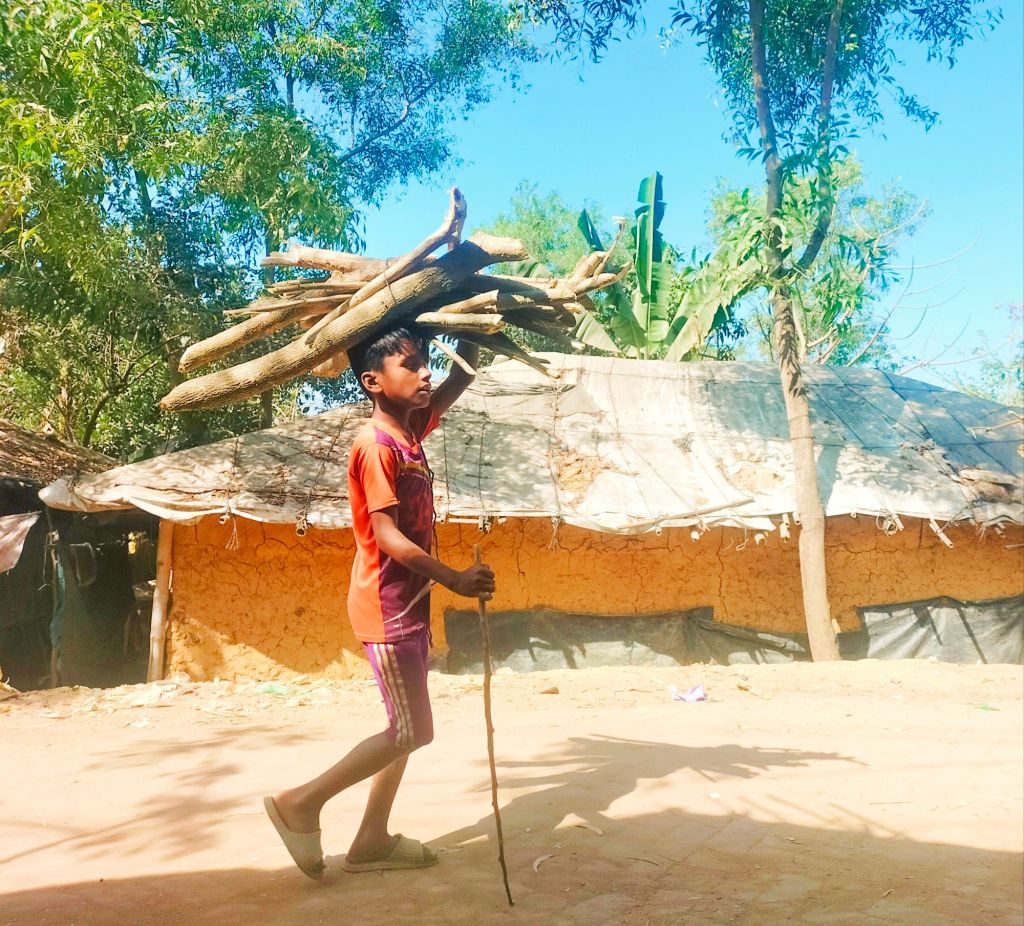
Desperate for survival, many are at risk of exploitation, child labor, and human trafficking. Scarce resources are fueling conflicts within the camps, further destabilizing an already fragile situation.
5. A Call for Immediate Action
The international community must recognize the climate crisis as a direct cause of worsening refugee conditions.
Immediate funding is needed to restore food rations and prevent further hunger-related deaths.
Long-term solutions must include climate resilience strategies, sustainable aid distribution, and stronger global commitments to refugee rights
Conclusion
The ration cut from $12 to $6 is not just a statistic—it’s a life-threatening reality. The climate crisis is no longer a distant threat; it is here, and it is pushing the Rohingya community to the brink of survival. We urge the world to act now before it is too late. Our lives depend on it.
” An insightful article by Mohammed Anuwar, a young Rohingya climate change activist working in the UNHCR environmental sector and also a grade-12 student of our Life Destination High School.”
From Hardship to Hope: The Remarkable Journey of Nurul Amin

Nurul Amin, 17 years old, son of Sayed Nur from Kamaung Seik, Northern part of Maungdaw, Arakan State in Myanmar. In 2017, Amin along with his parents left his homeland due to a horribly genocidal act on the Rohingya minority conducted by the brutal Burmese Militaries and arrived at Kutupalong, the largest refugee camp in Bangladesh.
” In Myanmar, when I was a child, I attended to a primary school in my village and It was the most challenging period for me as the school was so far from my house and it took me hours to reach at it. During rainy days, I was completely wet while I was on the way of my school. However, I hardly managed class 2 in my homeland before 2017.” Nurul Amin claimed
In 2017, the raping, discrimination, torturing, killing innocents, throwing children into fire, burning the houses and so on operated by the Burmese militaries forced over 1 million Rohingya people from their homes and fled to a bordering country, Bangladesh and took refuge in the forests of Cox’s Bazar and Teknaf. “ My legs became disable and unable to walk on while we were crossing the mountains, villages, barbed fence and river on Aug 2017.” Amin added.
Many elderly people and young children endured unbearable struggle to find a peaceful life on those days, leaving the homes. On their way of Bangladesh, they fought starvation as they took nothing from their homes.
“ It took us two days to travel through the hills for reaching Bangladesh and had nothing to eat and sometimes we needed to pinch our stomachs to relieve the suffering of hunger.” Amin expressed
After being a refugee in the largest refugee camp, Cox’s Bazar, he became a dreamless boy and received no opportunity to continue his study. With guidelines regarding learning forced him toward useless and wasted his time without doing anything for years. Finally, his father, Sayed Nur has open a small shop near his shelter and it starts working for the entire family. “ At the last, my father made me a shopkeer and selling it every morning and evening.” Amin said

” When I was 15, one opportunity from the Life Destination High School offered me to continue my educational journey and I have been attending the class from grade-3 since 2023. It is the hope and building a dream to catch my destination through this learning platform.” He added
There are many young Rohingya children who have no opportunities to make their life and build their future by studying in the Rohingya refugee camp. Offering a formal educational opportunities bring the peace and successes in which people can enjoy their lifetime and make the community develop. The international community must focus to restore the higher education for the Rohingya students in Refugee camp, Bangladesh.
 Life Destination School