
Words and photos by Anuwar Sadek
Water is the essence of life, supporting all living organisms, from microscopic bacteria to towering trees. Within the human body, it plays a crucial role in nutrient transportation and metabolic processes. However, in the Rohingya refugee camps of Bangladesh, access to clean and sufficient water remains a major challenge due to the overcrowded living conditions and lack of natural water sources such as ponds, wells, and freshwater streams.
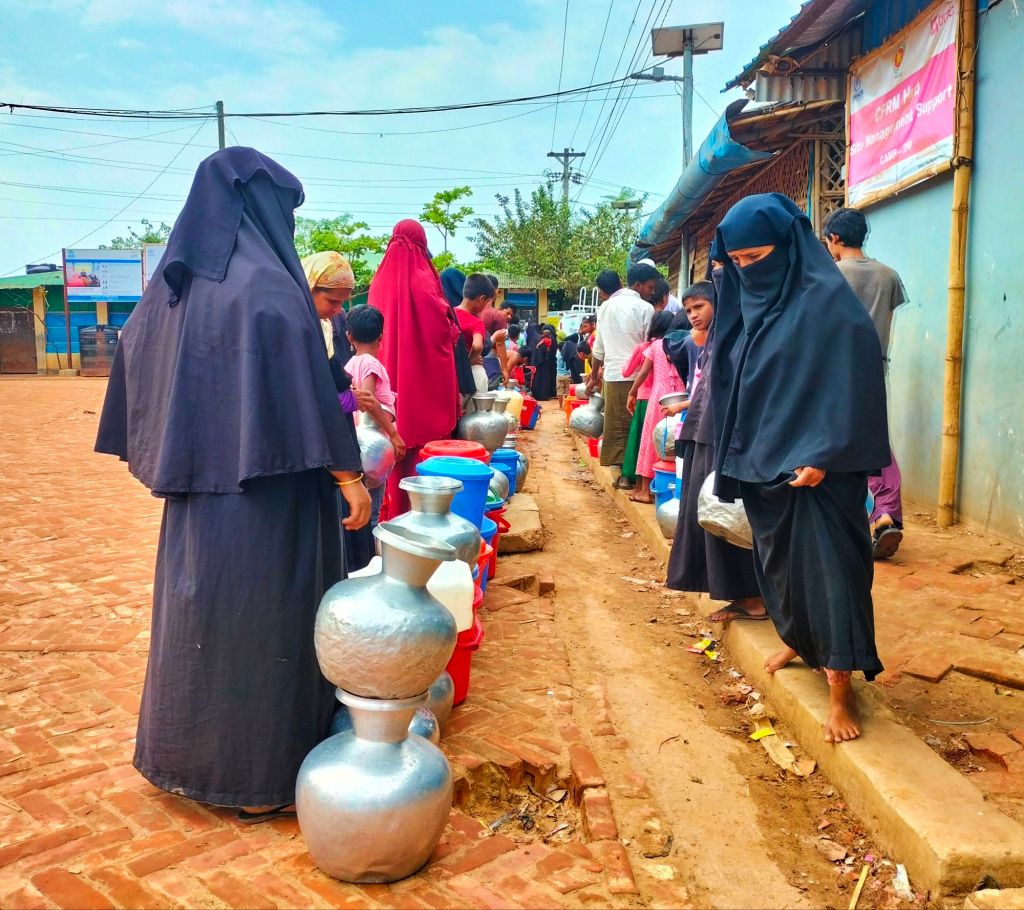
- This photo was taken while Rohingya women standing to fetch water which the vehicle carried out from far away on 2024.
Dependence on Alternative Water Sources
In such an environment, refugees rely on alternative water sources like tube wells and water tanks, provided by organizations such as UNHCR, NGO Forum, and the Asian Development Bank (ADB). However, the limited supply is insufficient to meet the needs of more than a million refugees. The situation becomes even more critical during the hot and dusty seasons, where dehydration and health risks increase significantly.
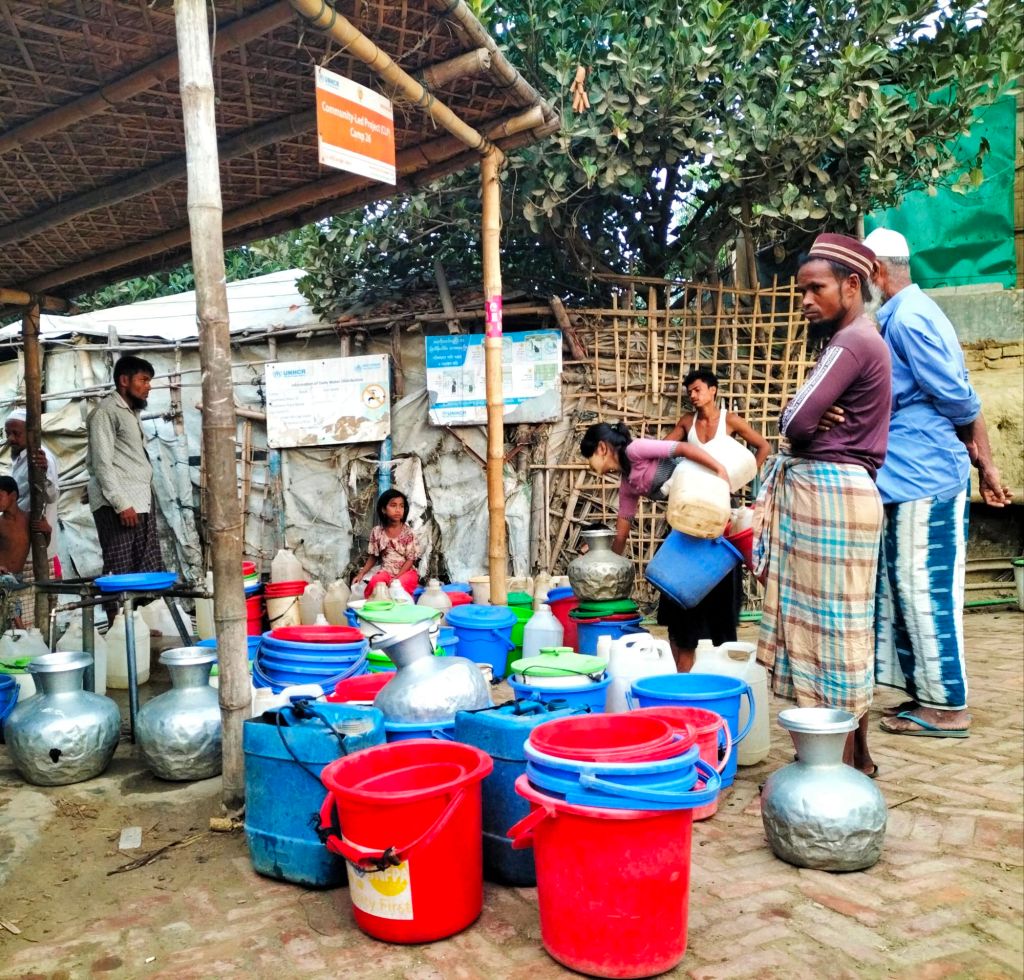
Mohammed Solim, an NGO volunteer, shared his daily struggle:
“After the water lifting machine broke, a vehicle now brings water to distribute among over 300 families every day. I have to stand in line for two to three hours, missing my working hours at the NGO, just to receive two pots of water.”
Impact on Daily Life
The water shortage affects every aspect of life in the camp. Basic hygiene becomes difficult to maintain, forcing many to go without bathing for days.
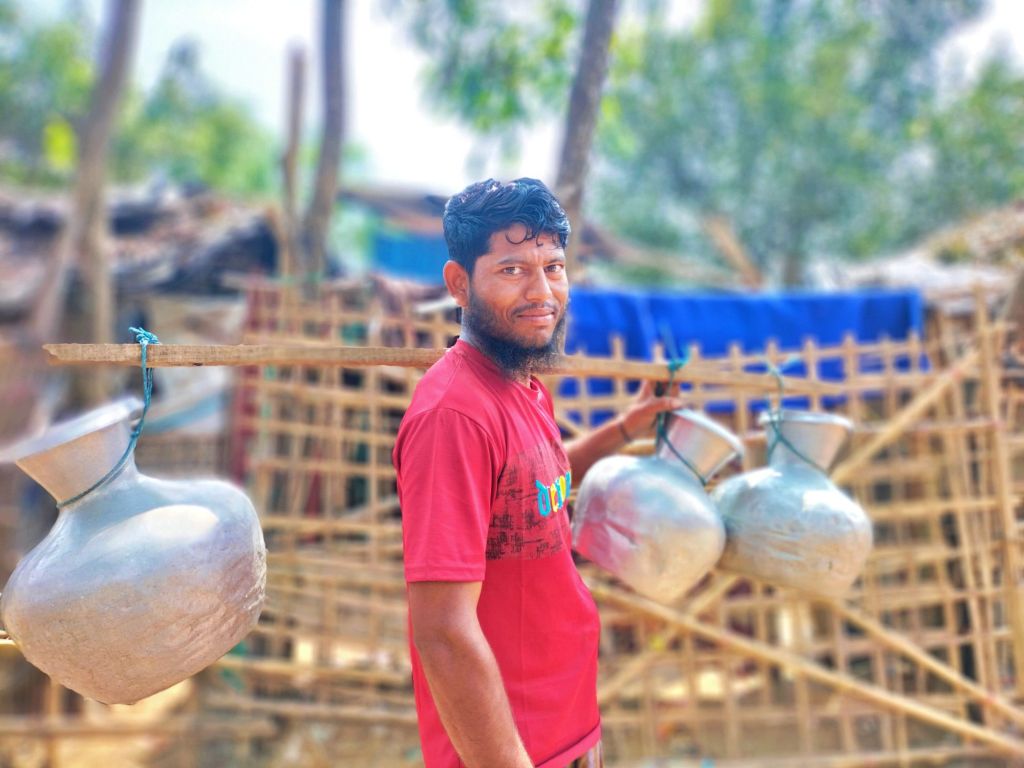
A Rohingya man supporting to his wife by littering water
Shomsida, a Rohingya woman, expressed her hardship
“This inadequate water supply forces my family and me to go several days without a bath. Even when I try, I can barely use two kilograms of water at a time.”
Children and students are also affected, as they often have to choose between attending school and fetching water. A 13-year-old Rohingya student said
“Sometimes, I cannot attend my regular classes because I have to stand in a long queue for water. It has become a new challenge in my life.”
Urgent Need for Sustainable Solutions
The ongoing water crisis in the Rohingya refugee camps highlights the urgent need for sustainable water management. Pregnant women, elderly persons, youth, and children are particularly vulnerable to the hardships caused by water scarcity. Ensuring a reliable water supply is not just about survival—it is about restoring dignity, health, and stability in the lives of Rohingya refugees. Addressing this crisis will bring much-needed peace and unity to the displaced community..
 Life Destination School