
Story and photos by Ayub Khan Dkl
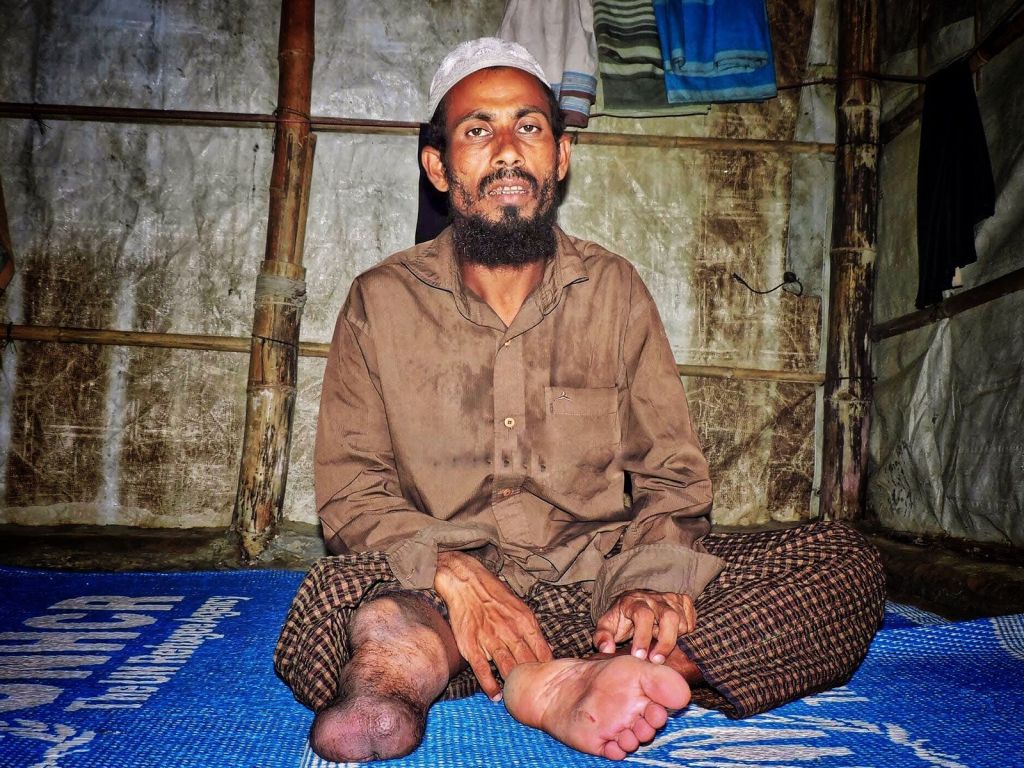
Noor Kali, expressing the pain of losing all to the Arakan Army AA
The voice and tear of Noor Kalim impress the mixture of saddness into no end
In the heart of the Rohingya refugee camps in Cox’s Bazar, Bangladesh, lives a man named Noor Kalim — a name that echoes pain, resilience, and survival. At just 36 years old, Noor has endured a lifetime of suffering, escaping not just war, but the slow, excruciating brutality of genocide.
Originally from Foyazipara village in Maungdaw township, Arakan state, Myanmar, Noor Kalim and his family were victims of relentless persecution — first by the Myanmar military (Junta), and more recently by the so-called Arakan Army (AA). The horrors they witnessed and the trauma they carry are a testament to the silent genocide unfolding in Arakan.
On August 5, 2024, the Arakan Army launched a sudden and brutal attack on Noor’s village. With no time to gather belongings or even take shelter, Noor, his wife Dolu, and their two children were forced to flee for their lives. Already carrying a physical burden from the past — Noor had lost his right leg in 2012 after being shot by the Myanmar military — he faced a new injury while crossing the dangerous barbed-wire fence at the border, cutting deep into the sole of his left foot.
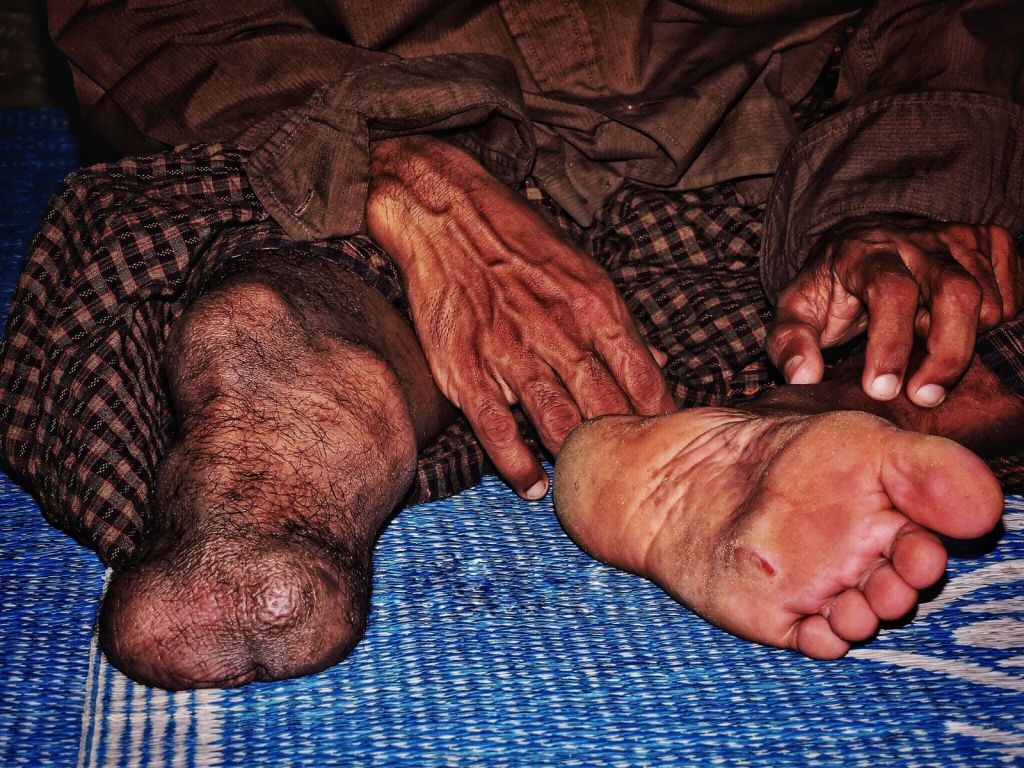
A losing leg of Noor Kalim shot by Myanmar Military on 2012
Despite his injuries and intense pain, Noor pushed forward, motivated by a single, desperate goal: to protect his family.
The journey was no less terrifying than the violence they escaped. Along with many others, the family gathered at Chinapatti seashore, praying for a way out amid the roar of drone strikes. After hours of waiting under the scorching sun and trembling sky, a boat finally arrived at 2 PM. But instead of reaching safety, the nightmare deepened. They were taken to an unknown area called Laldiya, where an unidentified group captured and tortured them. For two endless hours, they endured both physical and emotional torment — before being miraculously released.
Still wounded and exhausted, Noor and his family reached Bangladesh at dawn on August 6, 2024. But their arrival marked the beginning of yet another chapter of hardship. Dolu, his wife, recalls those moments with tear-filled eyes:
“I had to carry our children and look after Noor while escaping such horrific situations. We lost everything to brutality. We gave all our belongings, including money, to the boatmen. Now, we have nothing.”
In March 2025, after months of uncertainty, Noor’s family was issued a Joint Assistance Card by UNHCR, finally granting them access to humanitarian aid. Though grateful, Noor remembers those early days of hunger and fear:
“When we first arrived, there wasn’t any help. No shelter, no food — just pain. We thought we might not survive.”
Today, Noor Kalim and his family live in a temporary shelter in one of the refugee camps. While their physical wounds have begun to heal, the emotional scars remain deep. Aid has helped them survive, but each day is still a struggle for food, medicine, and dignity. The future remains uncertain.
Yet, Noor clings to hope.
“I dream of a day when we can live in peace, where my children don’t have to wake up in fear. For now, we are just trying to survive.”
The silence of the international community regarding the Rohingya crisis has brought no meaningful change. Without global intervention, the so-called Arakan Army—locally known as Mog Bagi—will never grant freedom or safety to Rohingya Muslims trapped in a life of suffering inside Arakan State, Myanmar. This is the moment for the international community to rise and act—to ensure the safety, dignity, and fundamental rights of every single Rohingya Muslim.
Edited by Anuwar Sadek
#Rohingya #Mog Bagi #Violence #ArakanState #Genocide #Home #Junta #Myanmar #Refugees #Bangladesh
 Life Destination School