
Memoir of Abul Karim
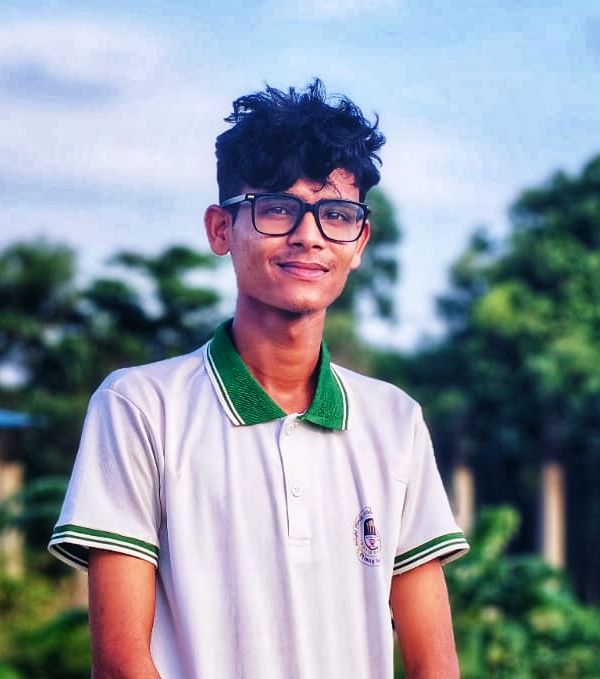
My name is Abdul Korim. I am the son of Hamit Husson and Khatiza. I am 18 years old and the proud brother of 10 brothers and 2 sisters. I was born and raised in KyetYoePyin village ( ကြက်ရိုးပြင်), located in Northern Maungdaw Township of Arakan State, Myanmar. Today, I live as a refugee in Camp-06 of the Kutupalong FDMN camp in Ukhiya, Cox’s Bazar, Bangladesh.
Currently, I am studying in Grade 12 at a community high school called Life Destination High School. Throughout my academic journey, I have ranked 1st, 2nd, or 3rd in every Grade. But no matter how hard I work, it often feels like my efforts are in vain, aswe refugees do not receive recognized certificates or qualifications. Despite this, I have not lost hope.
I come from what was considered a high-class family in our village. My father was a farmer and a respected Amir, and my mother is a dedicated housewife. Although my parents did not receive a proper education themselves, they always prioritized education for their children. I studied up to Grade 4 in Myanmar before we were forced to leave. My parents supported every dream I had, and I am forever proud to be their son.
Everything changed on August 25, 2017. That was the day I fled Myanmar and crossed into Bangladesh, escaping persecution, violence, and the ethnic cleansing campaign carried out by the Myanmar government. They labeled us “Bengali” to deny our identity, but we are Rohingya, and Arakan is our ancestral land.
I have always been a positive person. I love to read, to write, to dream, and to learn. I believe in growth through knowledge and community service. My dream is to become a doctor — not just for myself, but for my entire community. I want to serve the people who are suffering silently and bring dignity to the lives around me. But being born as a Rohingya means I face many restrictions. I cannot freely move, I cannot access quality education, and I cannot reach for opportunities like others in the world do.
We live under constant pressure as refugees in Bangladesh, we have no legal rights, no freedom of movement, and no official status. We face a double burden: discrimination in our homeland and statelessness in the land we fled to for safety. One of the hardest challenges I face today is the lack of access to higher education. The poverty that surrounds us makes it even harder, and without opportunities, our future becomes uncertain. Many young people here lose hope. But I refuse to give up.
Even though my dream of becoming a doctor seems far away, I still hold on to it. I continue to study, to learn, and to prepare myself. I believe one day, the world will hear our voices and give us the chance to rise not just for ourselves, but for the future of the Rohingya people.
Abdul Karim
After completing a writing workshop, Karim begins to write his own background as a memoir or an autobiography to share his inner crying which is still unheard by the world.
 Life Destination School